











Frequently Asked Questions?
What routes and missions are turboprop aircraft suitable for?
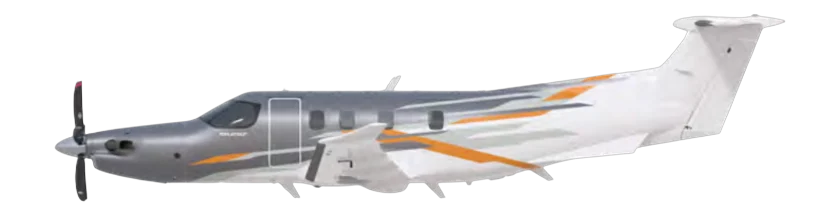
Turboprops are ideal for flights of up to 1,500–2,000 km: Almaty–Tashkent, Moscow–Kazan, Astana–Almaty. They thrive on short, unpaved runways: the Pilatus PC-12 lands at 750 meters, making them accessible to thousands of sites that a jet simply can't reach. They cost one and a half to two times less per hour than a jet, and over distances of up to 1,000 km, the time penalty is only 15–25 minutes.
What is the range and passenger capacity of turboprop aircraft?
Single-engine aircraft carry 4–9 passengers: the TBM 960 seats six and ranges 3,200 km, and the Pilatus PC-12 NGX seats up to nine and ranges 3,300 km. The twin-engine King Air 360ER carries eight passengers for almost 5,000 km. The cruising speed of this class is 500–610 km/h. A rule of thumb: a full seat load reduces the maximum range by 20–301 TP80T.
How is a turboprop aircraft different from a light jet?
The jet is faster—750–850 km/h versus 500–610—and flies higher, avoiding turbulence. The turboprop offers better fuel economy: 220–350 l/h versus 500–700, an hourly rental from $1,800 versus $3,000+, plus access to short unpaved runways. On routes up to 1,000 km, the time difference is less than half an hour, so it's better to fly a turboprop for short legs, and a jet for long ones.
What turboprop aircraft are in the fleet and how do they differ?
The fleet includes 13 models: the high-speed Daher TBM 960 and Piper M700 Fury (556–611 km/h, 5–6 seats), the spacious Pilatus PC-12 NG/NGX/PRO with a cargo door and nine seats, the twin-engine King Air 260 and 360ER for long-haul flights up to 5,000 km, the business Piaggio Avanti Evo with jet speed and a stand-up cabin, and the affordable Piper M350/M500/M600SLS.
How to choose the right aircraft for your needs?
Start with two figures: the typical route length and the number of passengers. Up to 1,000 km and 4 passengers – a turboprop or light jet; 2,000–4,000 km – a medium jet; nonstop intercontinental flights – a long-haul jet. Add adjustments for short runs, baggage volume, and berths. We'll select a model that matches your profile and calculate the economics of ownership. Send us a request – we'll prepare a proposal, calculate the content, and analyze options tailored to your needs.
A new plane or a used one – which is more profitable to buy?
A new aircraft comes with a factory warranty and a 1-3 year waiting list, but the price is maximum. A used aircraft offers immediate delivery and a lower price for the 30-60%, but it's important to check the engine life and history. For most buyers, a new aircraft, 3-7 years old, is optimal: the main discount has already been applied, and the aircraft still has a long service life. We consider both options. Send us a request – we'll prepare a proposal, calculate the cost, and analyze the options for your needs.
Which aircraft class should I choose based on my route and number of passengers?
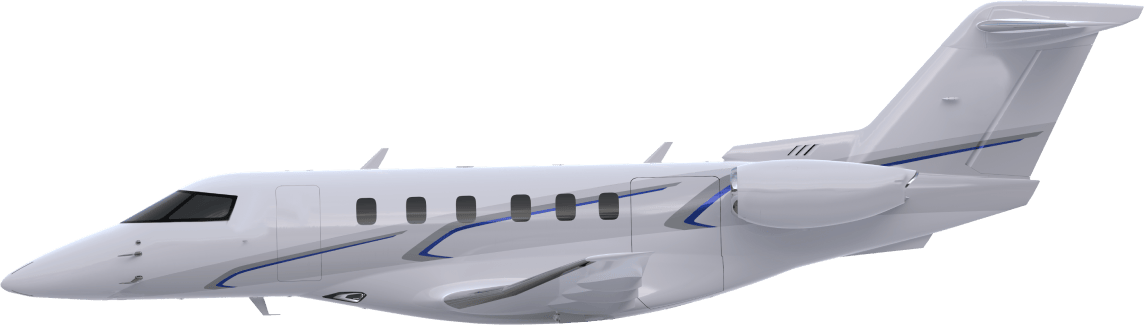
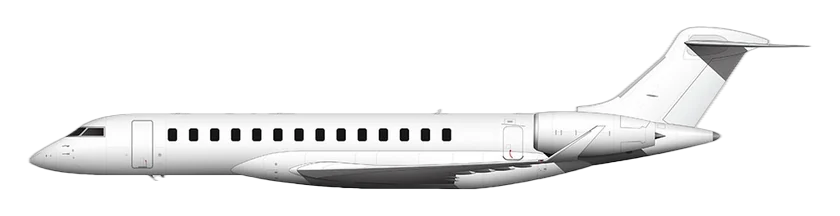
Turboprops: up to 1,500 km, 4-9 seats; light jets: up to 4,000 km; midsize: stand-up cabin, 4-6 hours; super-midsize and large: 6,300-7,400 km, 8-12 seats; long-haul: up to 14,800 km nonstop. Helicopters cover up to 800 km door-to-door. We'll find the right class for your needs. Send us a request – we'll prepare a proposal, calculate the cost, and analyze options tailored to your needs.
How much does it cost to own a plane per year?
The bulk of the costs are fixed—hangar, crew, maintenance, insurance—and are independent of flight hours. For 300–400 hours per year, the benchmark is: turboprop $ 0.6–0.9 million, light jet ~$ 1.6 million, midsize $ 2.4 million, large $ 2.8–3 million, long-haul $ 3.8–4.7 million. We calculate the exact figure based on the specific model and your flight hours. Send us a request—we'll prepare a proposal, calculate the cost, and analyze options tailored to your needs.
What influences the cost per flight hour when purchasing an airplane?
There are three cost groups: direct (fuel, hourly reserves for engines and airframe), crew (salaries, training, hotels), and fixed (insurance, hangar, management), distributed over the flight time. The more you fly, the lower the hourly cost. A benchmark for 400 hours per year ranges from $1,500 for a turboprop to $10,000+ for a long-haul aircraft. Submit a request – we'll prepare a proposal, calculate the cost, and analyze options tailored to your needs.
How does an airplane maintain its value and what is important for future resale?
Liquidity depends on the model, fleet size, engine life, and interior condition. High-volume models (Phenom 300, Challenger 650, PC-12, G650ER) hold their price better and sell within 60-120 days. When purchasing, consider residual value and demand—this protects your investment. We'll advise you on which models are most liquid within your budget. Send us a request—we'll prepare a proposal, calculate the contents, and analyze options tailored to your needs.


