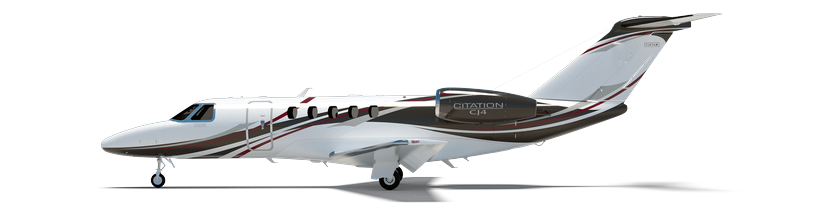
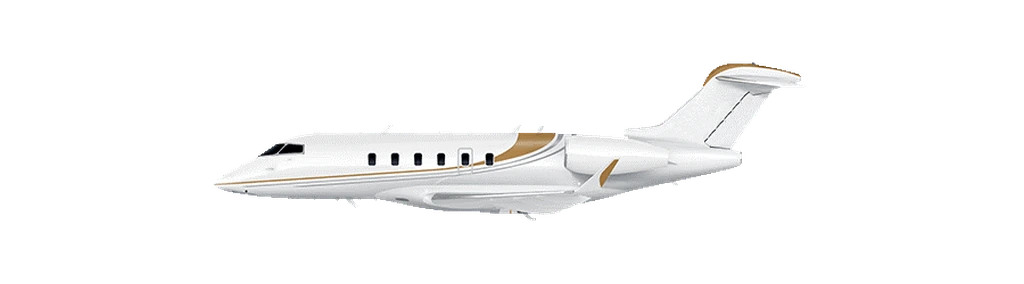
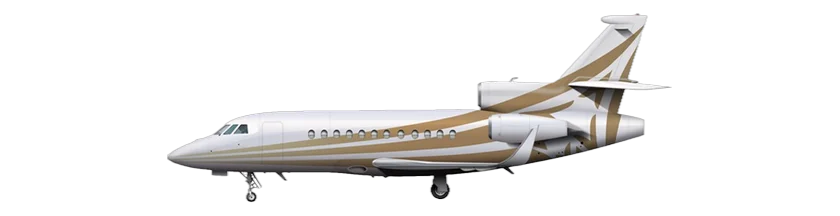
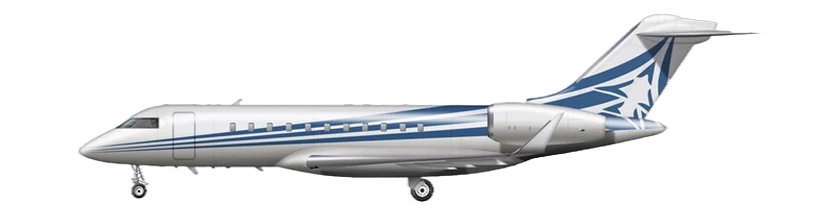
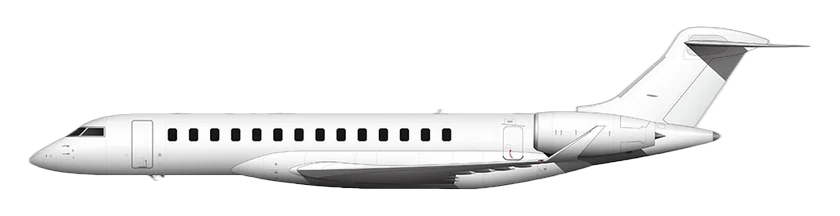
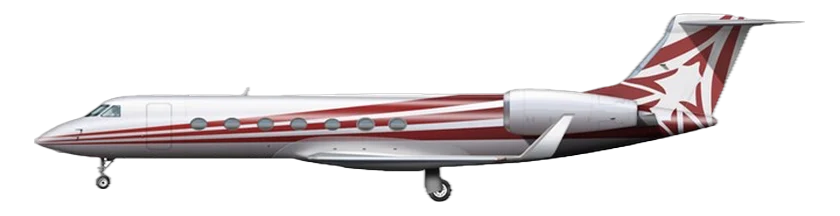
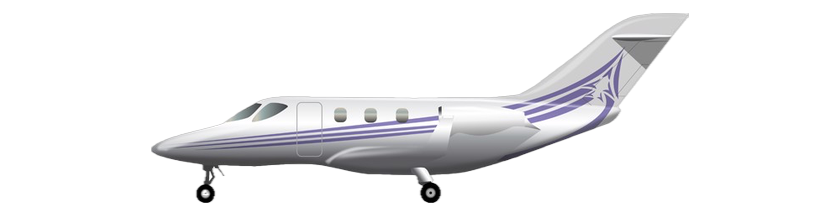
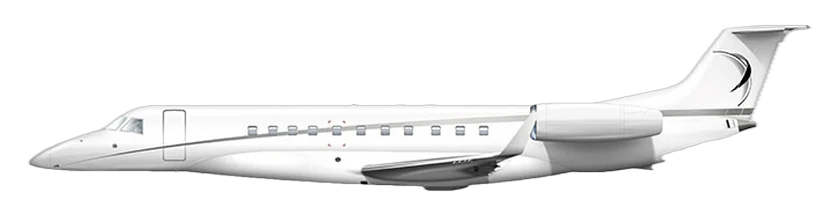
The United States is the world's largest business aviation market and the source of the majority of used aircraft. For buyers, this means a fundamentally different choice than in any other country: dozens of aircraft of various years and mileage are available for common types, offering a genuine opportunity to choose based on condition and history, rather than settling for whatever's available.
The service network is commensurate with the market size: authorized centers for all manufacturers, independent service centers, component warehouses, and trained personnel. This is the most predictable operating environment available.
There are two challenges, both solvable. The first is the owner requirements: the N-register is not available to everyone, and a foreign owner requires a separate design. The second is taxes: there is no federal VAT, but the state tax can be significant, depending on where the aircraft is delivered, registered, and based. We'll examine both.
Ownership requirements: who can register an aircraft in the US?
This is the main question for a foreign buyer, and it needs to be answered accurately. Requirements allow registration if the owner is:
- US citizen;
- a foreign national who has permanent resident status in the United States;
- a partnership in which all partners are U.S. citizens;
- a corporation organized under the laws of a state, district, or territory of the United States, provided that its president and at least two-thirds of its board of directors and other officers are United States citizens, and at least 75% of the voting interest is owned or controlled by United States citizens;
- US government agency;
- a corporation without U.S. citizenship, organized and operating under U.S. law, if the aircraft is based and primarily used in the United States.
The first way: a trust ownership structure
If none of the above options are suitable, a trust structure is used. A U.S. citizen trustee assumes title to the aircraft and registers it in their name; the economic interest remains with the beneficiary. This is a standard and well-established structure, not a workaround.
It has strict limits, and it is important to understand them in advance: non-residents may have no more than 25% of the total powers The trustee has the right to manage or change the trust, directly or indirectly. The trustee must be free from the settlor's control and ceases to be a U.S. citizen. Upon registration, the trustee must submit an affidavit of beneficiaries, a fully certified copy of the trust agreement, a signed purchase agreement, and a registration statement.
The second way: a US corporation with actual basing
A corporation without U.S. citizenship, organized and operating under U.S. law, may register an aircraft directly, without a trust structure, if the aircraft is based and primarily used in the United States. «Primarily» means that At least 60% of flight hours are on flights originating and terminating in the United States.
This is a factual, not a documentary, requirement: its fulfillment is confirmed by flight records. If the aircraft is actually based in Europe or the Middle East, this route is unsuitable, and a trust structure—or another registry—is the only option.
What are the benefits of registering in the USA?
- The largest service network in the world. Authorized centers for all manufacturers, independent warehouses, and component warehouses. Service for any common type is within easy reach.
- The deepest secondary market. More supply means more opportunity to choose based on condition, service life, and history, rather than availability.
- Cape Town Convention since 2004. The security interest is registered in the International Registry; American aviation finance practices are the most developed in the world, and the lending terms are appropriate.
- Zero import duty on civil aircraft.
- No federal value added tax.
- Registry recognition. An aircraft with registration N- does not raise any questions from insurers, banks or counterparties anywhere in the world.
- Staff availability. Pilots and engineers with certifications for every common type are available on the job market.
When is registering in the US the right choice?
- The aircraft is based and primarily operated in the United States.
- Priority is the availability of service and components for rare or complex types.
- A deal with American financing.
- The owner is a U.S. citizen or permanent resident or a qualifying corporation.
- A foreign owner willing to work through a trust structure is normal practice, not the exception.
When choosing a different registry
- Actual base outside the United States. If the aircraft is based in Europe or the Middle East, registering it in the region where it is based simplifies the permitting and customs procedures, and the route through a US corporation becomes unavailable.
- Unwillingness to create a trust structure. It requires an American manager, annual administration, and associated costs. Private registries make ownership simpler.
- State tax. Under certain supply and basing arrangements, the use tax may be significant and is calculated prior to the transaction.
- Privacy of ownership. The registry is public, information about the owner is available.
- Commercial operation outside the United States requires separate development: the rules for carrying out commercial transportation under American registration abroad are more complex than under local registration.
Alternatives
| Registry |
For what task? |
What to consider |
| N- USA |
US base and service, availability of components and personnel, US financing, deep secondary market |
A trust or US corporation is required if based in the country; state tax is calculated separately |
| M - Isle of Man |
private and corporate ownership, 24-hour registry, convention is widespread |
commercial transport is not allowed |
| 2- Guernsey |
Private ownership and commercial operation; aircraft from 5,700 kg are available to owners from any country |
For lighter types, communication with the islands is required |
| VP-B Bermuda, VP-C Caymans, P4 Aruba |
corporate ownership with documentation familiar to creditors |
Recognized Continuing Airworthiness Organization required |
| 9H Malta |
if a significant portion of flights are within the European Union |
EASA requirements in full |
| A6 UAE |
if the actual base is Dubai or Abu Dhabi |
presence in the UAE is required |
Conditions for each register are in the section aviation registers.
Duties and taxes: There is no federal VAT, but there is a state tax.
Import duty for civil aircraft is zero. There is no federal value added tax in the United States. This is where the good news ends, and something begins that is usually not warned about.
Sales and use tax
The main tax impact when purchasing an aircraft in the US is state sales and use taxes. These taxes are structured fundamentally differently than European VAT: the rate, tax base, list of exemptions, when the liability arises, and the rules for interstate offset are determined by each state's legislation. The state where the aircraft is transferred, the state of registration, and the state of its actual home base are all relevant—and these may not coincide.
Therefore, any text that states a single tax figure for the US is misleading, and we will not do so. The correct answer is a transaction-specific calculation with a US tax consultant, completed before the contract was signed: the supply and basing structure is not adjusted after the deal is closed, and additional use tax assessments a year after the purchase are a common and expensive surprise.
Federal fees for operation
When carrying passengers commercially, the federal air transport excise tax is levied, plus segment charges. Private operations under Part 91 regulations are generally not subject to the air transport excise tax, but fuel charges are. Consult a consultant to determine the applicability of specific charges to your operation: the rules for distinguishing private and commercial operations in the United States are detailed, and misclassification can be costly.
If the plane is removed from the United States
Purchasing an aircraft in the US does not oblige the aircraft to remain there. However, if it is based in Europe, Union customs clearance is added: the Union customs duty on civil aircraft is zero, with the remaining significant amount being import VAT at the national rate of the country of origin, and no exemption under Article 148 of the VAT Directive is granted to private or corporate aircraft. An N- registration, however, grants registration outside the Union, which opens access to the Union's temporary import regime—for up to six months of continuous use, without commercial use or servicing under this regime.
Service
This is the American market's greatest strength, and there's no point in describing it in detail: authorized centers for all business aviation manufacturers, independent maintenance bases, engine and avionics centers, and component warehouses. For any common type, servicing is within a short flight.
The practical implication for buyers is the opposite of what we wrote about smaller jurisdictions: in the US, infrastructure criteria hardly limit the choice of aircraft type. Here, you can afford a rare or complex aircraft—there will be someone to service it and fly it. This is not the case in most other countries.
The downside: if an aircraft is purchased in the US but will be operated in another region, the calculations change completely. A type that requires extensive service in the US may not have support in its new home base. Therefore, the choice is made based on the region of operation, not the region of purchase.
How burdensome this is depends on the aircraft class. For light and turboprop aircraft, some work can actually be performed at the aircraft's home base: a technical crew arrives with equipment and documentation, hangar facilities are set up on-site, and ferrying is only necessary for heavy aircraft. For medium and heavy business jets, this arrangement is almost never used—the aircraft is sent to a service center. This is normal practice, but ferrying, crew accommodations, and downtime are planned in advance and factored into the ownership budget.
What to consider when choosing an aircraft
In the US, the choice is determined not by availability but by the destination—a rare situation in our category. Domestic routes range from short flights between cities within the same state to transcontinental flights from the East Coast to the West Coast, approximately five hours long, requiring a medium or heavy jet. Intercontinental routes: Europe—seven to nine hours from the East Coast.
An important local factor is the airport network. The US has several thousand airports accessible to business aviation, many of which have short runways. The ability to land close to the destination rather than at a major hub is one of the main practical advantages of business aviation here, and for this reason, a turboprop or light jet is often chosen over a larger aircraft.
A separate criterion that is often overlooked is the infrastructure available for a specific type. Before signing a contract, it's worth checking four things: is there a service center for this type in the country or within a reasonable distance? Is there an operator willing to manage the aircraft? Where is the spare parts and consumables warehouse located? Are pilots and engineers qualified for this type available? An aircraft with no nearby service center or trained personnel is more expensive to operate than a simpler aircraft due to ferry times, waiting for components, and the cost of training the crew and maintenance personnel.
The directory lists 1,198 business aviation operators at 550 airports (US operators). This means that any scheme—own operation, management through an operator, fractional ownership, or charter—can be implemented on competitive terms. Let's select a model for the task и let's compare the characteristics — taking into account both the routes and what this model is supported by on site.
What is checked in a transaction
Before purchasing, four things are checked: the title and the absence of encumbrances, the completeness of the technical documentation, the remaining engine life and their participation in maintenance programs, and the history of damage and repairs. The pre-purchase inspection is conducted at an independent maintenance facility and takes one to three weeks, depending on the aircraft class. Its results serve as the basis for price revisions: hidden work worth tens of thousands of dollars is regularly uncovered. Payments for the transaction are processed through an escrow account, with the funds and title transferred simultaneously.