



























Frequently asked questions
What routes and tasks suit ultra-large jets?
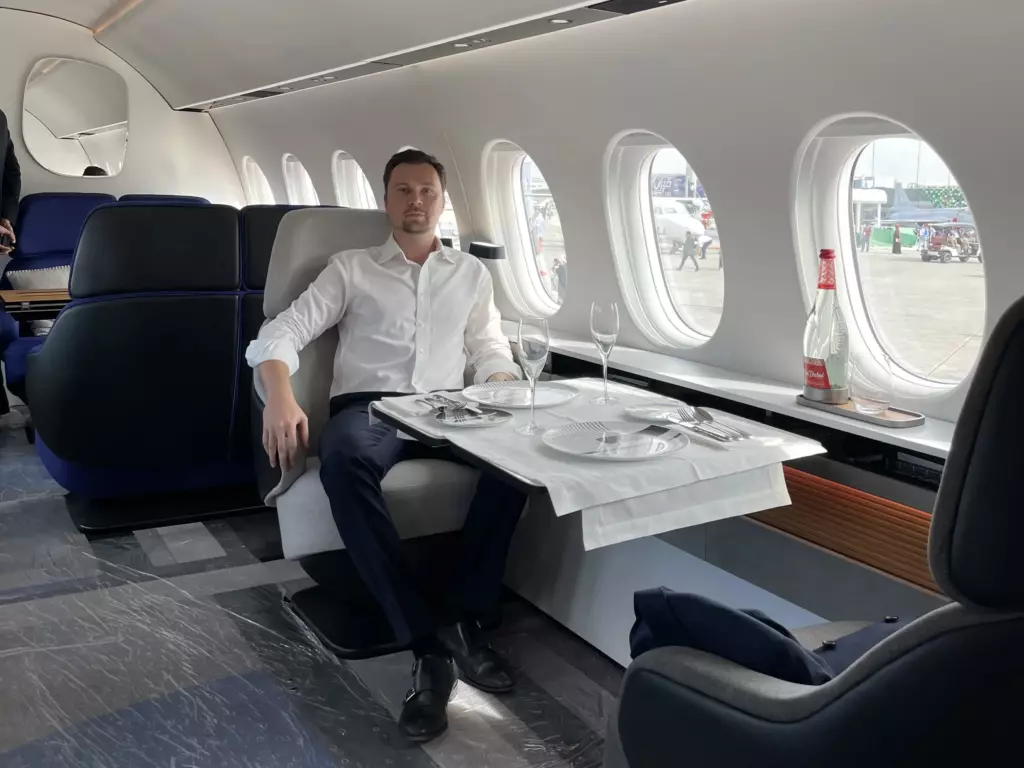
A class for those who need a maximum cabin without long-range prices: 8–10-hour flights like London–Dubai, Paris–Delhi, Dubai–Singapore. Three cabin zones allow a meeting, a meal and sleep at once. Typical tasks — carrying delegations, family travel in large groups, and government and corporate flights with 10–14 passengers. Send us a request — we'll prepare options, calculate running costs and analyse the best fit for your task.
What range and how many passengers do ultra-large jets have?
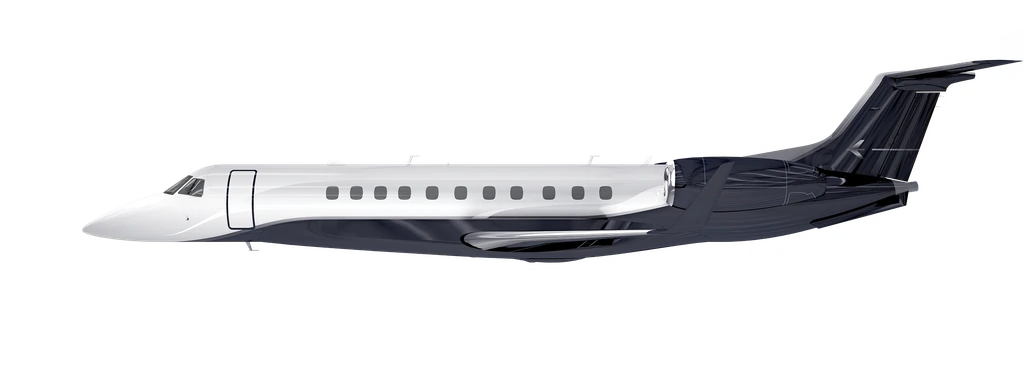
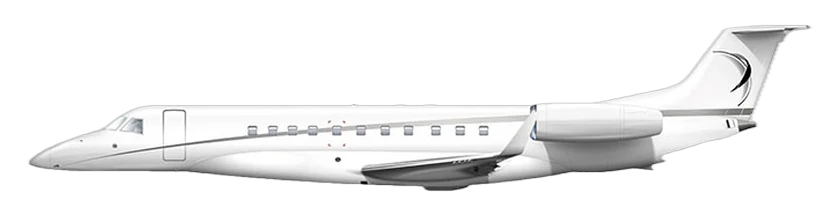
Capacity is 10–16 seats: the Legacy 600/650 take 13–14 passengers, the Challenger 850 up to 14–16. Range: Challenger 850 5,200 km, Legacy 600 6,000 km, Legacy 650 7,200 km, Gulfstream G450 8,060 km, the tri-jet Falcon 900LX 8,800 km. The Legacy's holds of up to 6.8 m³ are the most capacious in the segment short of long-range jets. Send us a request — we'll prepare options, calculate running costs and analyse the best fit for your task.
How does a ultra-large jet differ from neighbouring classes?
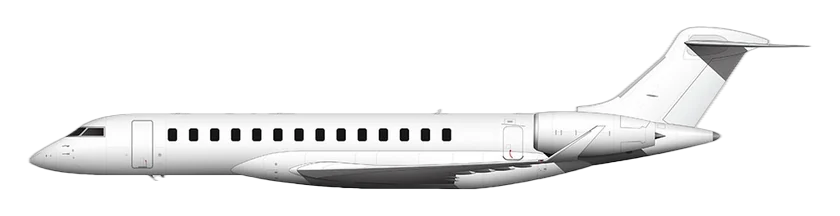
To the large class it adds a third cabin zone and up to 16 seats — but a notable part of the segment (Legacy, Challenger 850) is built on regional airliners, so the aircraft are heavier and climb more slowly. The long-range class (Global, Gulfstream G550+) gives 9,600–14,800 km and fresh airframes, but costs twice as much to buy. Here you get the maximum cabin for sensible money. Send us a request — we'll prepare options, calculate running costs and analyse the best fit for your task.
Which ultra-large jets are in the fleet and how do they differ?
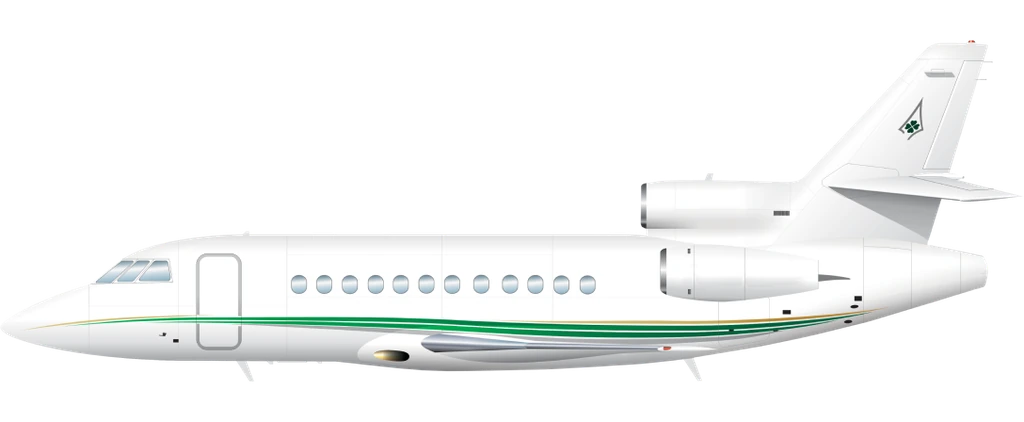
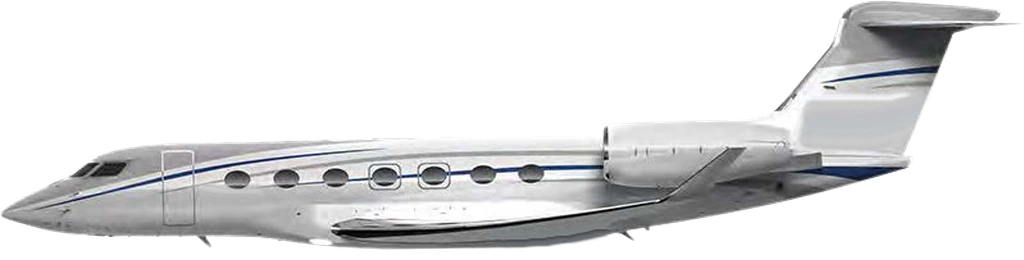
Five models: the Bombardier Challenger 850 — 14–16 seats, airliner cabin width; the Embraer Legacy 600 and 650 — three zones, a huge 6.8 m³ hold and the best price for capacity; the Gulfstream G450 — the fastest in the set with 8,060 km; and the Dassault Falcon 900LX — a tri-jet with 8,800 km and clearance for demanding short strips. Send us a request — we'll prepare options, calculate running costs and analyse the best fit for your task.
How do you choose an aircraft to buy for your needs?
Start from two numbers: the length of your typical route and the number of passengers. Up to 1,000 km and 4 people — a turboprop or light jet; 2,000–4,000 km — a midsize jet; nonstop intercontinental — a long-range jet. Then adjust for short runways, baggage volume and sleeping berths. We'll match a model to your profile and calculate the ownership economics. Send us a request — we'll prepare options, calculate running costs and analyse the best fit for your task.
New aircraft or pre-owned — which is the better buy?
A new aircraft means a factory warranty and a 1–3-year queue, but the price is at its peak. A pre-owned aircraft means immediate delivery and a price 30–60% lower, while engine time and history matter. For most buyers a fresh 3–7-year-old aircraft is optimal: the main depreciation has happened and plenty of life remains. We cost both options. Send us a request — we'll prepare options, calculate running costs and analyse the best fit for your task.
Which aircraft class should you choose for your routes and passengers?
Turboprops — up to 1,500 km, 4–9 seats; light jets — up to 4,000 km; midsize — a stand-up cabin and 4–6 hours; super-midsize and large — 6,300–7,400 km, 8–12 people; long-range — up to 14,800 km nonstop. Helicopters cover door-to-door legs up to 800 km. We'll match the class to your task. Send us a request — we'll prepare options, calculate running costs and analyse the best fit for your task.
How much does it cost to own an aircraft per year?
The bulk of costs are fixed — hangar, crew, maintenance, insurance — and independent of hours flown. At 300–400 h/year a guide: turboprop $0.6–0.9M, light jet ~$1.6M, midsize $2–2.4M, large $2.8–3M, long-range $3.8–4.7M. We calculate the exact figure for a specific model and your hours. Send us a request — we'll prepare options, calculate running costs and analyse the best fit for your task.
What drives the cost of a flight hour when you own an aircraft?
Three cost groups: direct (fuel, hourly reserves for engines and airframe), crew (salaries, training, hotels) and fixed (insurance, hangar, management), spread across hours flown. The more you fly, the lower the hour. A guide at 400 h/year runs from $1,500 on a turboprop to $10,000+ on a long-range jet. Send us a request — we'll prepare options, calculate running costs and analyse the best fit for your task.
How well does an aircraft hold its value and what matters for resale?
Liquidity depends on the model, fleet size, engine time and interior freshness. High-volume models (Phenom 300, Challenger 650, PC-12, G650ER) hold value better and sell in 60–120 days. When buying, look at residual value and demand — it protects your investment. We'll advise which models are most liquid in your budget. Send us a request — we'll prepare options, calculate running costs and analyse the best fit for your task.


 VTOL">

