Frequently asked questions
What is Daher known for and what is the TBM line?
France's Daher builds the TBM — the fastest production single-engine turboprops in the world. The current TBM 960 reaches 611 km/h — light-jet speed at turboprop economics. Range ~3,200 km, six seats, airliner-grade automation: auto-throttle, automatic descent on depressurisation and pilotless Autoland. Since 1990 more than 1,200 TBMs have been delivered. Send us a request — we'll prepare options, calculate running costs and analyse the best fit for your task.
How much does the TBM 960 cost and what does operation cost?
A new TBM 960 is about $4.8M, fresh TBM 940s on the pre-owned market $3.5–4.2M, early TBM 850s can be found at $2–2.5M. Operation is the key argument: burn of only ~220 L/hour versus 400+ for a comparable jet, direct costs around $700–900 an hour. On routes up to 1,500 km the TBM loses just 15–20 minutes to a light jet. Send us a request — we'll prepare options, calculate running costs and analyse the best fit for your task.
How does the TBM differ from the Pilatus PC-12?
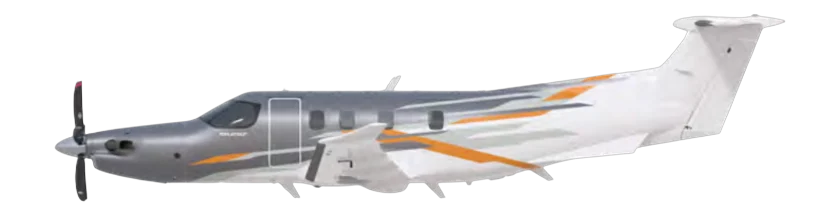
Both are single-engine PT6 turboprops, but the philosophy differs. The TBM 960 is about speed: 611 km/h versus ~500 for the PC-12, but the cabin is more compact with six seats. The PC-12 NGX is about capacity and versatility: 8–9 passengers, a cargo door, unpaved-strip operation. A family or executive with 'two-or-three and fast' routes leans to the TBM, a group to the Pilatus. Send us a request — we'll prepare options, calculate running costs and analyse the best fit for your task.
Which country is Daher from, how old is the TBM marque and how many built?
Daher is a French company; the TBM turboprop line (the Socata heritage) has been built since 1988. In that time more than 1,200 TBMs have been built — the fastest production single-engine turboprops in the world, operated mainly in the US and Europe. Send us a request — we'll prepare options, calculate running costs and analyse the best fit for your task.
What routes and tasks suit turboprops?
Turboprops are the optimum for flights up to 1,500–2,000 km: London–Geneva, Paris–Milan, Vienna–Munich. Their element is short and unpaved strips: a Pilatus PC-12 lands in 600 m, so thousands of airfields are reachable that a jet physically cannot use. An hour costs one and a half to two times less than a jet, and on legs up to 1,000 km the time penalty is only 15–25 minutes. Send us a request — we'll prepare options, calculate running costs and analyse the best fit for your task.
What range and how many passengers do turboprops have?
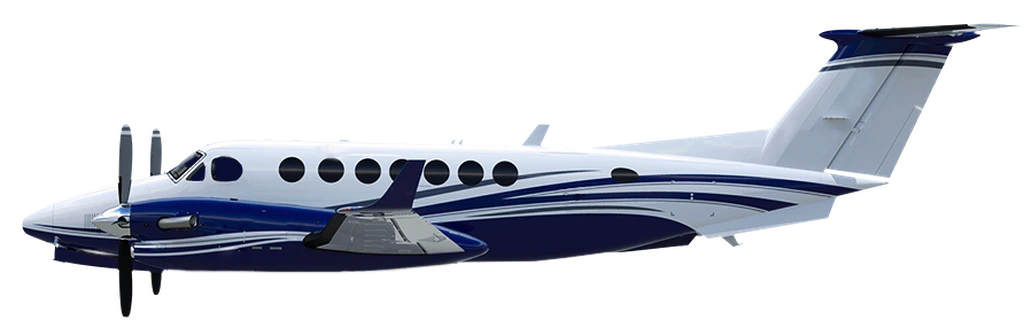
Single-engine aircraft take 4–9 passengers: the TBM 960 seats six over 3,200 km, the Pilatus PC-12 NGX up to nine over 3,400 km. The twin-engine King Air 360ER carries eight almost 5,000 km. Class cruise speed is 500–610 km/h. A rule of thumb: a full cabin cuts maximum range by 20–30%. Send us a request — we'll prepare options, calculate running costs and analyse the best fit for your task.
How does a turboprop differ from neighbouring classes?
A jet is faster — 750–850 km/h versus 500–610 — and flies higher, above turbulence. The turboprop answers with economics: 220–350 L/hour versus 500–700, a charter hour from $1,800 versus $3,000+, plus access to short unpaved strips. On legs up to 1,000 km the time difference is under half an hour, so short hops make sense by turboprop and long ones by jet. Send us a request — we'll prepare options, calculate running costs and analyse the best fit for your task.
Which turboprops are in the fleet and how do they differ?
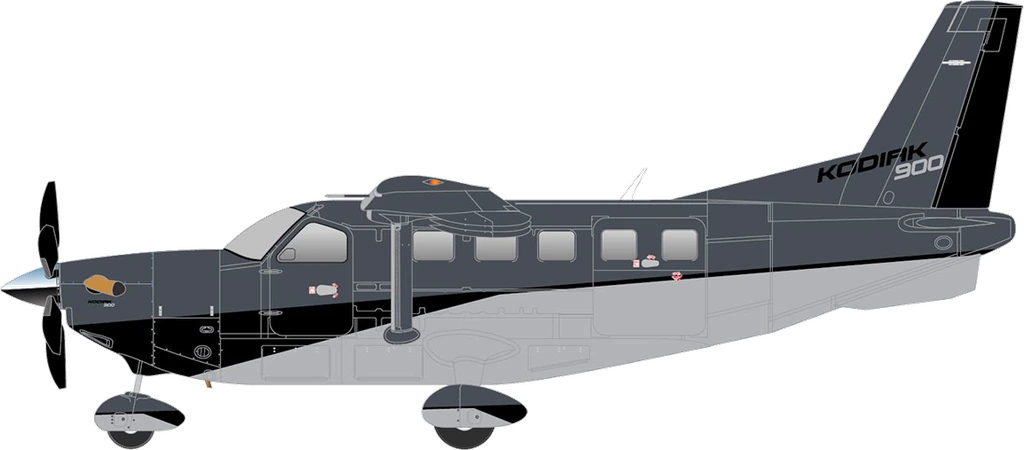
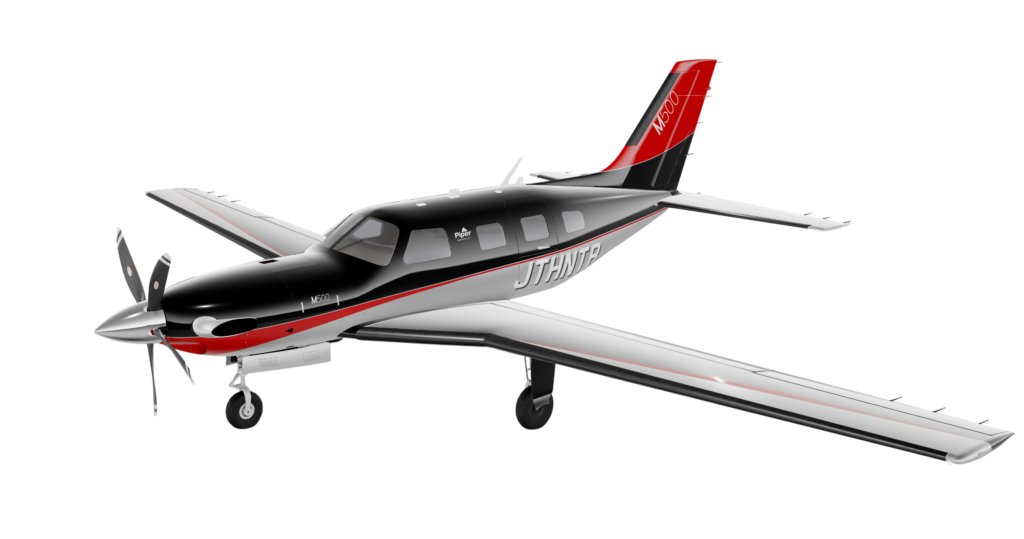
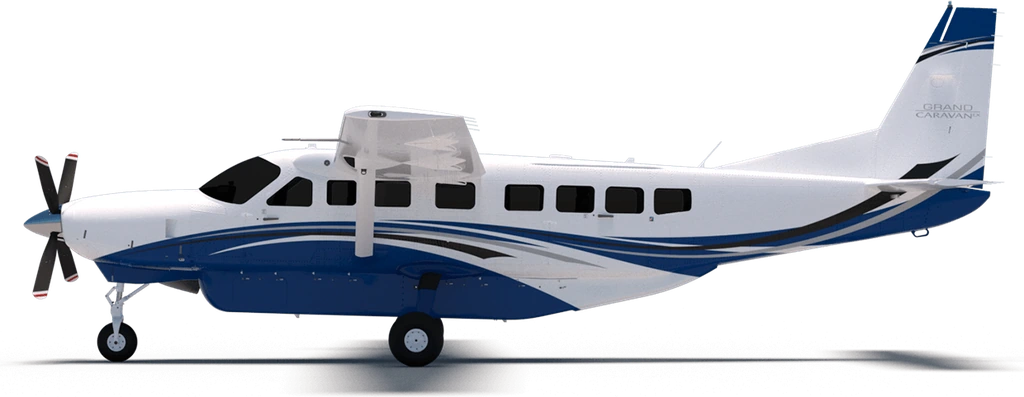
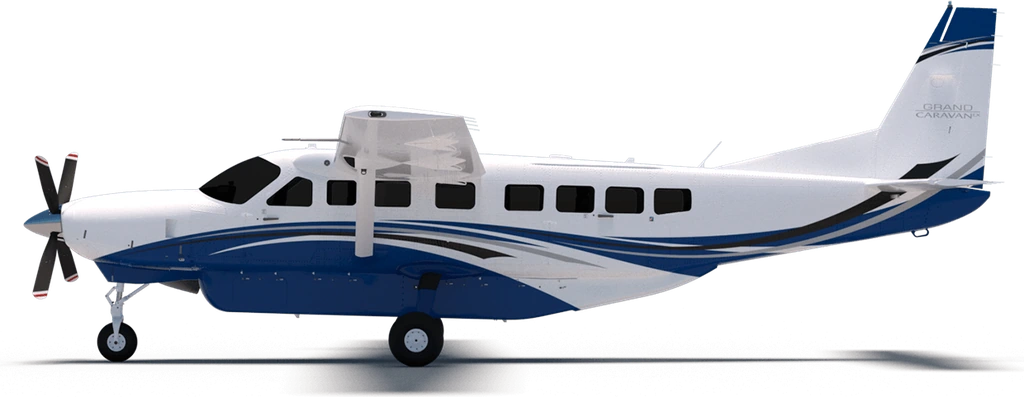
The fleet has 13 models: the fast Daher TBM 960 and Piper M700 Fury (556–611 km/h, 5–6 seats), the roomy Pilatus PC-12 NG/NGX/PRO with a cargo door and nine seats, the twin King Air 260 and 360ER for long legs up to 5,000 km, the business Piaggio Avanti Evo with jet speed and a stand-up cabin, and the affordable Piper M350/M500/M600SLS. Send us a request — we'll prepare options, calculate running costs and analyse the best fit for your task.
How do you choose an aircraft to buy for your needs?
Start from two numbers: the length of your typical route and the number of passengers. Up to 1,000 km and 4 people — a turboprop or light jet; 2,000–4,000 km — a midsize jet; nonstop intercontinental — a long-range jet. Then adjust for short runways, baggage volume and sleeping berths. We'll match a model to your profile and calculate the ownership economics. Send us a request — we'll prepare options, calculate running costs and analyse the best fit for your task.
New aircraft or pre-owned — which is the better buy?
A new aircraft means a factory warranty and a 1–3-year queue, but the price is at its peak. A pre-owned aircraft means immediate delivery and a price 30–60% lower, while engine time and history matter. For most buyers a fresh 3–7-year-old aircraft is optimal: the main depreciation has happened and plenty of life remains. We cost both options. Send us a request — we'll prepare options, calculate running costs and analyse the best fit for your task.