










Frequently asked questions
Praetor 500: what kind of aircraft is it and what to consider when buying?
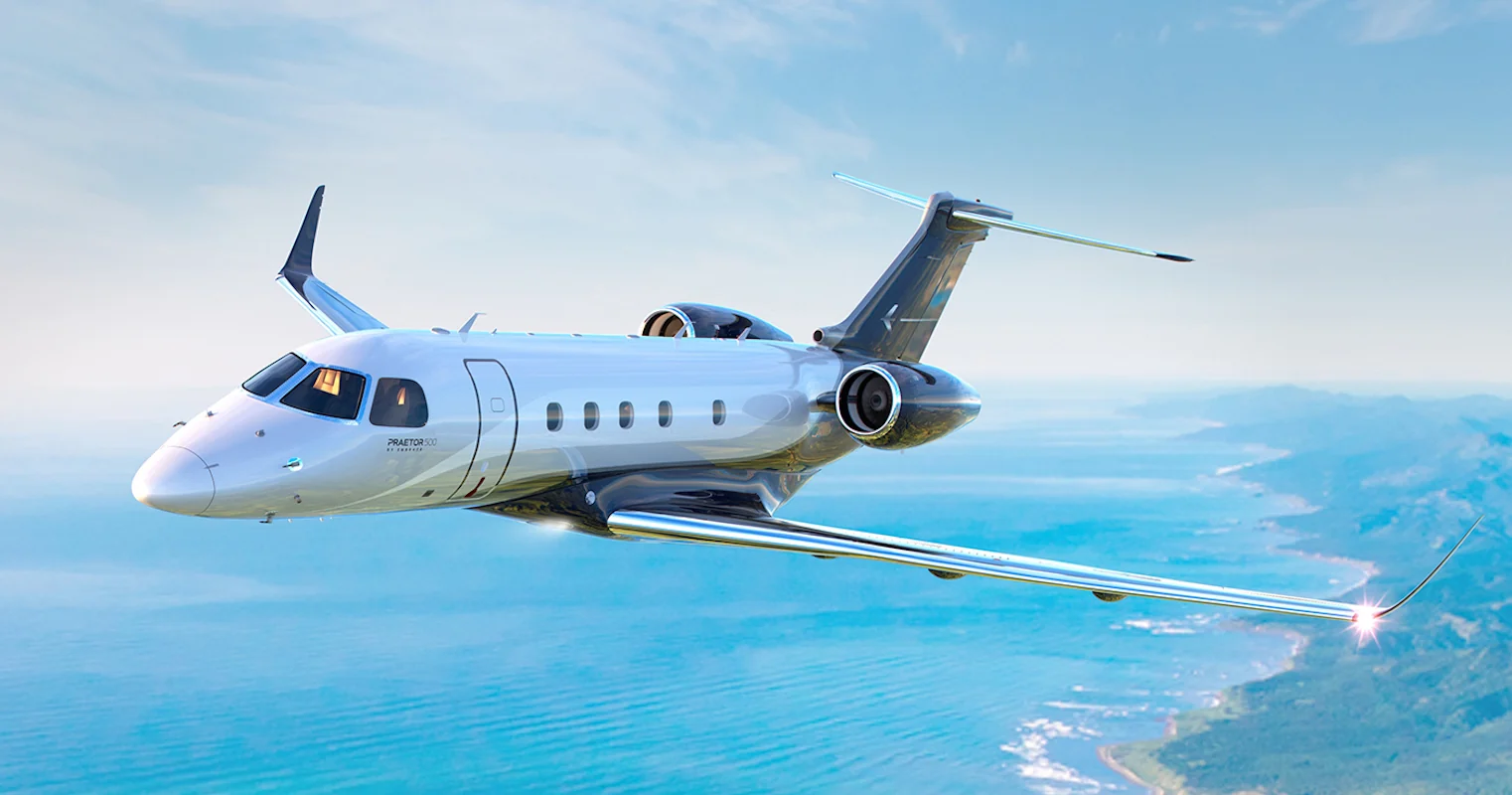
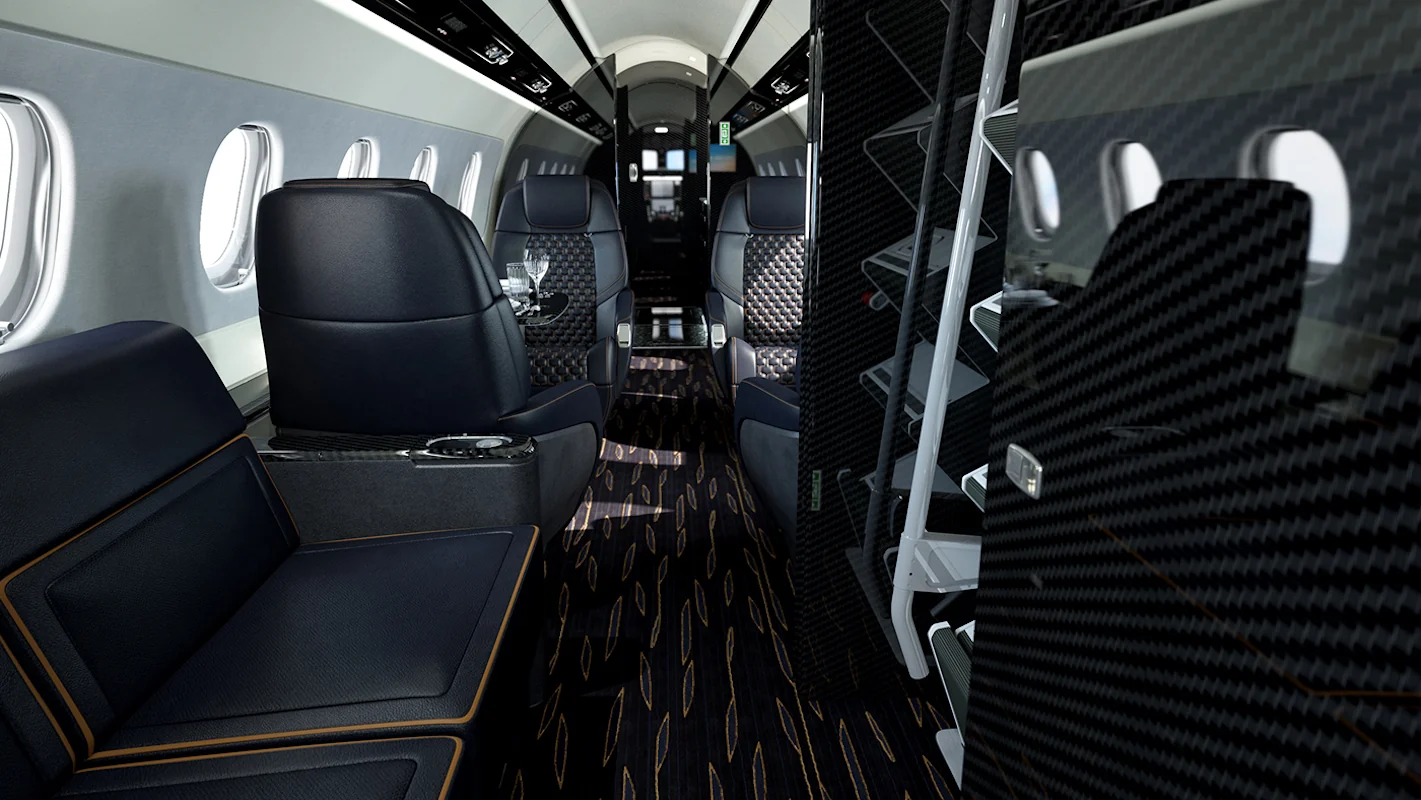
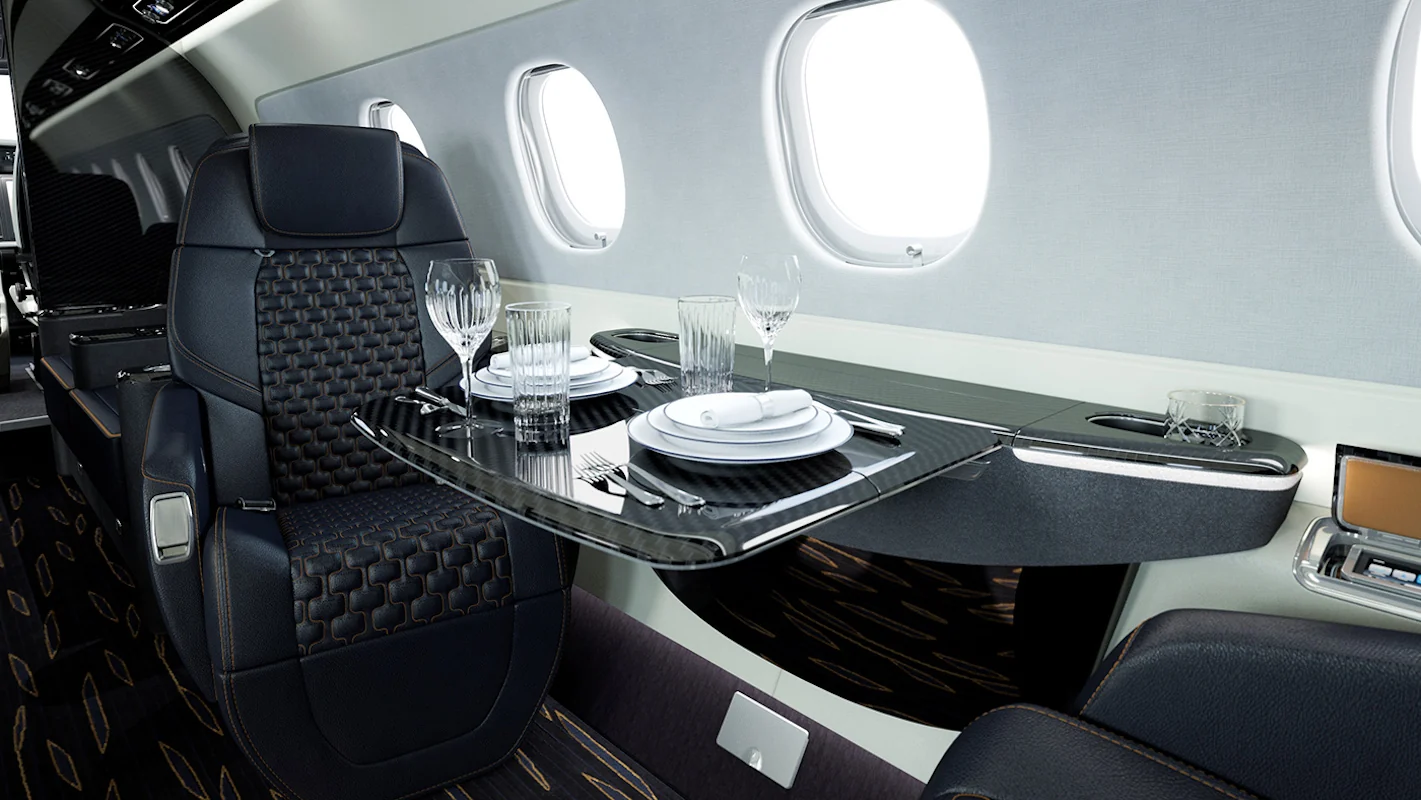
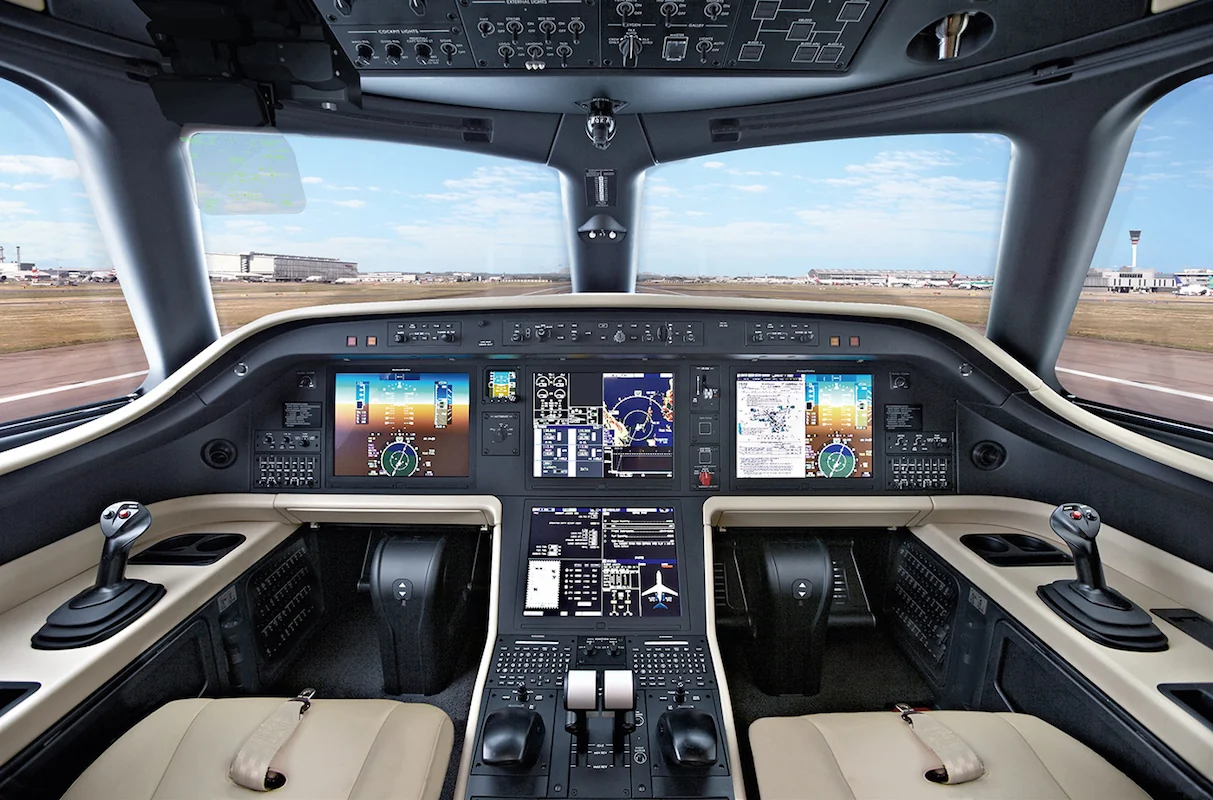
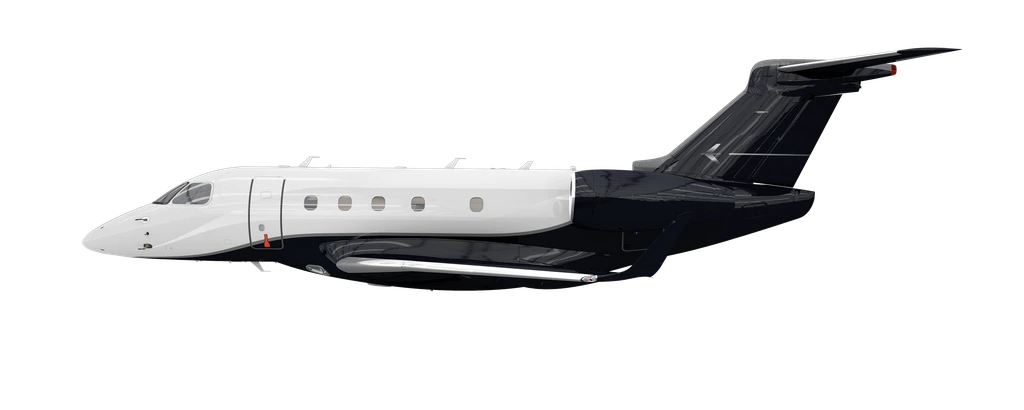
The Praetor 500 is Embraer's midsize jet with a class-record 6,186 km range: London–Dubai or Geneva–Cairo nonstop. Nine to ten seats, an 863 km/h cruise, Honeywell HTF7500E engines and full fly-by-wire control with active turbulence damping — technology no rival in the class offers. In production since 2019. A flight attendant and hot meals are available depending on cabin configuration. There is no in-flight baggage access — bags are loaded on the ground. On typical legs it covers routes such as Vienna–Munich · Vienna–Barcelona · Vienna–Dubai. Send us a request — we'll prepare options, calculate running costs and analyse the best fit for your task.
How much does the Praetor 500 cost: purchase and running costs?
Guide figures for the Praetor 500: average pre-owned price — $13M; new — $20M. Running costs at 300–400 h/year — about $2.30M/year, or $5,758 per flight hour. The final figure depends on year, hours flown, engine-programme status and configuration. Send us a request — we'll prepare options, calculate running costs and analyse the best fit for your task.
What is Embraer known for and which business jets does it build?
Brazil's Embraer is the world's third-largest maker of civil aircraft after Airbus and Boeing. Its business line: the very light Phenom 100EX, the light Phenom 300E — the world's best-selling light jet for 12 years running — and the super-midsize Praetor 500/600 with up to 7,440 km of range. Signature style: BMW-studio cabins and full fly-by-wire on the Praetor. Send us a request — we'll prepare options, calculate running costs and analyse the best fit for your task.
How reliable are the Phenom and Praetor and what about service?
The Phenom 300 fleet has passed 700 aircraft with dispatch reliability above 99.8% — the PW535E engines run 5,000 hours to overhaul. The Praetor inherited the airframe of the proven Legacy 450/500 line. Embraer's service network in Europe and the Middle East (Paris, Lisbon, Dubai) fully covers regional operators' needs, and heavy checks do not require a flight to the Americas. Send us a request — we'll prepare options, calculate running costs and analyse the best fit for your task.
How well does Embraer hold value on the pre-owned market?
The Phenom 300 is a liquidity benchmark: a five-year-old 300E sells for $9–10.5M against a new $12.5M, and 30–60-day exposure is among the shortest on the market. The Praetor 600, short of new slots, sells at minimal discount. Early Phenom 100 ($2.3–3M) is a popular first jet, with steady demand even in weak quarters. Send us a request — we'll prepare options, calculate running costs and analyse the best fit for your task.
How does the Praetor 600 differ from the Challenger 3500?
Two super-midsize leaders. The Praetor 600 is longer-legged — 7,441 km versus 6,297 km for the Challenger — and has full fly-by-wire with active turbulence damping. The Challenger 3500 answers with the widest cabin in class (2.19 m versus 2.08 m) and a far larger fleet of 300/350 predecessors, meaning a developed service infrastructure. List prices are close: $21–27M. Send us a request — we'll prepare options, calculate running costs and analyse the best fit for your task.
What routes and tasks suit midsize jets?
The midsize class covers 4–6-hour legs: London–Dubai, Geneva–Istanbul, Vienna–Dubai. A range of 3,900–6,200 km allows nonstop flights from Europe to the Gulf, India and North Africa. The cabin now allows standing (1.73–1.83 m), work at a table and a flight as a working day — the class is chosen for its balance of range, comfort and price. Send us a request — we'll prepare options, calculate running costs and analyse the best fit for your task.
What range and how many passengers do midsize jets have?
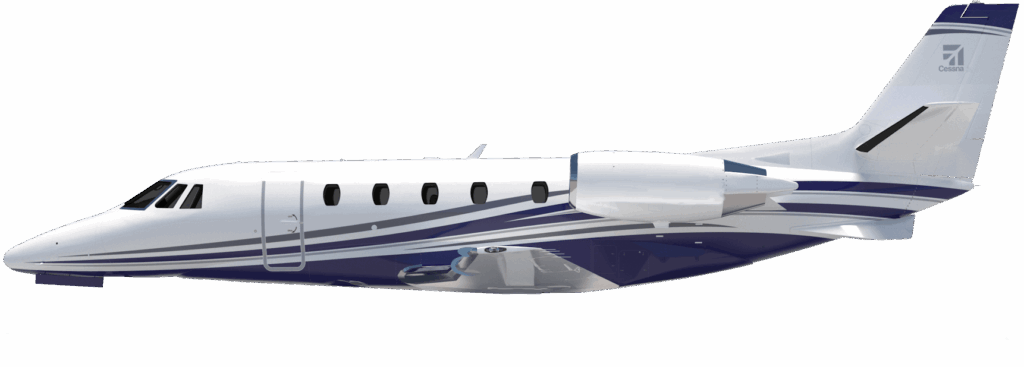
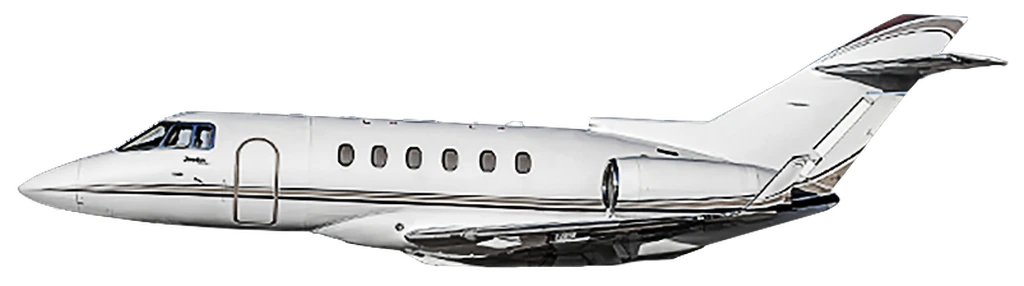
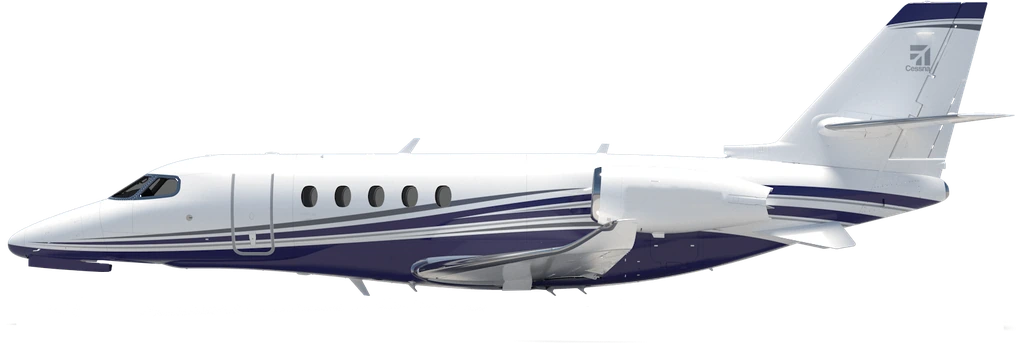
Layouts are 8–9 seats, with up to nine passengers on the Citation Latitude and Praetor 500 with two pilots. Range: Citation XLS+ and PC-24 about 3,900 km, Hawker 800XP/900XP 4,600–4,900 km, Latitude 5,280 km, Praetor 500 a class-record 6,200 km. Cruise 780–850 km/h. Holds of 1.3–2.3 m³ take a whole group's gear, including skis. Send us a request — we'll prepare options, calculate running costs and analyse the best fit for your task.
How does a midsize jet differ from neighbouring classes?
To the light class the midsize adds a stand-up cabin, an extra 1,000–2,000 km and a full galley — but an hour is $1,500–2,500 dearer. The super-midsize goes further: 6,300–7,400 km, a flat floor, sleeping berths — and another $1,000–2,000 on the hour. Midsize is justified on 4–6-hour routes for up to nine people; transatlantic and large parties call for super-midsize. Send us a request — we'll prepare options, calculate running costs and analyse the best fit for your task.
Which midsize jets are in the fleet and how do they differ?
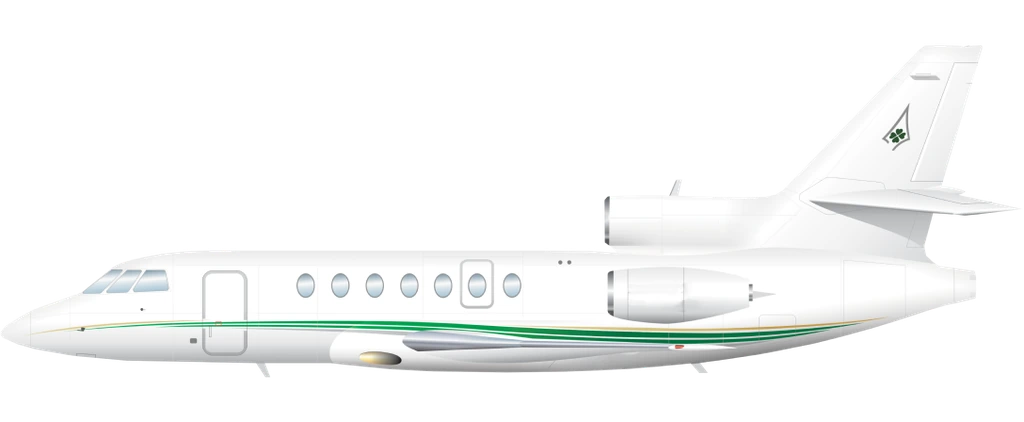
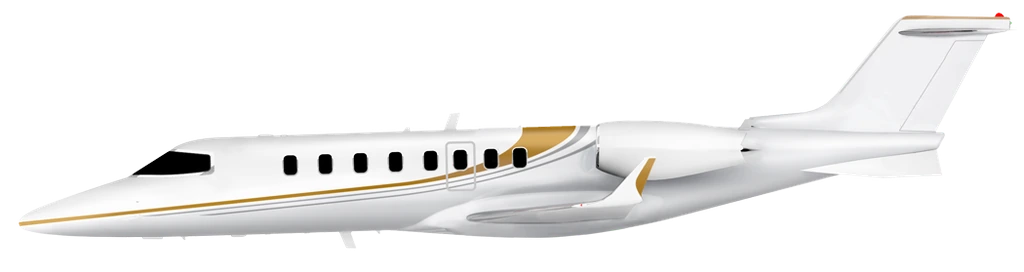
Eleven models: the newest Cessna Citation Ascend, Latitude (flat floor, 1.83 m cabin) and Sovereign+, the proven XLS+ Gen 2 — the world's best-selling midsize — the long-legged Embraer Praetor 500 (6,200 km), the 'off-road' Pilatus PC-24 cleared for unpaved strips, the classic Hawker 750/800XP/900XP with the widest cabin of its generation, the fast Learjet 60XR and the compact Gulfstream G150. Send us a request — we'll prepare options, calculate running costs and analyse the best fit for your task.
How do you choose an aircraft to buy for your needs?
Start from two numbers: the length of your typical route and the number of passengers. Up to 1,000 km and 4 people — a turboprop or light jet; 2,000–4,000 km — a midsize jet; nonstop intercontinental — a long-range jet. Then adjust for short runways, baggage volume and sleeping berths. We'll match a model to your profile and calculate the ownership economics. Send us a request — we'll prepare options, calculate running costs and analyse the best fit for your task.
New aircraft or pre-owned — which is the better buy?
A new aircraft means a factory warranty and a 1–3-year queue, but the price is at its peak. A pre-owned aircraft means immediate delivery and a price 30–60% lower, while engine time and history matter. For most buyers a fresh 3–7-year-old aircraft is optimal: the main depreciation has happened and plenty of life remains. We cost both options. Send us a request — we'll prepare options, calculate running costs and analyse the best fit for your task.