





Frequently asked questions
BBJ 737-8 MAX: what kind of aircraft is it and what to consider when buying?
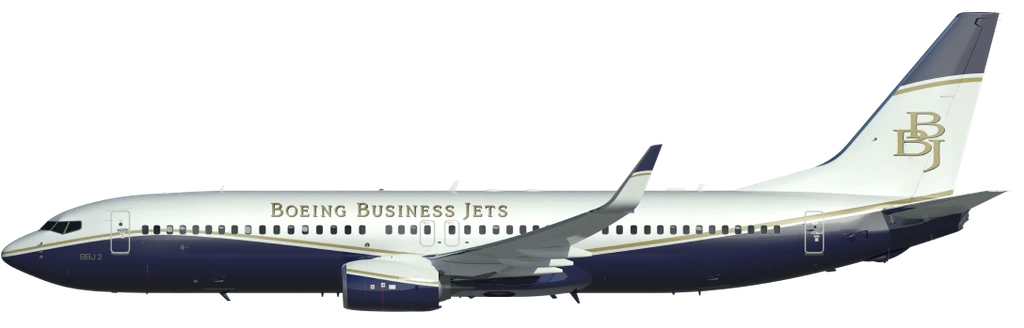
The BBJ 737-8 is the sweet spot of the line: a cabin of about 79 m² for 19–50 seats, a range of about 11,900 km with extra tanks and LEAP-1B engines. Built since 2018. Equally at home as a 19-seat flying residence or a corporate aircraft with fifty business-class seats for moving senior management. The cabin has a flight attendant and hot meal service. The baggage compartment is accessible in flight. On typical legs it covers routes such as Paris–Milan · Paris–Lisbon · London–Mumbai. Send us a request — we'll prepare options, calculate running costs and analyse the best fit for your task.
How much does the BBJ 737-8 MAX cost: purchase and running costs?
Guide figures for the BBJ 737-8 MAX: average pre-owned price — $60M; new — $118M. Running costs at 300–400 h/year — about $5.82M/year, or $14,553 per flight hour. The final figure depends on year, hours flown, engine-programme status and configuration. Send us a request — we'll prepare options, calculate running costs and analyse the best fit for your task.
What is Boeing Business Jets and which models are in the range?
BBJ is Boeing's division building VIP versions of production airliners since 1996; more than 260 have been delivered. The current range: BBJ 737-7 MAX, BBJ 737-8 MAX (~79 m² cabin) and BBJ 737-9 MAX, plus wide-body BBJ 787-8/9 and BBJ 777X. Extra fuel tanks are a signature feature: they turn a medium-haul 737 into an intercontinental liner. Send us a request — we'll prepare options, calculate running costs and analyse the best fit for your task.
What range does the BBJ have and where can it fly nonstop?
The BBJ 737-7 MAX with extra tanks flies up to 13,000 km, the BBJ 737-8 about 12,000 km: London–New York or Paris–Los Angeles nonstop. The wide-body BBJ 787-8 covers ~18,000 km — any route on the planet with a single refuel. Meanwhile a 79–110 m² cabin lets you fly with a family and a team of 20–40. Send us a request — we'll prepare options, calculate running costs and analyse the best fit for your task.
How much does a BBJ cost new and pre-owned?
A new BBJ 737 MAX runs $110–130M: ~$95M green aircraft plus $20–35M for interior and connectivity. The pre-owned market is more accessible: classic first-generation BBJs from 1999–2008 sell for $18–40M depending on CFM56 engine time and cabin condition. Ownership runs $4–6M a year at an average 400 hours. Send us a request — we'll prepare options, calculate running costs and analyse the best fit for your task.
How does the BBJ differ from the Airbus ACJ?
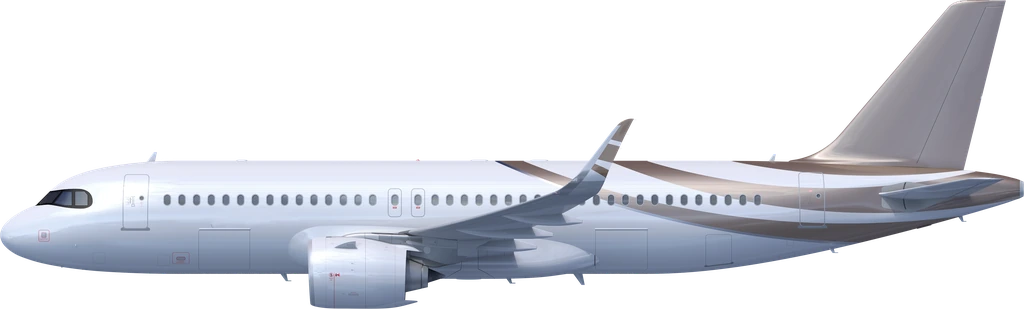
BBJ 737 MAX versus ACJ320neo: the Boeing has slightly more range in the MAX 7 version (up to 13,000 km) and the world's largest fleet of a single airliner type, simplifying crew and parts sourcing anywhere. The ACJ answers with a wider cabin (3.70 m versus 3.53 m) and fly-by-wire. Ownership costs and list prices are comparable; mission details decide. Send us a request — we'll prepare options, calculate running costs and analyse the best fit for your task.
What routes and tasks suit business liners?
A business liner is a flying residence or headquarters: cabins of 60–270 m² hold bedrooms, showers, meeting rooms for 8–12 and a staff area. Typical scenarios: flights for heads of state and corporations with 15–50-person delegations, family travel with staff, and artist and sports-team tours. Where a group feels cramped even in a Global, liner territory begins. Send us a request — we'll prepare options, calculate running costs and analyse the best fit for your task.
What range and how many passengers do business liners have?
The ACJ TwoTwenty — 18 seats and 10,500 km; the ACJ320neo — 25 seats and 11,100 km; the BBJ 737-8 — 11,700 km with a 79 m² cabin; the Lineage 1000E — 19 seats and 8,500 km; the Sukhoi Business Jet — 19–23 seats and up to 7,200 km. Wide-body ACJ330neo and BBJ 787 cover 17,000–18,500 km — any pair of cities on the planet nonstop. Send us a request — we'll prepare options, calculate running costs and analyse the best fit for your task.
How does a business liner differ from neighbouring classes?
Cabin area is 60–270 m² versus 25–40 m² on a Global or Gulfstream: full bedrooms, a shower and a cinema appear. The flip side: a liner needs runways from 2,000–2,500 m and full airport infrastructure, an hour costs one and a half to two times more, and cruise is lower (M0.78–0.85 versus M0.90). Up to 12–15 passengers a jet is more rational; more — a liner. Send us a request — we'll prepare options, calculate running costs and analyse the best fit for your task.
Which business liners are in the fleet and how do they differ?
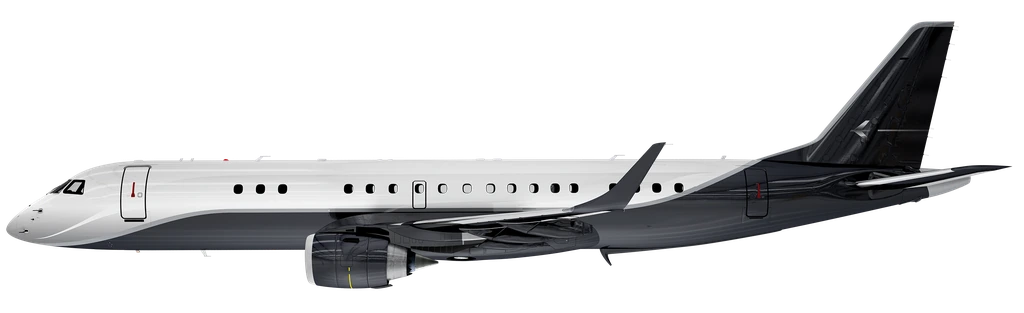
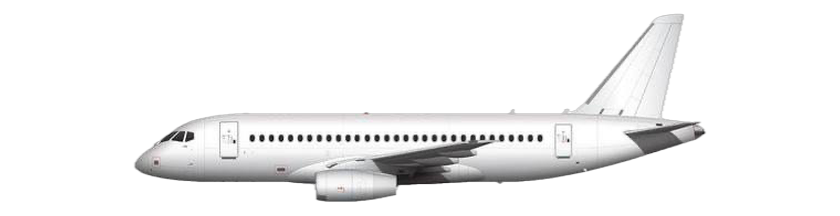
Fourteen aircraft: the Airbus ACJ line from the compact TwoTwenty to the wide-body ACJ350-9 (up to 19,000+ km), Boeing BBJ 737 MAX in three sizes and the long-range BBJ 787/777-8, the Embraer Lineage 1000E with five cabin zones, and the Sukhoi Business Jet — 19–23 seats at half the price of Western equivalents, supported in the CIS. Send us a request — we'll prepare options, calculate running costs and analyse the best fit for your task.
How do you choose an aircraft to buy for your needs?
Start from two numbers: the length of your typical route and the number of passengers. Up to 1,000 km and 4 people — a turboprop or light jet; 2,000–4,000 km — a midsize jet; nonstop intercontinental — a long-range jet. Then adjust for short runways, baggage volume and sleeping berths. We'll match a model to your profile and calculate the ownership economics. Send us a request — we'll prepare options, calculate running costs and analyse the best fit for your task.
New aircraft or pre-owned — which is the better buy?
A new aircraft means a factory warranty and a 1–3-year queue, but the price is at its peak. A pre-owned aircraft means immediate delivery and a price 30–60% lower, while engine time and history matter. For most buyers a fresh 3–7-year-old aircraft is optimal: the main depreciation has happened and plenty of life remains. We cost both options. Send us a request — we'll prepare options, calculate running costs and analyse the best fit for your task.