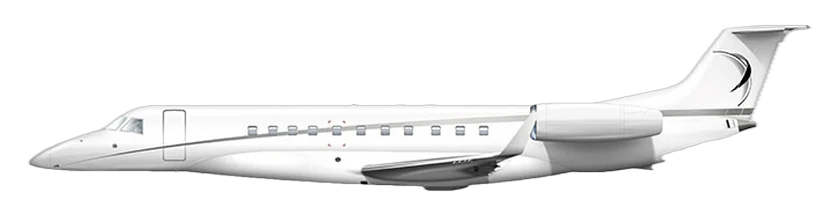
France is attractive to buyers for two reasons. First, geography: Le Bourget remains the main business aviation airport in continental Europe, while Nice and Cannes handle the heaviest seasonal traffic in the Mediterranean. Second, manufacturing: the Dassault and Daher factories are located here, meaning servicing of the Falcon and TBM is performed where these aircraft were built.
The taxation process is the same as in other EU countries: there is virtually no duty, with import VAT remaining a significant amount, depending on the ownership structure. It's also worth noting that compliance with temporary import conditions in France is closely monitored, and violating the regulations is costly.
Below are the benefits of French registration, when choosing a foreign registry, how duties and VAT are calculated, where the aircraft is serviced, and what is checked during the transaction.
What are the benefits of registering in France?
The registry is maintained by the Main Directorate of Civil Aviation, prefix F-. Registration in a Union member state provides the following:
- Full access to the European sky. Operation according to EASA regulations, flights within the union without permits typical for third-country aircraft.
- Factory service for French types. For the Falcon and TBM, service is performed by the manufacturer, with full access to documentation, tooling, and engineering support. For owners of this type, this is the most compelling argument for basing their operations in the country.
- Recognition of documents. EASA Certificate of Airworthiness and Personnel Certificates are accepted in the Member States without further validation.
- Dense infrastructure in the Paris area and on the Riviera. Line handling, hangar storage, ground handling and crew services are available at major business aviation airports.
- A clear legal environment for a transaction without financing. The rights to the aircraft are registered by the national authority, and the dispute is considered under French law.
When Local Registration Is the Right Choice
- Owning a Falcon or TBM aircraft based in-country, manufacturer servicing trumps most other considerations.
- Base and crew in France, flights mainly within the union.
- Purchase using your own funds, without collateral financing.
- Commercial operation with a French Air Operator Certificate.
- The owner is a company carrying out taxable activities in France: in this case, the import tax can be deducted.
When choosing foreign registration
- Provision and financing. The country is not a party to the Cape Town Convention, so there is no international registration of a security interest or irrevocable power of deregistration. The financing party typically offers a registry where the convention is in effect, and this is the most common reason for flag changes in Europe.
- EASA administrative burden. For complex aircraft in non-commercial operation, Part-NCC requirements apply: procedures, a safety management system, and designated managers. Private registries outside the union do not require these requirements.
- Privacy of ownership. Information about the owner is entered into the national register.
- Registry service. Private registries operate 24/7, process re-registrations and issue documents quickly, and assign a manager to the owner.
- Tax structure of the transaction. The country of import and the country of registration may not coincide, and the choice of the country of registration affects the amount of import VAT more than the choice of registry.
- Commercial operation under foreign registration Under Article 83-bis of the Chicago Convention, supervision is transferred to the State of the Operator.
Alternatives
| Registry |
For what task? |
What to consider |
| F- France |
base and maintenance in the country, flights within the union, ownership of Falcon or TBM |
country outside the Cape Town Convention; Part-NCC requirements |
| 9H Malta |
Operation under EASA rules with participation in the Cape Town Convention is a combination that provides both access to European skies and clear security for creditors |
EASA requirements in full |
| M - Isle of Man |
private and corporate ownership, 24-hour registry, convention is widespread |
commercial transport is not allowed |
| 2- Guernsey |
Private ownership and commercial operation; aircraft with a maximum takeoff weight of 5,700 kg are available to owners from any country. |
For lighter types, communication with the islands or on-site servicing is required; the registry does not have its own service base |
| EI and EJ Ireland |
Participation in the convention since 2005, the International Registry is located in Dublin; the EJ mark is reserved for business jets |
The requirements for the owner are aimed at communication with the states of the union |
| N- USA |
wide service network and availability of components |
A US citizen, corporation, or ownership trust is required. |
| T7 San Marino, P4 Aruba, VP-B Bermuda, VP-C Caymans |
foreign registration when operated by a local company under Article 83-bis |
a valid agreement between states is required |
| A6 UAE |
if the actual base is Dubai or Abu Dhabi |
presence in the UAE is required |
Conditions for each register are in the section aviation registers.
Duties and VAT
Civil aircraft are imported into the Union at a zero duty rate upon confirmation of their civil purpose, so import VAT remains a significant amount. The exemption under Article 148 of the VAT Directive applies only to aircraft used by airlines on international routes for a fee; private and corporate aircraft are not exempt.
In France, a standard rate of 20% applies. The tax is calculated based on the aircraft's customs value, taking into account delivery and insurance to the EU border.
Import VAT is deductible if the aircraft is used for taxable purposes—commercial use or the activities of the owner company, which qualifies for the deduction. If the aircraft is used for private purposes, the tax remains an expense. This is why the ownership structure is determined before the transaction, not after importation: it cannot be changed later.
Non-residents of the Union have access to the temporary import regime: up to six months of continuous import duty- and tax-free, provided the aircraft is registered outside the Union, the owner is established outside the Union, and the user is not a resident. This regime terminates commercial use, and no maintenance is performed under it. Repairs are processed within the customs territory, with taxation only on the cost of the work.
In France, this point requires special attention. Compliance checks for temporary import conditions are conducted thoroughly, and if a violation is detected—for example, commercial use, exceeding the deadline, or the actual use by a resident—duty and tax are assessed retroactively, and the aircraft may be detained until resolution is achieved. Therefore, the regime is planned before the initial arrival, rather than issued upon arrival.
Maintenance: where and what is done
France is the country of origin, and this determines the service landscape. For the Falcon, factory centers operate in Le Bourget and Bordeaux, and for the TBM, in Tarbes, where these aircraft are manufactured. For the Embraer, the manufacturer's authorized center operates in Le Bourget, and for the Textron Aviation line, it operates in the same location in the Paris area.
For Gulfstream and Bombardier, manufacturers' specialized centers are located outside the country, with the closest centers in the UK and Germany. Line maintenance and troubleshooting for these types is performed in France; basic configurations require a one- to two-hour flight.
There is also an authorized manufacturer's center for Pilatus turboprop aircraft in the country.
Spare parts for French types are available with minimal lead times, and engineers with certification for these types are readily available—for Falcon and TBM, this is the best-prepared market in Europe.
How burdensome this is depends on the aircraft class. For light and turboprop aircraft, some work can actually be performed at the aircraft's home base: a technical crew arrives with equipment and documentation, hangar facilities are set up on-site, and ferrying is only necessary for heavy aircraft. For medium and heavy business jets, this arrangement is almost never used—the aircraft is sent to a service center. This is normal practice, but ferrying, crew accommodations, and downtime are planned in advance and factored into the ownership budget.
What to consider when choosing an aircraft
The typical mission is flights within Europe and the Mediterranean: Paris, Nice, and Marseille are connected to European cities within one to three hours. For these routes, a turboprop or light jet is sufficient, and the choice is determined by the number of passengers and runway length requirements, not by the flight range.
A separate criterion that is often overlooked is the infrastructure available for a specific type. Before signing a contract, it's worth checking four things: is there a service center for this type in the country or within a reasonable distance? Is there an operator willing to manage the aircraft? Where is the spare parts and consumables warehouse located? Are pilots and engineers qualified for this type available? An aircraft with no nearby service center or trained personnel is more expensive to operate than a simpler aircraft due to ferry times, waiting for components, and the cost of training the crew and maintenance personnel.
If your goals include the Middle East, West Africa, or North America, you'll need a medium or heavy jet. There are 52 business aviation operators in the country at 40 airports (operators of France), and it is easier to find a crew and engineer for French types than anywhere else in Europe. Let's select a model for the task и let's compare the characteristics — taking into account both the routes and what this model is supported by on site.
What is checked in a transaction
Before purchasing, four things are checked: the title and the absence of encumbrances, the completeness of the technical documentation, the remaining engine life and their participation in maintenance programs, and the history of damage and repairs. The pre-purchase inspection is conducted at an independent maintenance facility and takes one to three weeks, depending on the aircraft class. Its results serve as the basis for price revisions: hidden work worth tens of thousands of dollars is regularly uncovered. Payments for the transaction are processed through an escrow account, with the funds and title transferred simultaneously.