Frequently asked questions
How Business Aviation Works
What is an AOC and why does an operator need one?
An AOC is the air operator certificate, the authorities permission to fly commercially. Without one a company may not sell flights, so the certificate and its status are checked before any booking is confirmed.
Who is responsible for flight safety, the broker or the operator?
The operator is responsible for the flight itself: its certificate, its crew, its maintenance. The broker is responsible for choosing the operator and verifying its approvals, insurance and record before offering the aircraft.
What is an FBO and how is it different from a VIP lounge?
An FBO is a separate business aviation terminal with its own desk, controls and apron access. A VIP lounge sits inside the main terminal: the service is better, but the passenger flow and procedures are still those of scheduled flights. In practice you arrive 15–20 minutes before departure rather than two hours.
What is a slot and why does it move a departure?
A slot is the window an airport allocates for take-off or landing. At busy airports and on peak dates free windows are scarce, so a departure is sometimes shifted by 30 to 60 minutes to fit the slot that was granted. At congested hubs the limits are strict: Tokyo Haneda allocates just 16 daytime slots a day to business aviation.
How does a private flight differ from a commercial one on paper?
A flight is operated either commercially, under an operator certificate, or privately, on the owner aircraft for their own use. That determines the approvals, the taxes and who may be carried. A charter arranged through a broker is always a commercial flight.
Pricing and Payment
Why does the price change after the first request?
The first figure is a guide based on aircraft type. The final price depends on the specific aircraft, where it is based, airport fees, crew overnight costs and local business aviation taxes, and is confirmed once operators respond for your dates. The spread between classes is wide: about $700 an hour for a turboprop, $5,100 for a midsize jet and $8,400 for a heavy jet (AOPA).
What is a positioning flight and how is it charged?
Positioning is the flight from the aircraft home base to your departure airport and back. Those hours are billed, which is why an aircraft based nearby can work out cheaper than a nominally lower-priced one further away. Positioning is a large part of the market: about 40% of private flights are flown empty.
Can a flight be paid for by a company?
Yes, that is standard: the contract is signed with the company, payment is made by bank transfer and the operator or broker issues the closing documents. Bank details and payment purpose are agreed before signing.
Is the money refunded if a flight is cancelled?
Cancellation terms are set out in the charter contract and depend on timing: the closer to departure, the higher the retention, up to the full price in the final hours. If the operator cancels, funds are refunded or moved to a new date.
What is escrow and when is it used?
Escrow is a third-party account holding funds until the conditions of a deal are met. Charter does not need it, but in an aircraft purchase or sale the deposit and settlement go through escrow so that funds and title change hands at the same moment.
What is not included in the flight price?
Requests outside the standard package are usually billed separately: premium spirits and special catering, ground transport and helicopter transfers, excess or oversized baggage, and aircraft standby time if the programme changes mid-trip.
Documents and Formalities
What documents do passengers need?
A passport valid for the route, a visa if the destination requires one, and birth certificates plus consent forms for children travelling without both parents. Details of every passenger go to the operator in advance because they are used in the permit applications. The final passenger list with passport details is fixed by the operator about 24 hours before departure.
Is a visa still required on a business jet?
Yes. A private flight does not change visa rules: they depend on your nationality and the destination, not on the type of aircraft. Only the procedure differs — control takes place in the business aviation terminal and without queues.
How do passport and customs control work at an FBO?
Officers come to the flight: passports are checked in the FBO lounge or at the aircraft steps, and baggage is screened selectively. It usually takes minutes, but the rules on currency, goods and animals are the same as on scheduled flights.
Can I depart from an airport without international status?
Only if it has a border crossing point. If it does not, the international flight departs from the nearest airport with border control, while domestic sectors can operate from smaller airfields.
How long do overflight and landing permits take?
For most destinations, from a few hours to a day. Some countries need longer: permits for China take from three working days, and several countries in Asia and Africa from two. That lead time sets the earliest possible departure date.
On Board
Is there internet and phone service on board?
Most modern aircraft have satellite internet, though quality depends on the equipment and the region. If connectivity is critical, say so in advance: the system on the specific aircraft is verified before booking.
Can I bring my own catering on board?
Yes, if it is prepared food from a restaurant or your own chef. The operator arranges delivery and storage, and some countries restrict food imports, which is checked before departure.
How is oversized baggage carried — skis, golf clubs, instruments?
It travels in the hold or the cabin, but its dimensions determine the class of aircraft: light jets have small holds. Give quantities and sizes with the request, otherwise space may not be there on the day.
What happens if medical help is needed in flight?
There is a first aid kit on board, the crew is trained in first aid and can contact ground-based medical services. If necessary the captain diverts to the nearest suitable airport. Known medical conditions should be declared in advance — they affect routing and alternates. Air ambulance aircraft carry a vital-signs monitor, a ventilator, a defibrillator and two to four infusion pumps, with physicians and critical care nurses on the team.
Can the route be changed in flight?
Sometimes: the captain requests the change from air traffic control while the operator arranges new permits and slots. The answer depends on fuel reserves, crew duty limits and the receiving airport, so it is never instant. The limits are fuel reserves and night curfews: Narita, for example, accepts flights only between 06:00 and 23:59.
Buying, Selling and Ownership
How does buying through a broker differ from dealing with the owner directly?
A broker sees both the open market and off-market aircraft, verifies history and documents, negotiates and arranges the inspection and escrow. A direct deal looks cheaper, but the buyer takes on all the vetting and legal work. This is the market norm rather than an exception: about 82% of aircraft listings are represented by brokers or dealers.
Can an aircraft be bought on lease or finance?
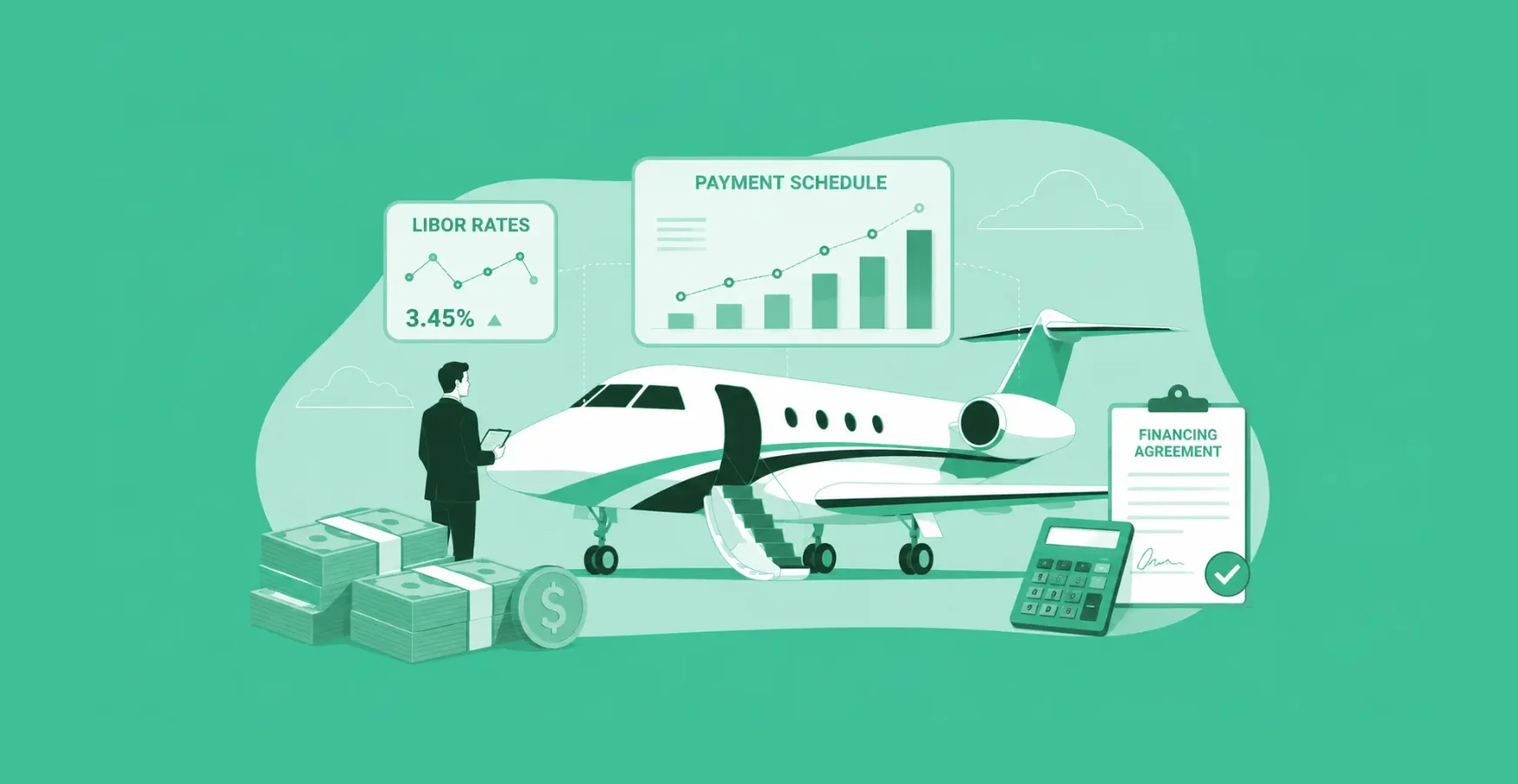
Yes, both leasing and lending are available. The terms depend on the type and age of the aircraft, the jurisdiction of registration and the ownership structure, and the application usually runs in parallel with the search. The market is active: IADA-accredited dealers closed 1,630 pre-owned transactions in 2025.
What is a trust ownership structure and why is it used?
It means the aircraft is registered to a company or a trust rather than an individual. The structure is used to qualify for a particular registry, to separate liability and to simplify a future resale; it is agreed with lawyers before the deal.
How does fractional ownership differ from a jet card?
In fractional ownership you buy a share of a specific aircraft and receive flight hours along with a share of its value. A jet card is prepaid hours without ownership: easier to start and stop, but there is no asset and no residual value. A useful benchmark: full ownership starts to pay off from roughly 200 flight hours a year.
What happens to warranty and maintenance programmes when ownership changes?
Factory warranty and engine or airframe programmes usually transfer to the new owner, but they must be re-registered and the fees settled. Programme status is checked during the inspection: unpaid contributions directly affect the price.
Safety and Assurance
How is an operator vetted before a flight?
We check the current air operator certificate, insurance cover, incident history, the age and maintenance record of the specific aircraft and the crew experience on type. If any of it cannot be confirmed, the aircraft is not offered. Vetting happens before the booking is confirmed and relies on three independent standards: IS-BAO, ARGUS and Wyvern.
What are IS-BAO, ARGUS and Wyvern audits?
They are independent industry assessments of operators: IS-BAO is an ICAO-based safety management standard, while ARGUS and Wyvern are rating programmes that audit crews and procedures. They are not legally required, but they provide extra assurance about an operator.
How many pilots are on board and what is required of them?
Business jets normally fly with two pilots, each type-rated and regularly checked in the simulator. Minimum experience is set by the authorities and by insurers, and duty time is limited by rest rules. Business aviation almost always flies with two pilots, and the operator tracks duty-time limits.
What happens if a technical fault appears before departure?
The flight does not go until the fault is cleared. The operator either fixes the aircraft, substitutes another or refunds the payment. A fallback is therefore agreed in advance, especially for fixed occasions such as a wedding or a competition.
Is passenger liability insured?
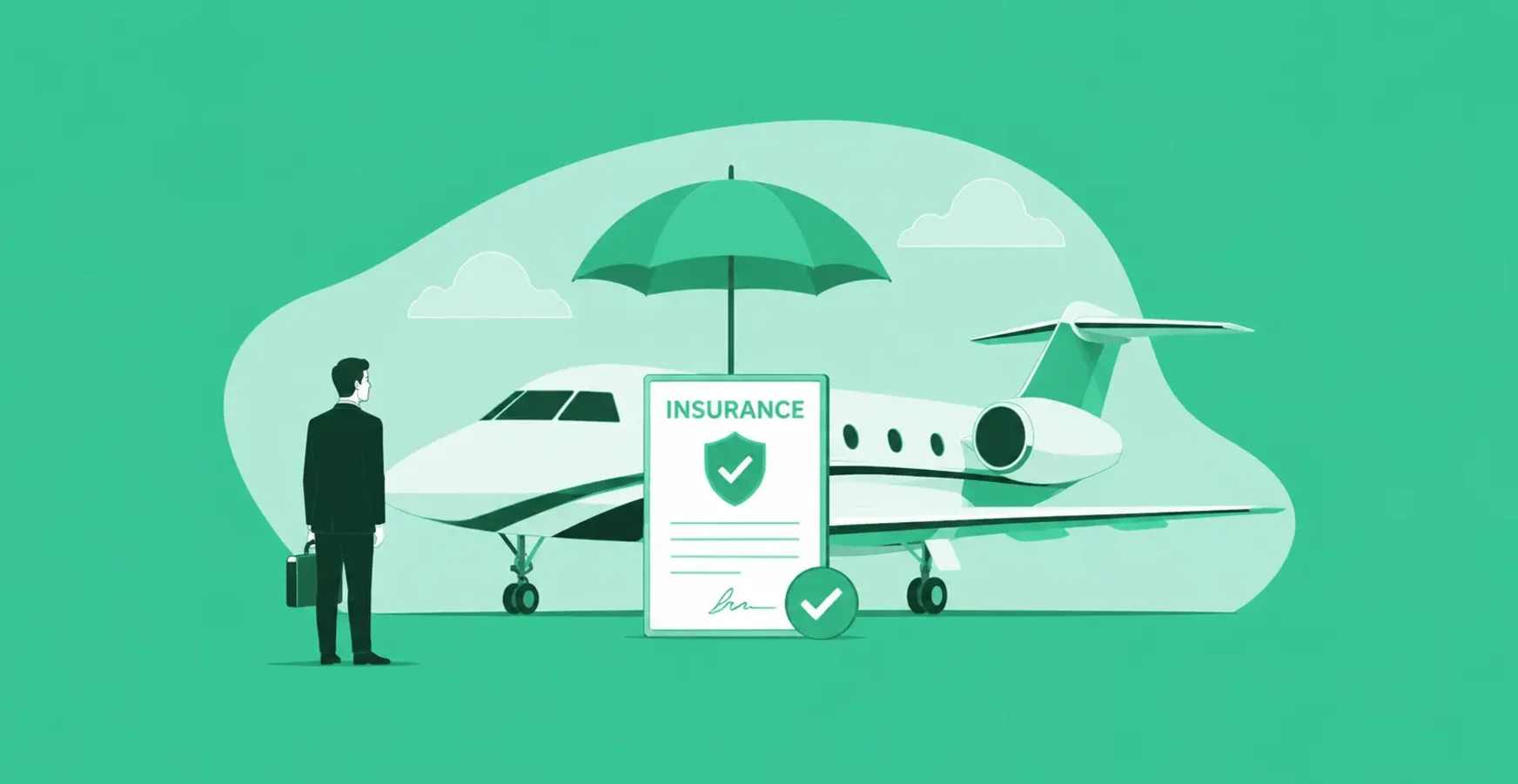
Yes, the operator must carry passenger and third-party liability insurance as well as hull cover. The limits are stated in the contract and are worth checking, particularly on long international routes.