









Frequently asked questions
Nextant G90XT: what is it and what to check before buying?
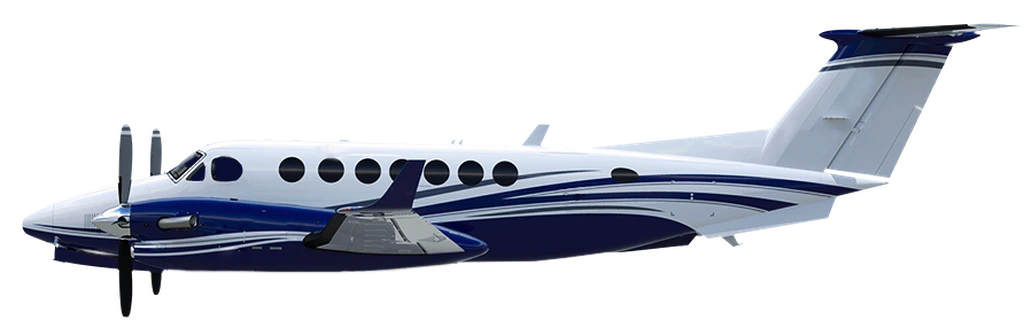
The Nextant G90XT is a turboprop by Nextant Aerospace (the US), in production since 2015. It seats 7, with 2,400 km range, a 500 km/h cruise and two GE Aviation H75-100 engines. When buying, a King Air C90 remanufacture with new engines. Send us a request — we'll prepare options, calculate running costs and analyse the best fit for your task.
How much does a Nextant G90XT cost: purchase and upkeep?
For the Nextant G90XT: a used-market price of $2.5M. At 300–400 h/year, running cost is about $865K/yr, or $2,163/h. The final figure depends on year, hours and condition. Send us a request — we'll prepare options, calculate running costs and analyse the best fit for your task.
What is the Nextant 400XTi and why is it interesting?
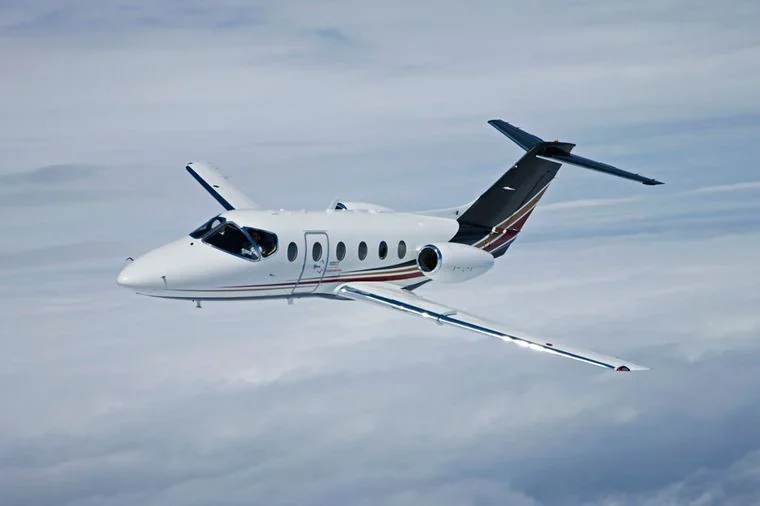
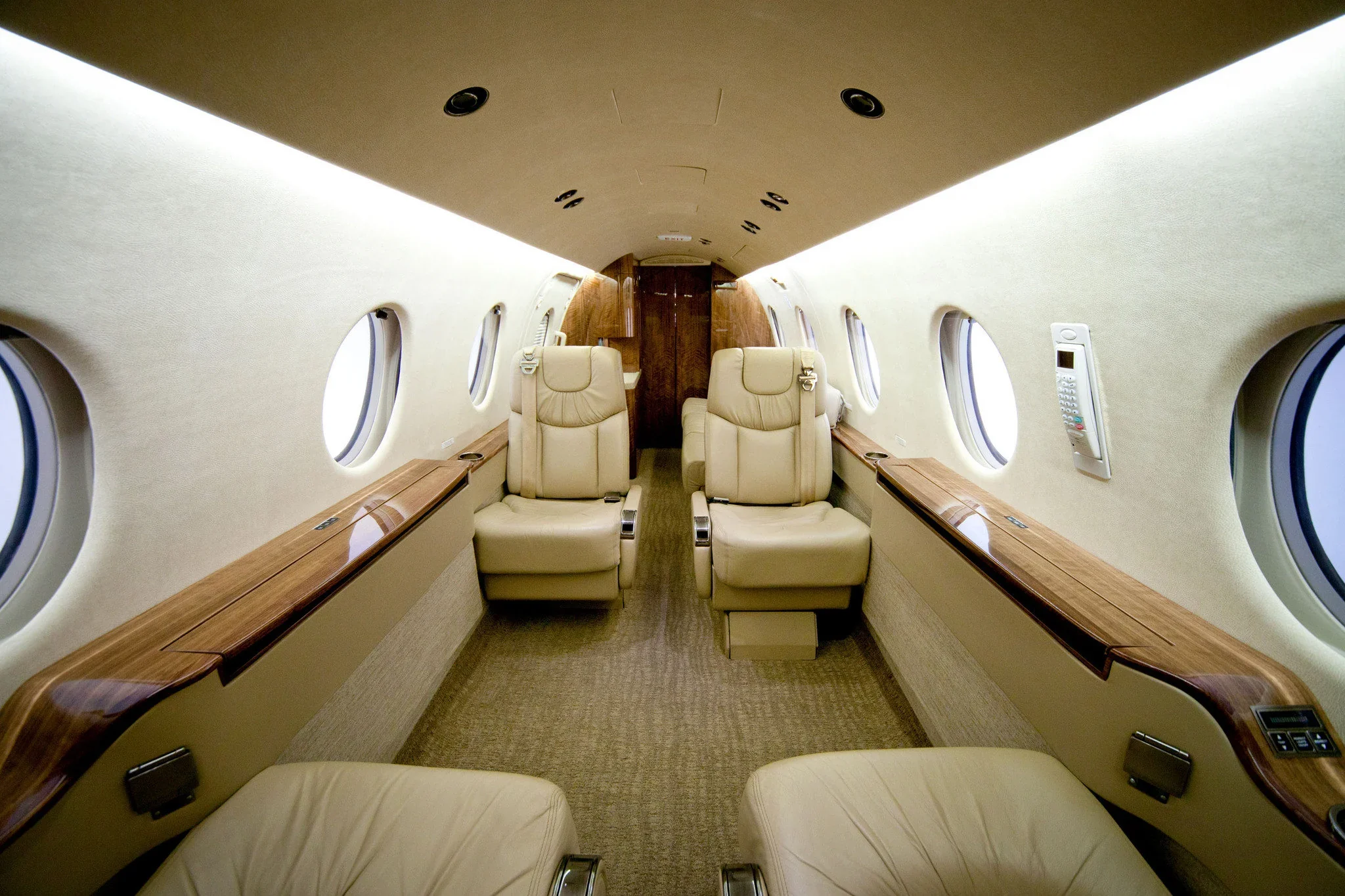
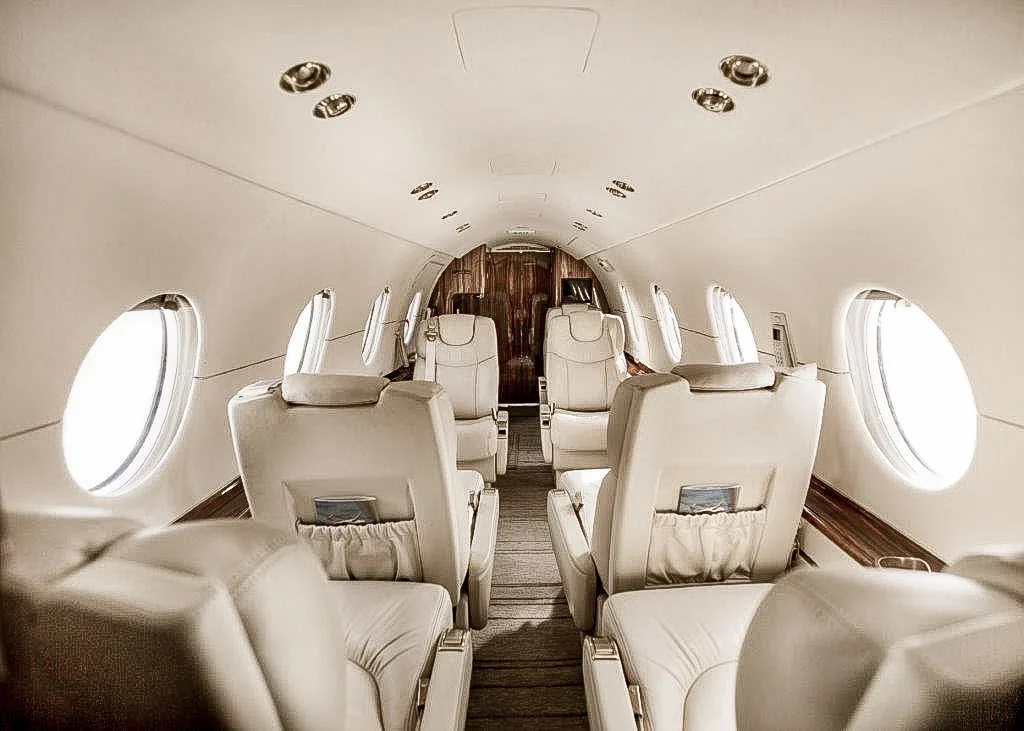
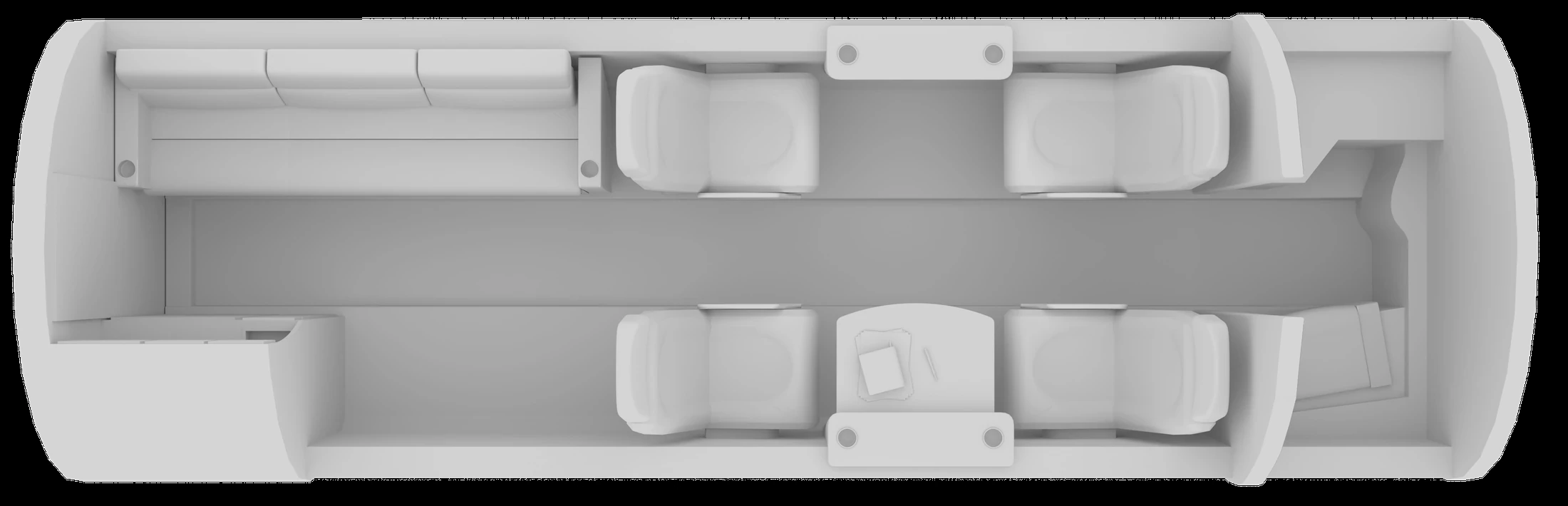
Nextant invented business-jet remanufacturing: the company takes a Beechjet 400A/XP airframe, fits new Williams FJ44-3AP engines, Rockwell Collins Pro Line 21 avionics and a new cabin — and delivers effectively a new 400XTi light jet with a warranty. Range grew to 3,700 km (+50% over the original Beechjet), fuel burn fell a third, and the price is half that of a new rival. Send us a request — we'll prepare options, calculate running costs and analyse the best fit for your task.
How much does the Nextant 400XTi cost and what does operation cost?
On the pre-owned market the 400XTi is offered at $2.2–3M — the price of a good turboprop at a jet speed of 830 km/h. Direct costs are about $1,800–2,000 an hour, with the FJ44 engines covered by the TAP Blue programme. By comparison, a new light jet with the same range costs $9–12M. It is one of the best price/speed offers in the light class. Send us a request — we'll prepare options, calculate running costs and analyse the best fit for your task.
How reliable is the Nextant platform and what about parts?
The 400XTi's basis is the Beechjet/Hawker 400, an airframe rated for the T-1 Jayhawk military programme (the US Air Force flew millions of hours on it). Engines and avionics are production Williams and Collins components with global support. The remanufacturing itself is FAA-certified. Its weak point is a small fleet (~70 aircraft), so specific airframe parts take longer to find than for a Citation. Send us a request — we'll prepare options, calculate running costs and analyse the best fit for your task.
Which country is Nextant from, how old is the marque and how many built?
Nextant Aerospace is an American company from Cleveland, Ohio, founded in 2007. A pioneer of business-jet remanufacturing: on the Beechjet/Hawker 400 airframe it creates effectively a new 400XTi. About 80 aircraft have been built under this programme. Send us a request — we'll prepare options, calculate running costs and analyse the best fit for your task.
What routes and tasks suit turboprops?
Turboprops are the optimum for flights up to 1,500–2,000 km: London–Geneva, Paris–Milan, Vienna–Munich. Their element is short and unpaved strips: a Pilatus PC-12 lands in 600 m, so thousands of airfields are reachable that a jet physically cannot use. An hour costs one and a half to two times less than a jet, and on legs up to 1,000 km the time penalty is only 15–25 minutes. Send us a request — we'll prepare options, calculate running costs and analyse the best fit for your task.
What range and how many passengers do turboprops have?
Single-engine aircraft take 4–9 passengers: the TBM 960 seats six over 3,200 km, the Pilatus PC-12 NGX up to nine over 3,400 km. The twin-engine King Air 360ER carries eight almost 5,000 km. Class cruise speed is 500–610 km/h. A rule of thumb: a full cabin cuts maximum range by 20–30%. Send us a request — we'll prepare options, calculate running costs and analyse the best fit for your task.
How does a turboprop differ from neighbouring classes?
A jet is faster — 750–850 km/h versus 500–610 — and flies higher, above turbulence. The turboprop answers with economics: 220–350 L/hour versus 500–700, a charter hour from $1,800 versus $3,000+, plus access to short unpaved strips. On legs up to 1,000 km the time difference is under half an hour, so short hops make sense by turboprop and long ones by jet. Send us a request — we'll prepare options, calculate running costs and analyse the best fit for your task.
Which turboprops are in the fleet and how do they differ?
The fleet has 13 models: the fast Daher TBM 960 and Piper M700 Fury (556–611 km/h, 5–6 seats), the roomy Pilatus PC-12 NG/NGX/PRO with a cargo door and nine seats, the twin King Air 260 and 360ER for long legs up to 5,000 km, the business Piaggio Avanti Evo with jet speed and a stand-up cabin, and the affordable Piper M350/M500/M600SLS. Send us a request — we'll prepare options, calculate running costs and analyse the best fit for your task.
How do you choose an aircraft to buy for your needs?
Start from two numbers: the length of your typical route and the number of passengers. Up to 1,000 km and 4 people — a turboprop or light jet; 2,000–4,000 km — a midsize jet; nonstop intercontinental — a long-range jet. Then adjust for short runways, baggage volume and sleeping berths. We'll match a model to your profile and calculate the ownership economics. Send us a request — we'll prepare options, calculate running costs and analyse the best fit for your task.
New aircraft or pre-owned — which is the better buy?
A new aircraft means a factory warranty and a 1–3-year queue, but the price is at its peak. A pre-owned aircraft means immediate delivery and a price 30–60% lower, while engine time and history matter. For most buyers a fresh 3–7-year-old aircraft is optimal: the main depreciation has happened and plenty of life remains. We cost both options. Send us a request — we'll prepare options, calculate running costs and analyse the best fit for your task.