Short
The main advantage isn't comfort, but time on the ground. You arrive at the ramp 15-20 minutes before departure, without queues for check-in and security, and private jets use thousands of small airfields inaccessible to scheduled flights. On intercontinental routes, avoiding connections saves 4 to 10 hours. Additionally, you're flying with just your crew or family, allowing you to work and discuss business right on board.
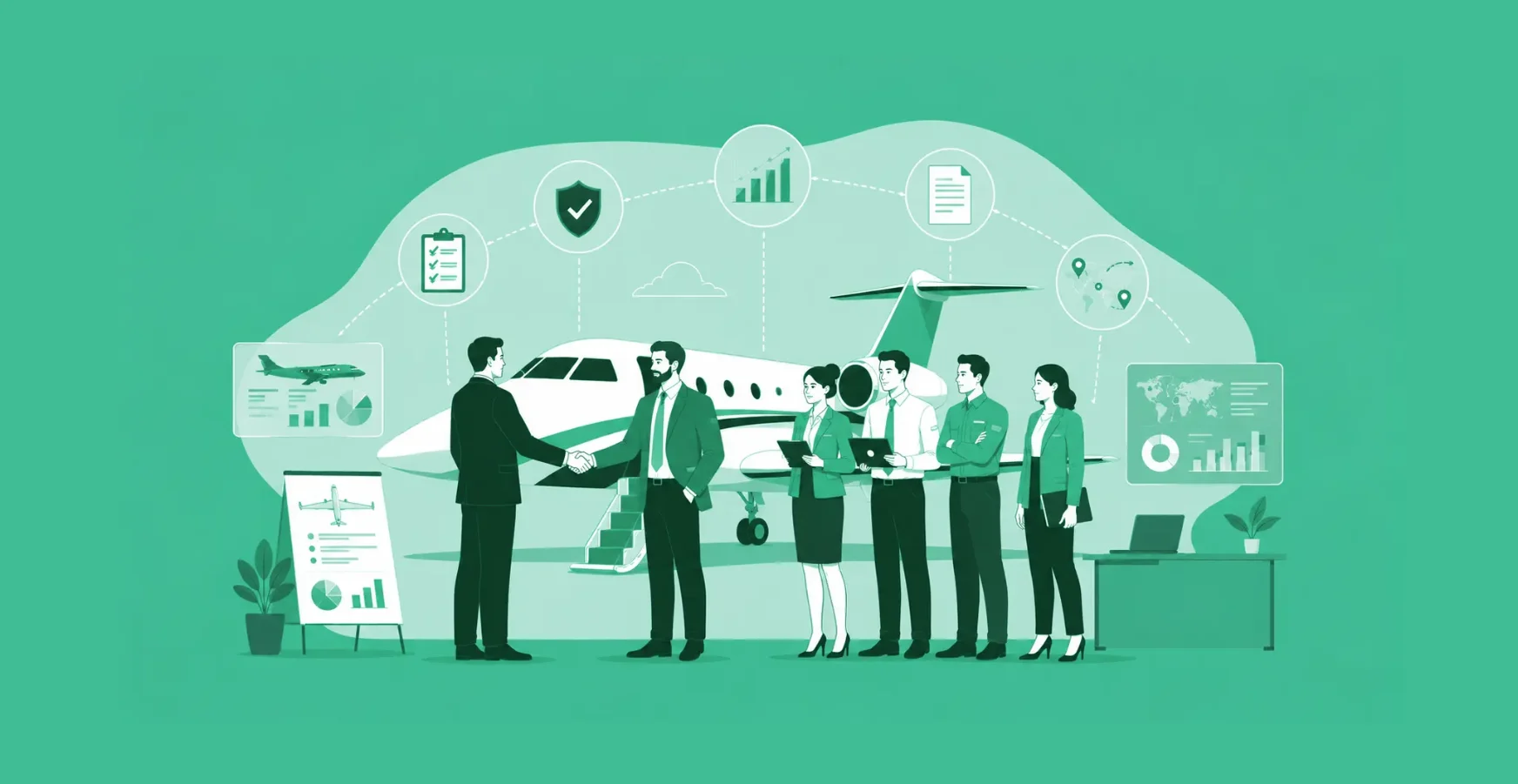
Private flight is often seen as a luxury, but for most users of business aviation it is a working tool. The real value comes from several measurable benefits: time saved, airport access, schedule flexibility, privacy and the ability to work en route. Below we cover each and how they translate into the economics of a trip.
Time saved
The main benefit is time. On a scheduled flight a large part of the trip is not the flight itself: arriving early, check-in, security, waiting to board, collecting baggage. In business aviation this path shrinks to minutes: arriving at a private terminal shortly before departure, separate procedures, no shared queues.
On short business trips the effect is especially clear. Where a scheduled connecting flight consumes a full day, a private aircraft fits into a few hours there-and-back with a meeting between segments. For a company this is direct economics: a team's time often costs more than the flight.
Airport access
The second fundamental advantage is the network. Scheduled service is tied to a limited number of large hubs, whereas business aviation uses many times more fields. Per NBAA, business aviation serves ten times as many US airports as scheduled airlines.
In practice this means arriving at a small aerodrome near the trip's endpoint — a plant, a site, a resort — instead of a major airport a hundred kilometres away. Connections, long ground transfers and dependence on someone else's schedule disappear, and destinations unreachable by direct flight become achievable.
Schedule flexibility
A private aircraft flies when the client needs. The date and time can be adjusted, the route changed, segments added or removed. If a meeting overruns, the aircraft waits; if it ends early, you can leave early. Scheduled aviation cannot offer this freedom in principle.
This flexibility is especially valuable on multi-leg trips: several cities can be visited in a day, which is simply impossible on airline timetables. Planning is built around the trip's objectives rather than around available flights.
Privacy and the ability to work
Only your passengers are on board. This matters both for confidential discussions — sensitive matters can be discussed without being overheard — and for public figures, for whom privacy is a value in itself.
The cabin becomes a workspace: connectivity and Wi-Fi on modern aircraft, the ability to hold a meeting en route, spread out documents, prepare for a meeting. The flight stops being lost time and becomes an extension of the working day — or genuine rest before it.
Predictability and reliability
Business aviation is less exposed to the factors that derail plans in scheduled travel: overbooking, cancellation for commercial load reasons, missed connections. If a technical problem arises with the aircraft, the operator or broker usually offers a replacement.
This does not mean independence from weather and slots — those affect everyone. But all else equal a private flight gives a more predictable outcome, and when something goes wrong an alternative is found faster, because the decision is made for one client rather than a network of hundreds of flights.

Comfort and personalisation
Comfort is not the main benefit but a noticeable one. The cabin is configured for the task: an office, a rest area, sleeping berths on long legs. Catering is chosen to preference rather than from a carrier's standard menu.
Details are personalised too: pets in the cabin, oversized or sports baggage, accessibility for reduced-mobility passengers, ground transfer right to the aircraft steps. All of it is arranged in advance and included in the final itinerary.
Safety
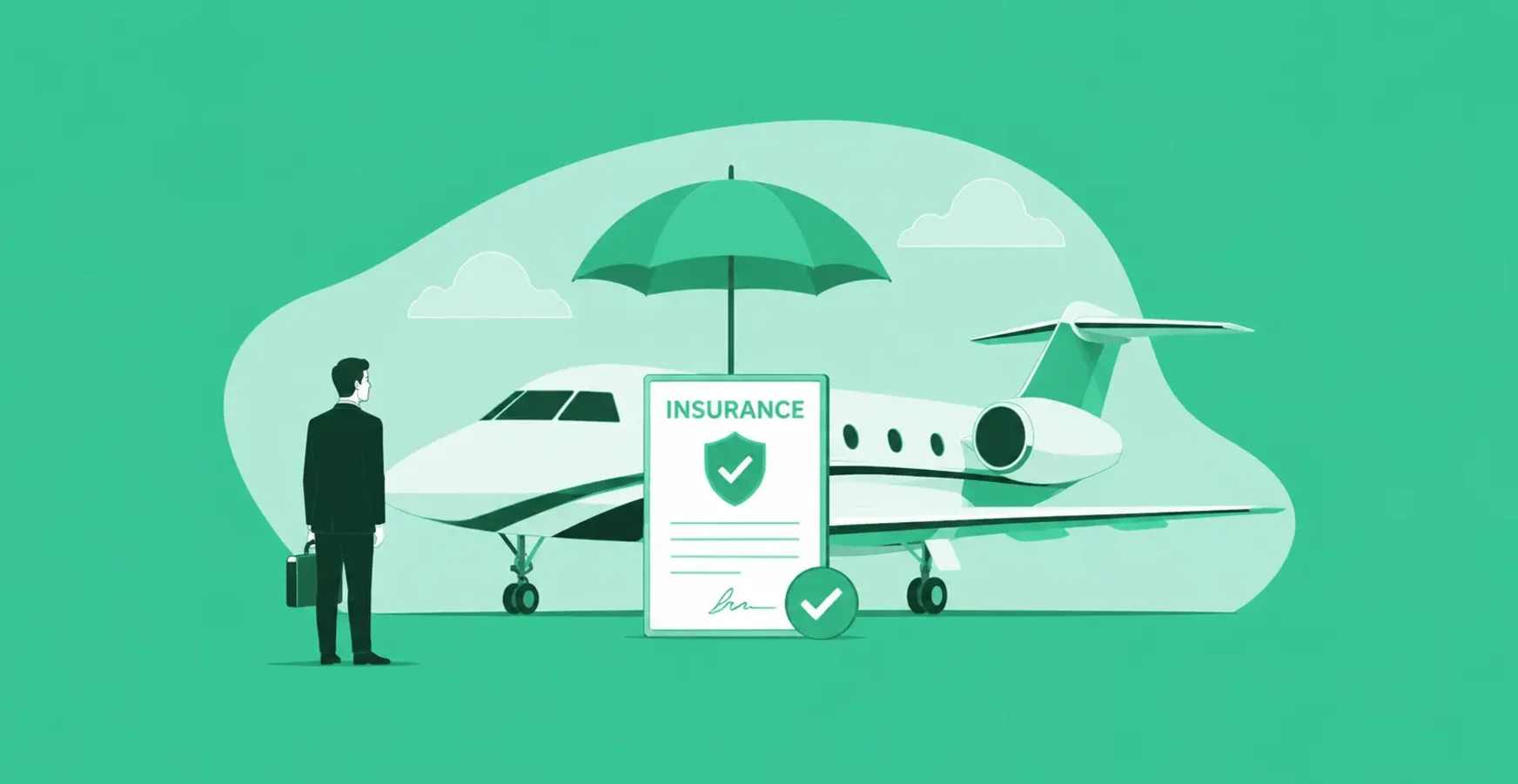
Business aviation is a strictly regulated segment. Commercial operators are certified, and beyond formal requirements the industry uses independent safety audits: ARGUS, Wyvern and the international IS-BAO standard, allowing an operator to be assessed before flying.
Aviation as a whole remains the safest mode of transport: per the EASA Annual Safety Review, Europe operates millions of flights a year at an extremely low accident rate. The ability to choose an operator by its safety rating is an advantage a scheduled passenger does not have.
For business: more than convenience
Companies use business aircraft not for status. The passenger mix is telling: per NBAA, 86% of business-aircraft passengers are marketing and sales staff, technical experts and customers, and only 14% are top management. The aircraft works as transport for teams, not an executive perk.
The typical user is not a corporate giant either: per SKYbrary, about 75% of companies operating business aircraft fly a single aircraft. These are small and mid-sized businesses for which the aircraft solves a specific transport problem where the scheduled network is inefficient.
When the benefits do not pay off
An honest discussion of benefits includes the other side. On popular routes with frequent direct scheduled flights and no hard timing requirements, the saving may not justify the price difference. For a single passenger on a standard route, scheduled business class is often more rational.
The benefits of business aviation come into their own where at least one factor is present: a compressed schedule with several points, a destination with no convenient flight, urgency, a group of passengers, a need for privacy. If none applies, it is worth honestly costing what exactly you are paying for.
Speed of response and urgent trips
A distinct advantage is speed of arrangement. Many private flights can be launched within hours if an aircraft and crew are available. For urgent situations — sudden negotiations, a crisis trip, family circumstances — this is decisive: the scheduled network simply cannot offer it.
On international routes the lead time is longer because of permits, but even there it is days, not weeks. This is why business aviation is in demand where decisions are made fast and the cost of delay exceeds the cost of the flight.

Group travel
When a team flies, the economics change. The cost of the aircraft is divided among all passengers, and with a group of six to eight the gap against business-class tickets narrows and sometimes disappears. The team flies together, can work en route and arrives at the same time.
This is a common scenario for project teams, sports teams, film crews and delegations. An added benefit is the ability to carry equipment or oversized baggage that creates a separate problem on a scheduled flight.
How to calculate the benefit
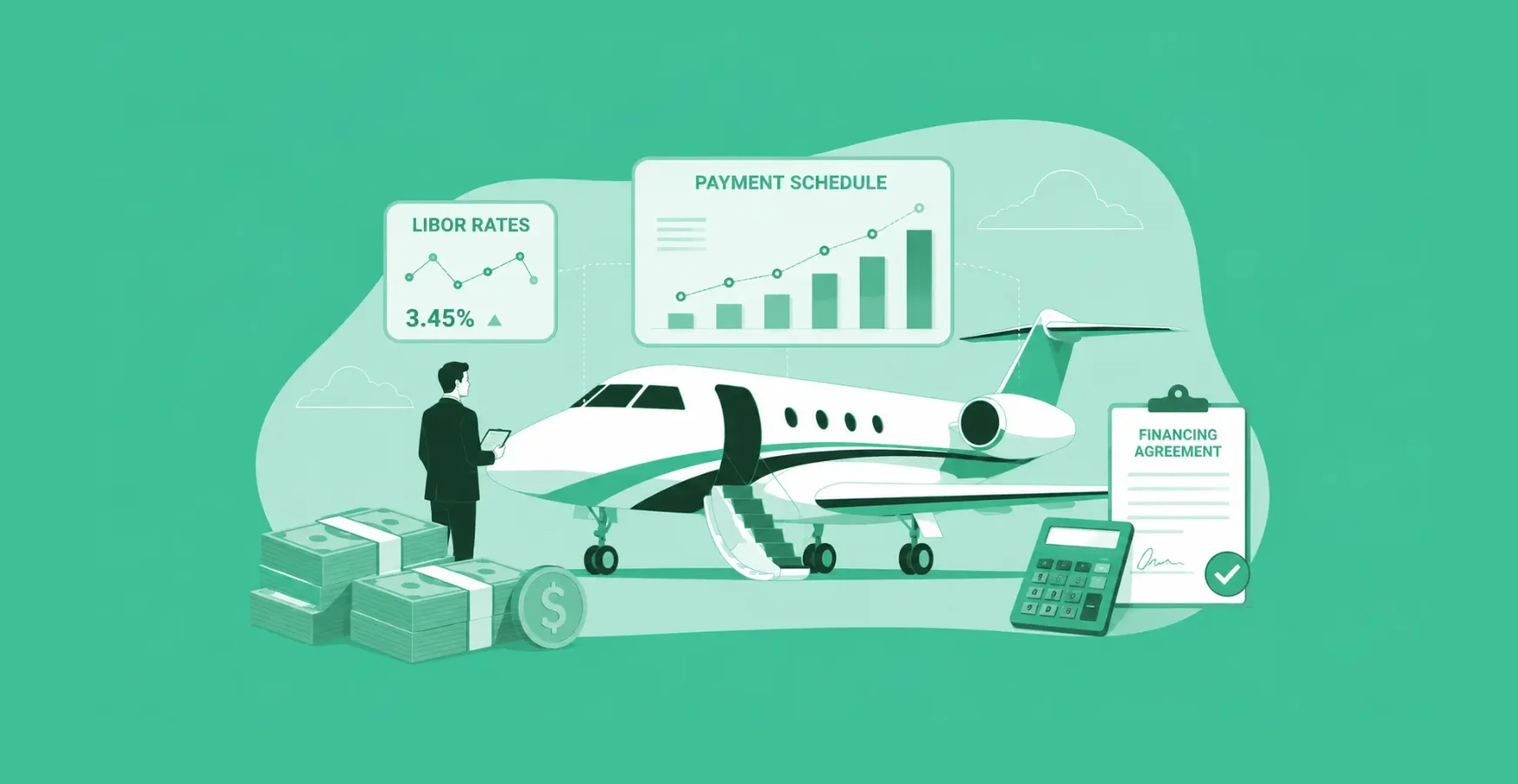
A correct calculation covers more than the flight price. The scheduled option includes tickets for all passengers, possible overnights due to awkward timetables, ground transfers from a distant airport and — above all — the team's lost working time.
Costing the full trip rather than just the tickets, the gap is often smaller than expected. On routes without direct flights, under time pressure or with a group of passengers, a private aircraft can come out comparable in money and clearly ahead on time.
What is not a benefit
There are common misconceptions. A private aircraft does not fly 'around the weather': meteorological conditions and slots affect everyone. It does not remove customs and immigration procedures on international routes, though it passes them faster in separate facilities.
Nor should you expect a private flight to always be faster in the air: a business jet's cruise speed is comparable to an airliner's, and the gain comes on the ground and from the direct routing. Understanding the real limits of the benefits helps make a sober decision.
Benefits for family travel
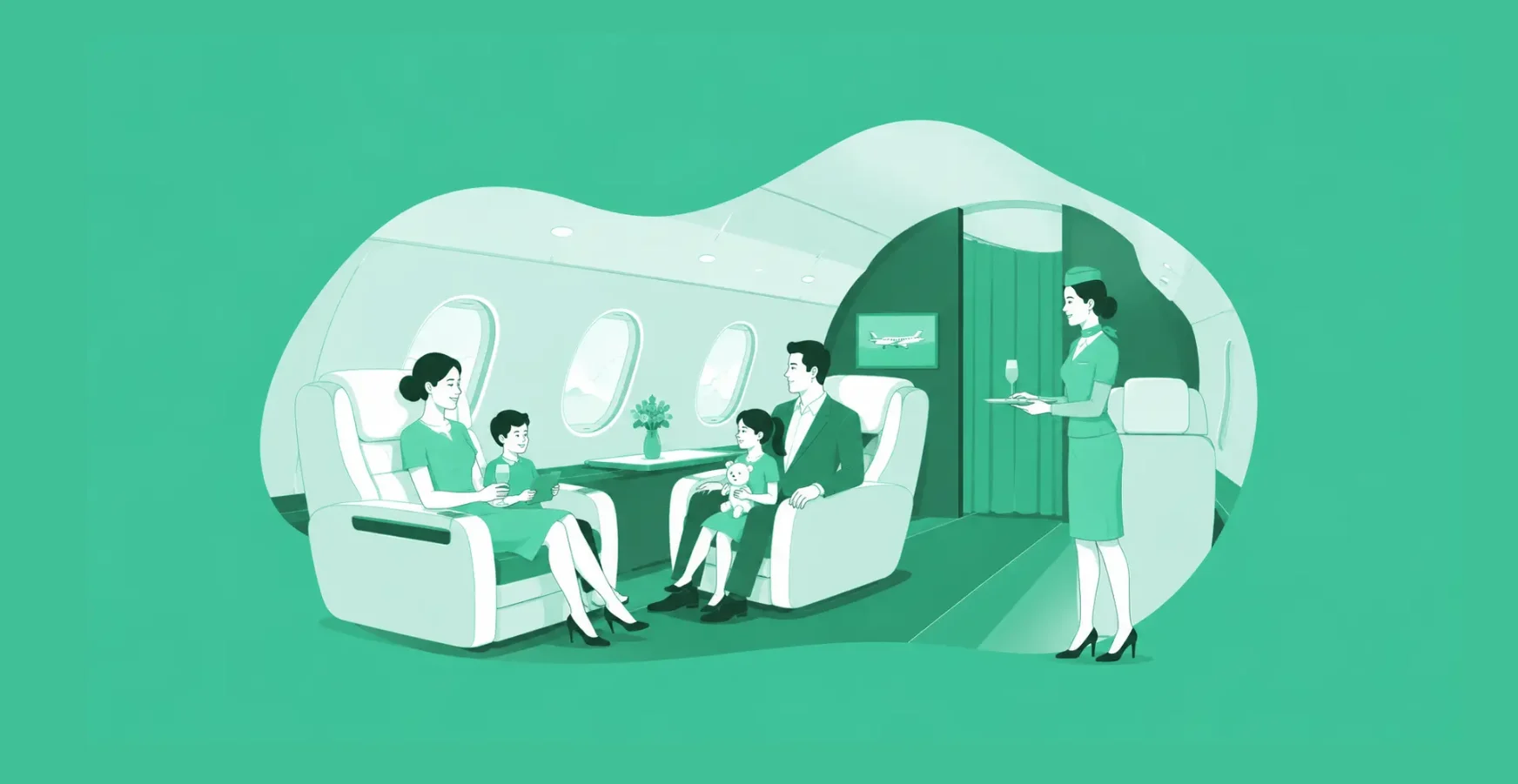
Business aviation is not only used for work. For a family trip a private aircraft removes a whole set of difficulties: no queuing with children, pets can travel in the cabin, and pushchairs, sports equipment or bulky baggage need no extra arrangements.
Schedule flexibility matters here too: departure fits the children's routine rather than the reverse. For distant resort destinations with awkward connections this is often the decisive argument — the journey stops being an ordeal and becomes part of the holiday.
The environmental angle
A discussion of benefits would be incomplete without the environmental dimension. A private flight produces higher emissions per passenger than a scheduled one, and the industry acknowledges this. The response is sustainable aviation fuel (SAF), gradually appearing at major hubs, and offset programmes.
A separate rational option is empty legs: the reposition happens regardless, and filling an already-scheduled flight adds no new flight. For a client to whom this matters, it is a way to use private aviation with the smallest additional footprint.
How to choose the access form
The benefits are not limited to owners. On-demand charter delivers them one trip at a time with no commitment; jet cards at a fixed rate; fractional ownership shares the costs; empty legs give discounted access to those flexible on dates. Ownership pays off at high utilisation — the industry benchmark starts around 200 hours a year.
JetHunter provides access to more than 5,000 aircraft and a catalogue of 246 models with specifications and operating costs. That makes it possible to select not only the aircraft but the access form for a real travel profile — so the benefits of business aviation work on a specific task rather than remaining an abstraction.
«Business aviation sells time, not comfort. When a client costs a flight, they must also count the hours it returns to them and their team — otherwise the arithmetic is incomplete.»
— Alexey Mordvintsev, CEO of JetHunter
Author: Alexey Mordvintsev, CEO of JetHunter, President of the Association of Professionals of Executive Aviation Industry (APIDA). Over 14 years in the industry.