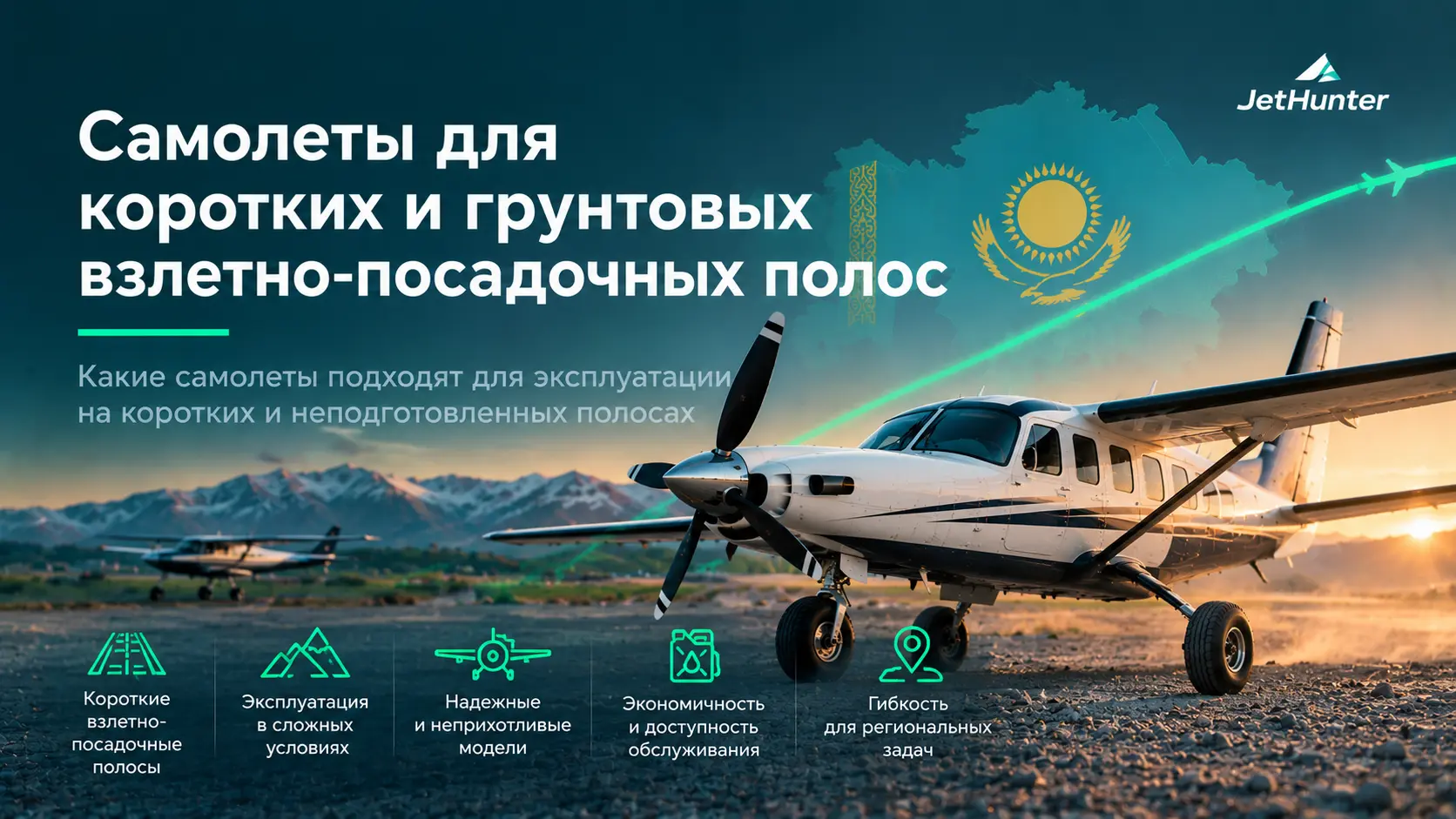
Aircraft for short and unpaved runways

Aircraft for short and unpaved runways

В Казахстане и Центральной Азии сеть аэродромов устроена неравномерно: крупные аэропорты с бетонными полосами есть в областных центрах, а вблизи производственных объектов, месторождений и удалённых населённых пунктов чаще встречаются короткие грунтовые площадки. Ниже разобрано, что определяет способность самолёта работать с таких полос и какие машины для этого предназначены.

Что определяет доступ к площадке

Первый параметр — потребная длина взлётно-посадочной дистанции. Она зависит не только от типа машины, но и от загрузки, температуры воздуха и превышения аэродрома. Летом в жару и на высоте одна и та же машина требует заметно большей полосы, чем в стандартных условиях.

Второй — прочность покрытия и характер грунта. Самолёт с высокорасположенным крылом, крупными колёсами и усиленным шасси работает там, где машина с низким крылом и малым клиренсом получит повреждения от камней и неровностей.

Третий — конструктивная защита: расположение воздухозаборников, защита винта и фюзеляжа от выбрасываемого гравия, клиренс до земли. Именно этот набор отличает машину, спроектированную под грунт, от машины, которая теоретически укладывается в длину полосы.

Почему это экономический вопрос, а не технический

Способность сесть ближе к цели переводится напрямую в наземное время. Если ближайший бетонный аэропорт в трёхстах километрах от объекта, к каждому перелёту добавляется несколько часов дороги в каждую сторону, и однодневная поездка превращается в двухдневную.

Для компаний с распределёнными объектами — добыча, геологоразведка, инфраструктурные проекты — это и есть основная причина покупки самолёта. Не скорость в воздухе, а устранение наземного плеча.

Отсюда следует критерий выбора: считать нужно не крейсерскую скорость, а полное время от точки до точки, включая дорогу. По этому показателю машина, садящаяся рядом с объектом, регулярно обгоняет более быструю, но привязанную к крупным аэропортам.

Машины для этой задачи

В линейке Daher эту нишу закрывает семейство Kodiak. Kodiak 100 Series III спроектирован под работу с коротких и неподготовленных полос: высокорасположенное крыло, прочное шасси, конструктивная простота обслуживания в полевых условиях.

Kodiak 900 — старшая машина семейства с удлинённым фюзеляжем, большей полезной нагрузкой и дальностью при сохранении взлётно-посадочных характеристик. Выбор между ними идёт от требуемой нагрузки и длины типового маршрута, а не от площадок.

Для сравнения: скоростные машины вроде Daher TBM 960 решают противоположную задачу — быстро связывают точки с оборудованными аэродромами. Обе логики законны, вопрос в том, какая соответствует вашему профилю полётов.

Что проверить у площадки

Перед включением площадки в маршрутную сеть собирают конкретные данные: длина и ширина полосы, тип и состояние покрытия, превышение над уровнем моря, наличие препятствий на подходах, доступность топлива.

Отдельно уточняется правовой статус: является ли площадка сертифицированным аэродромом, посадочной площадкой или требует отдельного разрешения на посадку. От этого зависит порядок оформления полёта.

Практический совет: данные стоит проверять на месте или через тех, кто там садился, а не полагаться на справочники. Состояние грунтовых полос меняется, и информация быстро устаревает.

Кто использует такие машины

Основной потребитель в регионе — компании с распределёнными объектами: горнодобывающие, нефтегазовые, геологоразведочные, инфраструктурные. Для них борт связывает офис с производственными площадками, до которых иначе добираться сутки.

Второй сценарий — санитарная и патрульная авиация, где важна способность сесть максимально близко к точке, а не скорость на маршруте. Третий — доставка персонала и грузов вахтовым методом на удалённые объекты.

Общее у всех трёх: экономика считается не от стоимости лётного часа, а от того, во что обходится альтернатива. Если альтернатива — сутки наземной дороги или невозможность добраться вовсе, расчёт выглядит иначе, чем для представительского перелёта.

Грузовые и специальные задачи

Отдельная особенность машин этого класса — возможность работы с грузом. Широкая грузовая дверь и плоский пол салона позволяют возить оборудование, запчасти и материалы, которые не помещаются в багажный отсек обычного самолёта.

Переоборудование салона под смешанную конфигурацию — часть пассажирская, часть грузовая — выполняется штатными средствами и занимает время, измеряемое минутами, а не днями. Для компаний с меняющимися задачами это существенное преимущество.

При планировании стоит заранее определить типовую загрузку: постоянно пассажирская, постоянно грузовая или смешанная. От этого зависит и выбор между Kodiak 100 Series III и более крупным Kodiak 900.

Влияние высоты и температуры

Параметр, который в средней полосе почти не замечают, а в Казахстане и Центральной Азии становится определяющим. С ростом превышения аэродрома и температуры воздуха плотность воздуха падает, а вместе с ней — тяга двигателя и подъёмная сила крыла.

Практическое следствие: потребная длина разбега растёт. Площадка, с которой машина уверенно взлетает весной при полной загрузке, летом в жару может потребовать снижения веса — меньше топлива, меньше пассажиров или груза.

Для горных районов юга и юго-востока региона этот фактор складывается с превышением аэродрома, и расчёт делается по фактическим условиям конкретного дня, а не по паспортным значениям в стандартной атмосфере.

Турбовинтовая или поршневая машина

Для работы с коротких полос турбовинтовые машины имеют преимущество: турбина сохраняет характеристики на высоте и в жару лучше поршневого двигателя, а запас мощности напрямую влияет на длину разбега.

Второй аргумент — топливо. Турбовинтовая машина работает на Jet A-1, который в регионе доступен, тогда как поршневая требует авиационного бензина с известными сложностями поставки. Для удалённых площадок это может оказаться решающим.

Третий — надёжность на маршрутах без запасных аэродромов. Одиночный отказ вдали от оборудованных площадок имеет разные последствия в зависимости от типа силовой установки, и в планировании полётов над малонаселённой местностью это учитывают.

Эксплуатация с грунта: что учитывать

Работа с неподготовленных полос увеличивает нагрузку на конструкцию и требует более внимательного обслуживания: контроль состояния шасси, проверка на предмет повреждений от камней, чаще осмотр винта и обшивки нижней части фюзеляжа.

Сезонность в регионе выражена: весенняя распутица и осенние дожди меняют состояние грунтовых полос, и площадка, доступная летом, может быть непригодна в межсезонье. Это закладывается в планирование маршрутов, а не выясняется на подлёте.

Зимой добавляется снежный покров и его уплотнение. Часть площадок эксплуатируется круглогодично при регулярной подготовке, часть — сезонно. Реальный график доступности площадок стоит собрать до покупки машины под них.

Как выбирать

Порядок такой: составить список фактических площадок, куда нужно летать, с их длиной, покрытием и превышением. Затем проверить, какие типы в них укладываются с учётом реальной загрузки и летних температур, а не в идеальных условиях.

Только после этого сравнивать машины по дальности, вместимости и расходам. Обратный порядок — выбрать самолёт, а потом выяснять, куда он садится — приводит к покупке машины, которая не решает исходную задачу.

JetHunter поставляет самолёты Daher в Казахстан и Узбекистан и помогает подобрать тип под конкретный перечень площадок, включая проверку потребной длины полосы для реальных условий эксплуатации.

«Взлётно-посадочные характеристики покупают не ради экзотики, а ради экономии наземного времени. Если самолёт садится в двадцати километрах от объекта вместо трёхсот, он окупается расписанием, а не крейсерской скоростью.»

— Alexey Mordvintsev, CEO of JetHunter

Author: Alexey Mordvintsev, CEO of JetHunter, President of the Association of Business Aviation Professionals (APIAP). Over 14 years in the industry.


How to choose an aircraft for rent?

Choosing an aircraft to rent is an important step that will determine the comfort of your trip. Here are key factors to consider:

image

Purpose of the trip:

  • Business travel: a small but comfortable airplane such as the Cessna Citation CJ3+ or Embraer Phenom 300E is suitable for business meetings.
  • Vacation: if you are traveling with a large group, choose a more spacious model such as the Bombardier Challenger 605 or Gulfstream G550.
  • Transcontinental flight: long flights require an aircraft with a long range, such as a Bombardier Global 6000 or Gulfstream G650ER.

Number of passengers:

  • Decide on the exact number of passengers to choose an airplane with enough seats and comfort level for everyone. For better comfort, calculate quantity of passengers based on a number of separate seats, disregarding divans.

Distance and route:

  • Consider the range of the chosen model and the possibility of landing at the destination airport. Consider the specifics of the route: mountainous or maritime terrain may require airplanes with specific technical characteristics. We can help you with this!.

Budget:

  • Determine your budget and compare the cost of renting different models.
  • Consider additional costs: airport services, meals on board, on-board internet. We’ll advise you when you can save up some money and when you better not cut corners.

Additional Requirements:

  • Availability of bedroom, hot catering, shower, internet, entertainment system.
  • Need to transport luggage, sports equipment, pets. Smoking.

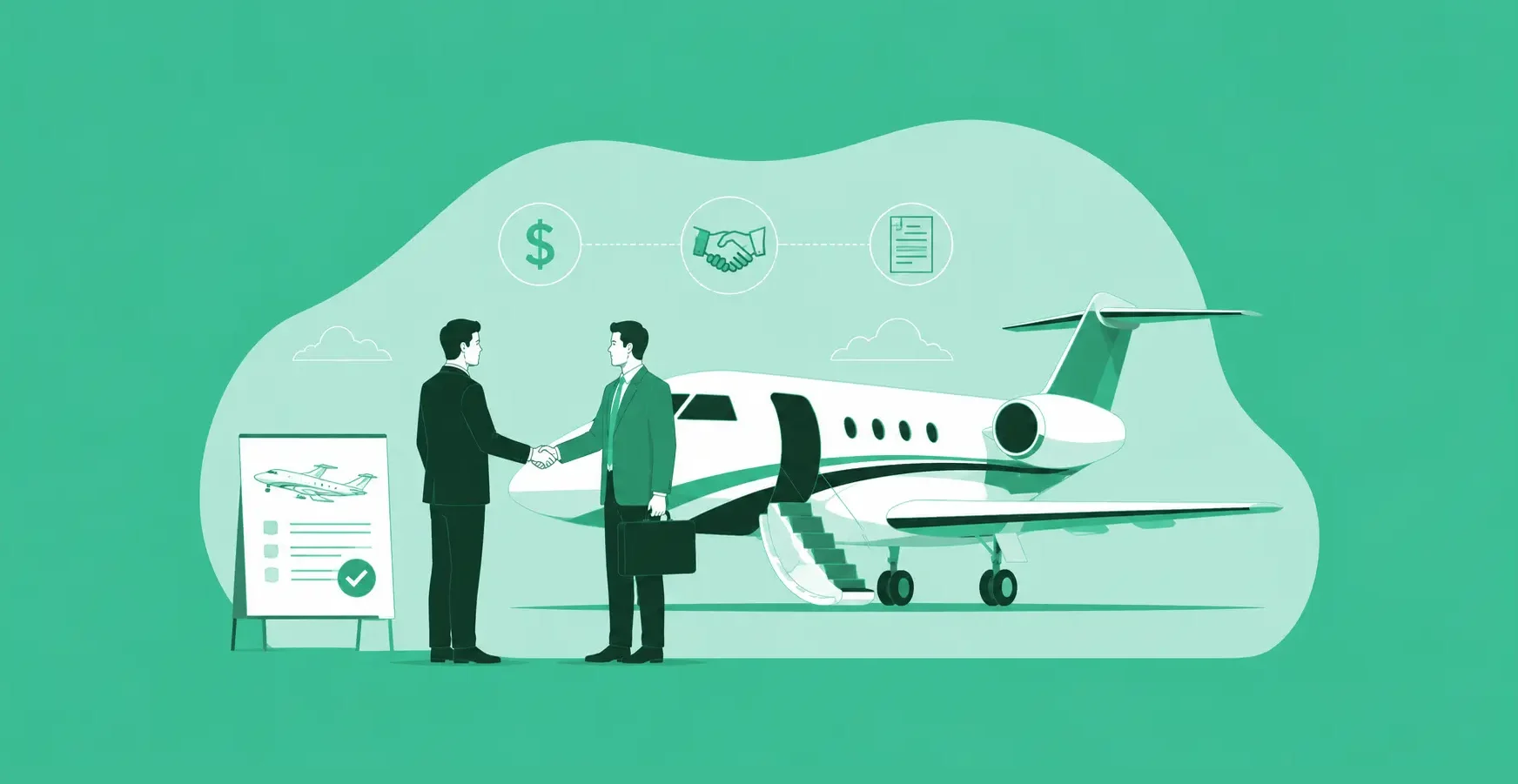
How an Aircraft Purchase Works: Request, Contract, Payment

1

Send us a request

Contact us and tell us about your most ambitious wishes. We will find the best aircraft for you!

2

Sign a contract

Sign Aircraft purchase agreement. This ensures that Aircraft purchase terms and conditions are protected and understood by both parties.

3

Make payment

Make payment for your chosen aircraftin any convenient way. We offer more than 50 different means of payment.

Eight Stages of a Business Jet Purchase

Determine aircraft requirements

Determine your budget and travel needs: Where do you want to fly? How often? How many passengers will you carry? What level of comfort do you prefer?

Send request to us

Contact our manager, who will help you understand the technical characteristics of the aircraft and choose the most suitable model.

Select an aircraft model

Based on your requirements, we will select several aircraft models that are optimally suited in terms of technical characteristics, capacity, flight range and other parameters. We will also help you compare the selected models and make an informed choice. We recommend choosing an aircraft that is 80% of your ideal.

Visual inspection of the aircraft

Choose one or two aircrafts from the available options. We will arrange for a visual inspection where you can personally inspect the aircraft, assess the condition of its interior and exterior and determine the most suitable option for purchase.

LOI and contract

You will need to sign a Letter of Intent to purchase the aircraft (LOI), pay a deposit and sign an Aircraft Purchase Agreement drafted by our experienced lawyers.

Pre-Purchase Inspection (PPI)

We will arrange an independent technical inspection of the aircraft at a certified center to ensure that it is safe and in good working order. You will receive a detailed report on the technical condition of the aircraft to be sure of its reliability. As a result, you will receive a fully operational airworthy aircraft.

Deal closing

At this stage, the aircraft is flown to the closing location and the aircraft is paid for in any way you like. The transaction is conducted through an escrow agent, which guarantees the safety and transparency of the transaction. Your funds will be sent to the seller only after receiving all necessary documents for the aircraft.

Getting an aircraft

We will organize a delivery ceremony to put the aircraft at your service. And we will ensure that your new aircraft gets off to a comfortable start. If necessary, we recommend the operator, insurance company and trusted maintenance center.

Have questions?

Leave your contact information and we will contact you within 5 minutes and tell you everything in more detail.

Find out more

We will advise, select and consult you on all issues.

Frequently asked questions

Which aircraft handle short and unpaved runways?

The best picks are utility turboprops: the Daher Kodiak, Cessna Caravan, Pilatus PC-6 and PC-12, and among jets the Pilatus PC-24 cleared for gravel. They operate from strips of 600–800 m and unprepared surfaces. Send us a request — we'll prepare options, calculate running costs and analyse the best fit for your task.

What runway length do they need?

Single-engine turboprops take off from 400–700 m; the PC-24 needs about 800–900 m on gravel. Exact requirements depend on payload, field elevation and temperature. Send us a request — we'll prepare options, calculate running costs and analyse the best fit for your task.

Why is a turboprop better than a jet on gravel?

A turboprop is tougher on rough surfaces, cheaper per hour and lands on shorter strips. A jet is faster and more comfortable but needs a prepared runway — the PC-24 being the exception. Send us a request — we'll prepare options, calculate running costs and analyse the best fit for your task.

Which aircraft suits regions without airfields?

For remote regions the Kodiak or Caravan (utility, up to 9–13 seats) or the PC-12 for longer, comfortable legs. For mixed tasks with jet speed, the PC-24. Send us a request — we'll prepare options, calculate running costs and analyse the best fit for your task.

How does a deal work: stages and timeline from deposit to handover?

The standard path takes 6–10 weeks. Step 1: a letter of intent (LOI) with price and terms — 3–5 days. Step 2: a 5–10% deposit into escrow and signing of the purchase agreement. Step 3: a pre-purchase inspection — 1–3 weeks. Step 4: rectification of findings and price adjustment. Step 5: closing — simultaneous transfer of funds, title and risk, technical acceptance and ferry of the aircraft.

What is a pre-purchase inspection and who pays for it?

A pre-purchase inspection (PPI) is an independent check at a certified centre: airframe, engines, corrosion, records and compliance with airworthiness directives. It takes from 3 days on a turboprop to 2–3 weeks on a heavy jet and costs $15–100K — paid by the buyer. By market practice the seller pays to rectify airworthiness-affecting defects. A seller refusing a PPI is grounds to walk away.

What taxes and duties apply when importing and registering an aircraft?

The import budget depends on jurisdiction. In the EU the main items are any customs duty (most business-jet codes carry reduced or zero rates) and import VAT, which varies by country of entry (for example 19–22% in much of Europe). Registration in Aruba, San Marino or the Isle of Man under operation outside the EU allows a temporary-admission regime. We produce an exact calculation before the LOI is signed — an error here costs millions.

How far in advance should a flight be booked?

The standard is 24–48 hours before departure: that is enough to confirm the aircraft, crew and slots. For regular clients we arrange a domestic flight from 4–6 hours. International routes need 48–72 hours: overflight permits for some countries take 3–5 working days. On peak dates — Christmas, summer holidays, major forums — aircraft are booked out 2–3 weeks ahead, so plan early.

What are empty legs and how much can you save on them?

An empty leg is the ferry of an empty aircraft to its next job or home to base. Such segments sell at a 30–75% discount to the usual price: a flight that would cost $25K can come to $8–12K. The limits: the date and route are fixed to the aircraft's schedule, and if the main booking is cancelled the flight may shift. We publish current empty legs weekly — watch the listings.

What are the rules on baggage, pets and flying with children?

Baggage is limited only by hold volume: a light jet takes 5–8 suitcases, while midsize and above fit skis, gun cases and golf bags — clear oversized cargo in advance. Pets travel in the cabin in a carrier or crate; a pet passport, microchip and documents for the destination country are required. Children fly from birth to 2 years with no surcharge.

How JetHunter Works With Clients: A Word From the Founder

image

For those who value time above all else, the sky opens up limitless possibilities. At JetHunter we have built a service that turns private flying into a tool of efficiency and comfort. When you charter an aircraft with us, you get more than transport — you get a carefully designed space for work and rest.

Our approach is comprehensive. Looking to buy a private jet, or need a business jet for a certain period? We will be your reliable partner. Every client gets personal attention: we walk you through the model range, help you choose an aircraft to buy, and arrange charter terms that keep your budget and business goals in focus.

We value the trust you place in us and aim to build a long-term, mutually rewarding relationship with every client.

With JetHunter you acquire more than an aircraft — you open up a new standard of living, where distance is no obstacle to your ambitions.

Sincerely,
Alex Mordvintsev, Founder of JetHunter