







Frequently asked questions
Cirrus Vision Jet: what is it and what to check before buying?
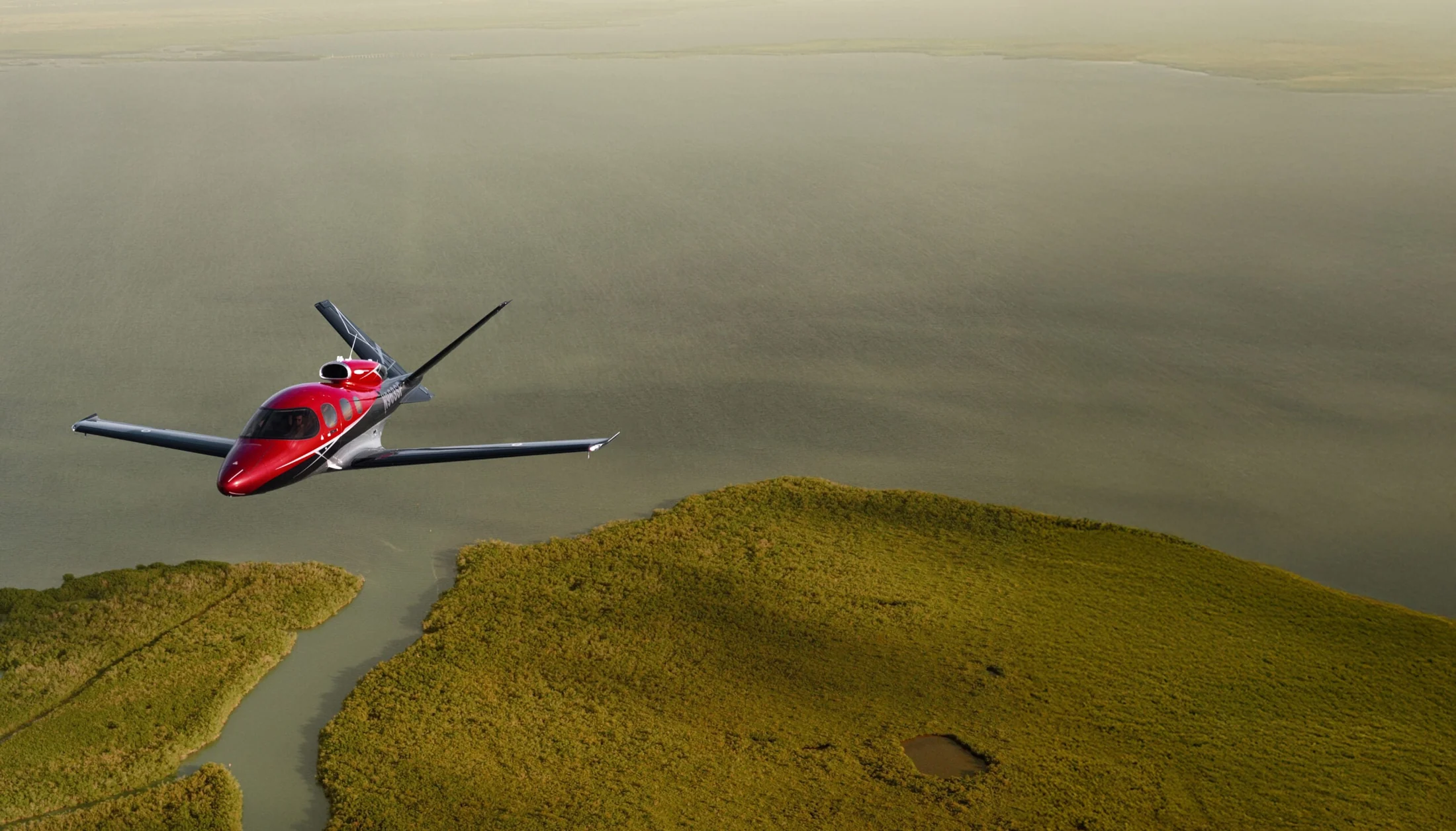
The Cirrus Vision Jet is a very light jet by Cirrus (the US), in production since 2016. It seats 7, with 2,000 km range, a 555 km/h cruise and a single Williams FJ33-5A. When buying, a single-engine jet with Safe Return autoland; check hours and Gen (G1/G2+). Send us a request — we'll prepare options, calculate running costs and analyse the best fit for your task.
How much does a Cirrus Vision Jet cost: purchase and upkeep?
For the Cirrus Vision Jet: a typical used price of $2.5M; new — $3.5M. At 300–400 h/year, running cost is about $700K/yr, or $1,750/h. The final figure depends on year, hours and condition. Send us a request — we'll prepare options, calculate running costs and analyse the best fit for your task.
What is Cirrus known for and what is the Vision Jet?
Cirrus is an American maker whose piston SR22 has been the best-selling general-aviation aircraft for twenty years running. The Vision Jet is its jet debut: the only production single-engine jet and the best-selling jet in the world by deliveries since 2018. Five adult seats, ~2,200 km range, price from $3.5M — the most affordable entry into jet aviation. Send us a request — we'll prepare options, calculate running costs and analyse the best fit for your task.
How safe is the single-engine Vision Jet?
Cirrus removed the main fear of the single-engine layout: the Vision Jet is factory-fitted with the CAPS parachute that lowers the whole aircraft with its passengers, and Safe Return — one button and the Garmin autopilot picks an airfield, approaches and lands without the pilot. On the SR piston line the parachute has already saved over 250 people; no production rival offers this combination. Send us a request — we'll prepare options, calculate running costs and analyse the best fit for your task.
How well does the Vision Jet hold value and what does ownership cost?
Demand for used Vision Jets steadily exceeds supply: three-to-four-year-old G2s sell for $2.8–3.3M — about 85% of a new one's price. Ownership is the cheapest in the jet segment: one Williams FJ33 engine, ~250 L/hour burn, direct costs around $800–1,000 per flight hour versus $1,500–2,000 for classic very light jets. Send us a request — we'll prepare options, calculate running costs and analyse the best fit for your task.
Which country is Cirrus from, how old is the marque and how many aircraft have been built?
Cirrus is an American maker from Duluth, Minnesota, founded in 1984. The piston SR22 has been the best-selling general-aviation aircraft for twenty years — over 8,000 of the SR family built; the Vision Jet has been delivered in more than 500 units. Send us a request — we'll prepare options, calculate running costs and analyse the best fit for your task.
What routes and tasks suit very light jets?
The VLJ is built for short business flights for 1–3 people: London–Paris, Geneva–Nice, Milan–Rome. The optimal leg is 800–2,000 km, i.e. 1.5–2.5 hours' flight. The aircraft are single-pilot certified and use short strips from 1,000 m, so they fly into small airports closer to the destination — Courchevel or St. Moritz instead of a major hub. Send us a request — we'll prepare options, calculate running costs and analyse the best fit for your task.
What range and how many passengers do very light jets have?
The class standard is 4–6 passenger seats and 2,000–2,900 km of range: the Phenom 100EX 2,180 km, the Cirrus Vision Jet about 2,300 km, the Citation M2 Gen 2 2,880 km, the HondaJet Elite II 2,865 km. Cruise speed is 630–780 km/h. With a full cabin, real range drops to about 1,500–2,000 km. Send us a request — we'll prepare options, calculate running costs and analyse the best fit for your task.
How does a very light jet differ from neighbouring classes?
A light jet (Phenom 300E, CJ4) carries 7–10 passengers over 3,700–4,000 km; a VLJ carries 4–6 over 2,000–2,900 km. Light jets have a roomier cabin with a full lavatory and a bigger hold, and higher speed. But a VLJ is 30–40% cheaper to charter and buy. The rule is simple: up to four passengers and 2,000 km — a VLJ is enough; more — you need a light jet. Send us a request — we'll prepare options, calculate running costs and analyse the best fit for your task.
Which very light jets are in the fleet and how do they differ?
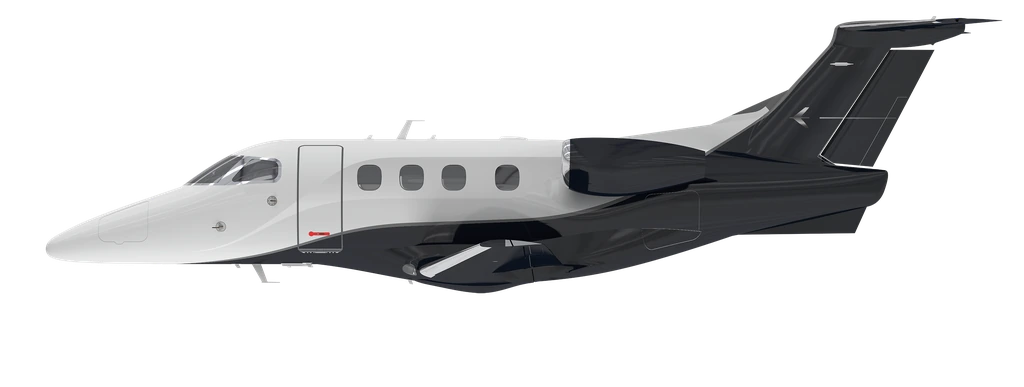
Four models: the Cessna Citation M2 Gen 2 — a classic with the longest range in the set (2,880 km); the HondaJet Elite II — the fastest (782 km/h) with a separate lavatory and a 1.87 m³ hold; the Embraer Phenom 100EX with a BMW Designworks cabin; and the Cirrus Vision Jet G2 — the only one with a CAPS airframe parachute and Safe Return auto-landing. Send us a request — we'll prepare options, calculate running costs and analyse the best fit for your task.
How do you choose an aircraft to buy for your needs?
Start from two numbers: the length of your typical route and the number of passengers. Up to 1,000 km and 4 people — a turboprop or light jet; 2,000–4,000 km — a midsize jet; nonstop intercontinental — a long-range jet. Then adjust for short runways, baggage volume and sleeping berths. We'll match a model to your profile and calculate the ownership economics. Send us a request — we'll prepare options, calculate running costs and analyse the best fit for your task.
New aircraft or pre-owned — which is the better buy?
A new aircraft means a factory warranty and a 1–3-year queue, but the price is at its peak. A pre-owned aircraft means immediate delivery and a price 30–60% lower, while engine time and history matter. For most buyers a fresh 3–7-year-old aircraft is optimal: the main depreciation has happened and plenty of life remains. We cost both options. Send us a request — we'll prepare options, calculate running costs and analyse the best fit for your task.