








Frequently asked questions
What condition is the Pilatus PC-24, 2021 in: hours and cycles?
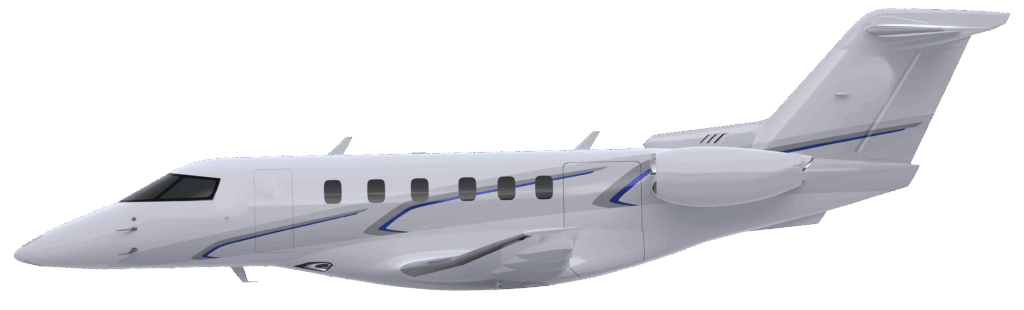
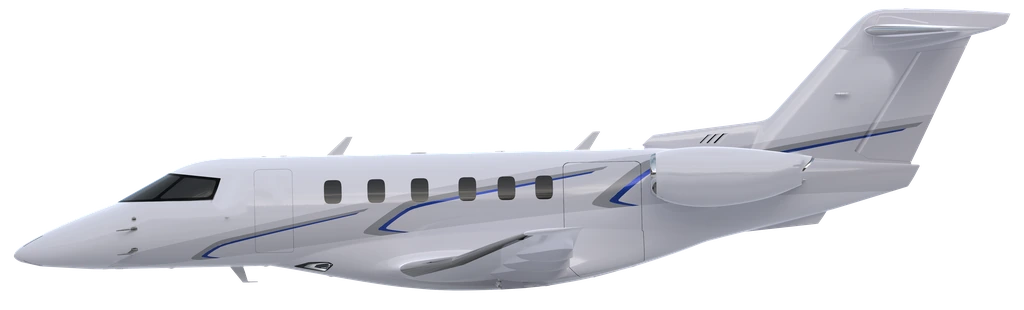
A 2021 aircraft, s/n 222. Cabin — 8 seats. Average sector — 1.2 h: typical short business legs. A flight attendant and hot meals are available depending on cabin configuration. The baggage compartment is accessible in flight. Send us a request — we'll prepare options, calculate running costs and analyse the best fit for your task.
How much does the Pilatus PC-24, 2021 cost and what are the ownership costs?
The average pre-owned price for the model is $11.1M. Running costs at 300–400 h/year — about $2.06M/year, or $5,137 per flight hour. The price of a specific aircraft depends on year, hours flown and engine-programme status. Send us a request — we'll prepare options, calculate running costs and analyse the best fit for your task.
What is Pilatus known for and which aircraft does it build?
Switzerland's Pilatus makes two hits. The PC-12 is the best-selling single-engine turboprop in the world (over 2,000 built): 8–9 seats, 3,300 km, operation from unpaved strips as short as 750 m. The PC-24 is a unique 'off-road jet': jet speed of 815 km/h combined with unpaved-strip clearance and runways from 900 m. Both are famed for Swiss build and thoughtful design. Send us a request — we'll prepare options, calculate running costs and analyse the best fit for your task.
How reliable is the single-engine PC-12?
The fleet statistics answer better than words: 2,000+ PC-12s have logged over 10 million hours, with one of the best accident rates of any turboprop, including twins. The PT6A-67P engine, with 500 million family hours, runs 3,500 hours between overhauls. North American operators carry cargo and patients on the PC-12 around the clock — no tougher test exists. Send us a request — we'll prepare options, calculate running costs and analyse the best fit for your task.
How well does Pilatus hold value on the pre-owned market?
The PC-12 is a residual-value record-holder in general aviation: a ten-year-old aircraft keeps 65–75% of its price (a new NGX is ~$6.5M, a 2015 PC-12 NG $4.3–5M). The reason is perpetual scarcity: the aircraft's versatility keeps demand from charter, air-ambulance and cargo operators. A good aircraft's exposure rarely lasts more than a month. Send us a request — we'll prepare options, calculate running costs and analyse the best fit for your task.
How does the PC-24 differ from ordinary light jets?
The PC-24 is the only jet serially certified for gravel, grass and unpaved strips: it can use ~20,000 airfields worldwide instead of ~5,000. Plus a 1.25×1.30 m cargo door like a turboprop's and a flat 8–10-seat cabin floor. The price of versatility is range: 3,890 km versus 4,000+ for the CJ4. A new one is about $12M. Send us a request — we'll prepare options, calculate running costs and analyse the best fit for your task.
What routes and tasks suit midsize jets?
The midsize class covers 4–6-hour legs: London–Dubai, Geneva–Istanbul, Vienna–Dubai. A range of 3,900–6,200 km allows nonstop flights from Europe to the Gulf, India and North Africa. The cabin now allows standing (1.73–1.83 m), work at a table and a flight as a working day — the class is chosen for its balance of range, comfort and price. Send us a request — we'll prepare options, calculate running costs and analyse the best fit for your task.
What range and how many passengers do midsize jets have?
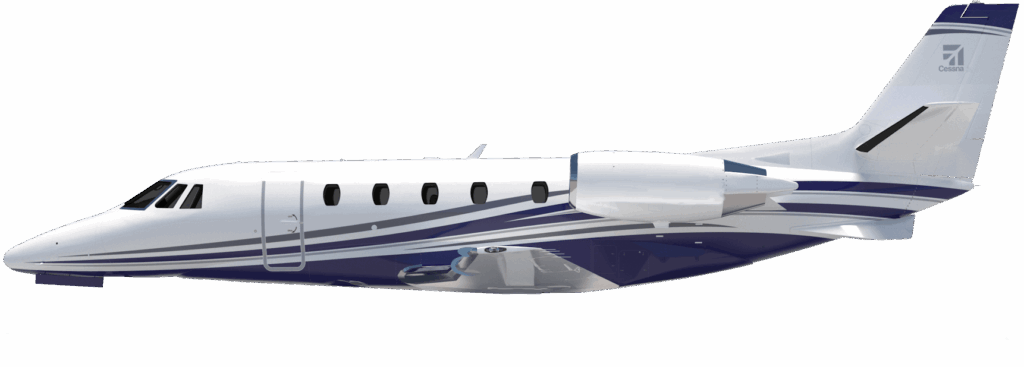
Layouts are 8–9 seats, with up to nine passengers on the Citation Latitude and Praetor 500 with two pilots. Range: Citation XLS+ and PC-24 about 3,900 km, Hawker 800XP/900XP 4,600–4,900 km, Latitude 5,280 km, Praetor 500 a class-record 6,200 km. Cruise 780–850 km/h. Holds of 1.3–2.3 m³ take a whole group's gear, including skis. Send us a request — we'll prepare options, calculate running costs and analyse the best fit for your task.
How does a midsize jet differ from neighbouring classes?
To the light class the midsize adds a stand-up cabin, an extra 1,000–2,000 km and a full galley — but an hour is $1,500–2,500 dearer. The super-midsize goes further: 6,300–7,400 km, a flat floor, sleeping berths — and another $1,000–2,000 on the hour. Midsize is justified on 4–6-hour routes for up to nine people; transatlantic and large parties call for super-midsize. Send us a request — we'll prepare options, calculate running costs and analyse the best fit for your task.
How much does a midsize jet cost on the pre-owned market?
The widest price spread: 2000s Hawker 800XP/900XP and Learjet 60XR $2–4.5M (cheap due to fuel burn and system age), Citation XLS+ $7–13M, Pilatus PC-24 $9–11M, fresh Latitude and Praetor 500 $14–18M. Beyond engine time, watch the cost of upcoming heavy checks: on older Hawkers an inspection can run $500K+. Send us a request — we'll prepare options, calculate running costs and analyse the best fit for your task.
How does a deal work: stages and timeline from deposit to handover?
The standard path takes 6–10 weeks. Step 1: a letter of intent (LOI) with price and terms — 3–5 days. Step 2: a 5–10% deposit into escrow and signing of the purchase agreement. Step 3: a pre-purchase inspection — 1–3 weeks. Step 4: rectification of findings and price adjustment. Step 5: closing — simultaneous transfer of funds, title and risk, technical acceptance and ferry of the aircraft.
What is a pre-purchase inspection and who pays for it?
A pre-purchase inspection (PPI) is an independent check at a certified centre: airframe, engines, corrosion, records and compliance with airworthiness directives. It takes from 3 days on a turboprop to 2–3 weeks on a heavy jet and costs $15–100K — paid by the buyer. By market practice the seller pays to rectify airworthiness-affecting defects. A seller refusing a PPI is grounds to walk away.