






Frequently asked questions
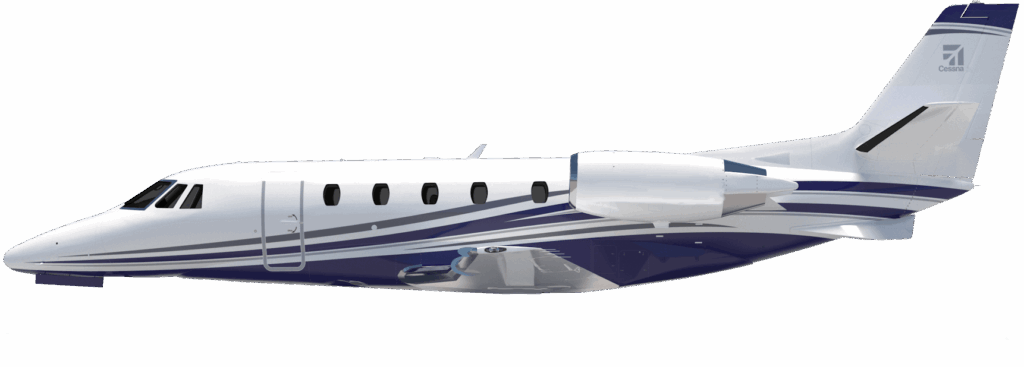
What condition is the Learjet 60XR, 2011 in: hours and cycles?
A 2011 aircraft, s/n 60-409. Cabin — 7 seats. Average sector — 1.7 h: typical short business legs. A flight attendant and hot meals are available depending on cabin configuration. There is no in-flight baggage access — bags are loaded on the ground. Send us a request — we'll prepare options, calculate running costs and analyse the best fit for your task.
How much does the Learjet 60XR, 2011 cost and what are the ownership costs?
The average pre-owned price for the model is $3.5M. Running costs at 300–400 h/year — about $2.30M/year, or $5,758 per flight hour. The price of a specific aircraft depends on year, hours flown and engine-programme status. Send us a request — we'll prepare options, calculate running costs and analyse the best fit for your task.
What is Bombardier known for and which families does it build?
Canada's Bombardier is one of the 'big three' business-jet makers. Two current families: Challenger (the 3500 in super-midsize, the 650 in large) and the flagship Global 5500/6500/7500/8000 line with up to 14,800 km of range. Signature traits are wide cabins (the Challenger 3500 has the widest in class, 2.19 m) and the Smooth Flĕx wing on the Global 7500. Send us a request — we'll prepare options, calculate running costs and analyse the best fit for your task.
How reliable are the Challenger and Global and what about service?
The Challenger 604/605/650 is one of the most numerous large jets: over 1,100 built, with fleet dispatch reliability above 99.7%. Bombardier is actively expanding its own service network — major centres in London, Paris, Singapore and Dubai cover the CIS and Central Asia. The GE CF34 engines on the Challenger are serviced under the fixed-rate OnPoint programme. Send us a request — we'll prepare options, calculate running costs and analyse the best fit for your task.
How well does Bombardier hold value on the pre-owned market?
The Challenger 650 is the liquidity champion in the large class: five-year-old aircraft sell for $22–26M against a $33M list, with exposure rarely over 90 days. The Global 7500, with a waiting list for new jets, sells pre-owned at almost no discount — $60–70M. Early Global Express XRS hold value less well ($10–15M), where costly maintenance checks await the buyer. Send us a request — we'll prepare options, calculate running costs and analyse the best fit for your task.
Which Bombardier should you choose for a specific task?
For 3–5-hour routes (Geneva–Istanbul, London–Dubai) the Challenger 3500 is optimal — 10 seats and 6,300 km. The Challenger 650 adds space and takes 12 passengers over 7,400 km. Intercontinental tasks are Global territory: the 6500 covers 12,200 km, and the 7500 links Europe with North America nonstop — 14,260 km with a four-zone cabin. Send us a request — we'll prepare options, calculate running costs and analyse the best fit for your task.
What routes and tasks suit midsize jets?
The midsize class covers 4–6-hour legs: London–Dubai, Geneva–Istanbul, Vienna–Dubai. A range of 3,900–6,200 km allows nonstop flights from Europe to the Gulf, India and North Africa. The cabin now allows standing (1.73–1.83 m), work at a table and a flight as a working day — the class is chosen for its balance of range, comfort and price. Send us a request — we'll prepare options, calculate running costs and analyse the best fit for your task.
What range and how many passengers do midsize jets have?
Layouts are 8–9 seats, with up to nine passengers on the Citation Latitude and Praetor 500 with two pilots. Range: Citation XLS+ and PC-24 about 3,900 km, Hawker 800XP/900XP 4,600–4,900 km, Latitude 5,280 km, Praetor 500 a class-record 6,200 km. Cruise 780–850 km/h. Holds of 1.3–2.3 m³ take a whole group's gear, including skis. Send us a request — we'll prepare options, calculate running costs and analyse the best fit for your task.
How does a midsize jet differ from neighbouring classes?
To the light class the midsize adds a stand-up cabin, an extra 1,000–2,000 km and a full galley — but an hour is $1,500–2,500 dearer. The super-midsize goes further: 6,300–7,400 km, a flat floor, sleeping berths — and another $1,000–2,000 on the hour. Midsize is justified on 4–6-hour routes for up to nine people; transatlantic and large parties call for super-midsize. Send us a request — we'll prepare options, calculate running costs and analyse the best fit for your task.
How much does a midsize jet cost on the pre-owned market?
The widest price spread: 2000s Hawker 800XP/900XP and Learjet 60XR $2–4.5M (cheap due to fuel burn and system age), Citation XLS+ $7–13M, Pilatus PC-24 $9–11M, fresh Latitude and Praetor 500 $14–18M. Beyond engine time, watch the cost of upcoming heavy checks: on older Hawkers an inspection can run $500K+. Send us a request — we'll prepare options, calculate running costs and analyse the best fit for your task.
How does a deal work: stages and timeline from deposit to handover?
The standard path takes 6–10 weeks. Step 1: a letter of intent (LOI) with price and terms — 3–5 days. Step 2: a 5–10% deposit into escrow and signing of the purchase agreement. Step 3: a pre-purchase inspection — 1–3 weeks. Step 4: rectification of findings and price adjustment. Step 5: closing — simultaneous transfer of funds, title and risk, technical acceptance and ferry of the aircraft.
What is a pre-purchase inspection and who pays for it?
A pre-purchase inspection (PPI) is an independent check at a certified centre: airframe, engines, corrosion, records and compliance with airworthiness directives. It takes from 3 days on a turboprop to 2–3 weeks on a heavy jet and costs $15–100K — paid by the buyer. By market practice the seller pays to rectify airworthiness-affecting defects. A seller refusing a PPI is grounds to walk away.