





Frequently asked questions
Hawker 4000: what kind of aircraft is it and what to consider when buying?
The Hawker 4000 is a super-midsize jet with a composite fuselage (2002–2013): the technology yields a wide 1.97 m stand-up cabin at low weight. Ten seats, a range of about 5,900 km, an 870 km/h cruise, PW308A engines and Honeywell Primus Epic avionics. A full super-midsize with a light-jet cost of entry. The cabin has a flight attendant and hot meal service. The baggage compartment is accessible in flight. On typical legs it covers routes such as Paris–Geneva · London–Athens · Dubai–Maldives. Send us a request — we'll prepare options, calculate running costs and analyse the best fit for your task.
How much does the Hawker 4000 cost: purchase and running costs?
Guide figures for the Hawker 4000: average pre-owned price — $3.7M. Running costs at 300–400 h/year — about $2.71M/year, or $6,765 per flight hour. The final figure depends on year, hours flown, engine-programme status and configuration. Send us a request — we'll prepare options, calculate running costs and analyse the best fit for your task.
What is Beechcraft known for and which aircraft does it build today?
Beechcraft (part of Textron Aviation) created the King Air, the best-selling twin turboprop in history: more than 7,600 built since 1964. In production today are the King Air 260 (6–8 seats, ~3,100 km) and the King Air 360ER with up to 5,000 km of range, with the single-engine Denali coming. The brand's niche is reliable turboprops for short and unpaved strips. Send us a request — we'll prepare options, calculate running costs and analyse the best fit for your task.
How reliable is the King Air and what about parts?
The King Air is a byword for durability in the turboprop class: Pratt & Whitney PT6A engines with over 500 million fleet hours, a 3,600-hour overhaul interval and unpaved-strip clearance. A fleet of 6,000+ flying aircraft means parts are always available everywhere — from the US to Central Asia — and routine maintenance is done by any Textron station. Send us a request — we'll prepare options, calculate running costs and analyse the best fit for your task.
How well does the King Air hold value on the pre-owned market?
More steadily than most jets: a ten-year-old King Air 350 sells for $4–6M against a new 360 at about $8.8M — a loss well under 50% over a decade. Liquidity comes from government bodies, air ambulance and cargo operators buying used aircraft. The quickest to sell are those with a fresh interior and engines under half-life. Send us a request — we'll prepare options, calculate running costs and analyse the best fit for your task.
How does the King Air differ from the Pilatus PC-12?
The main difference is engine count: the King Air is twin-engine, the PC-12 single. The King Air 260 climbs faster, is cleared for commercial night flights over difficult terrain without restrictions and takes up to 8 passengers. The PC-12 is about 30% cheaper to operate and has a large cargo door. The choice comes down to philosophy: engine redundancy versus ownership economics. Send us a request — we'll prepare options, calculate running costs and analyse the best fit for your task.
What routes and tasks suit super-midsize jets?
A class for long 6–8-hour business flights: London–Dubai, Geneva–New York with one stop, transatlantic Lisbon–New York. A range of 6,300–7,400 km, a flat-floor cabin up to 1.83 m high, a full galley and sleeping layouts — a 'flying office' format without stepping up to large-jet prices. Optimal for groups of 6–10. Send us a request — we'll prepare options, calculate running costs and analyse the best fit for your task.
What range and how many passengers do super-midsize jets have?
Layouts are 8–10 seats (Challenger 3500 up to 10, Praetor 600 9–12 in a dense layout). Range: Citation Longitude 6,480 km, Challenger 3500 6,300 km, Gulfstream G280 6,670 km, Praetor 600 7,440 km. The Citation X+ stands apart — the fastest civil aircraft (M0.935), trading range for speed. Holds are 2.8–4.3 m³. Send us a request — we'll prepare options, calculate running costs and analyse the best fit for your task.
How does a super-midsize jet differ from neighbouring classes?
From the midsize it is set apart by an extra 1,000–2,000 km, a wide flat-floor cabin and sleeping berths — transcontinental flights stop being an ordeal. The large class (Challenger 650, Falcon 2000LXS) adds a cabin width of 2.4–2.5 m, a separate rest zone and 7,400+ km, but an hour is $1,500–2,500 dearer. The choice threshold is regular flights longer than seven hours. Send us a request — we'll prepare options, calculate running costs and analyse the best fit for your task.
Which super-midsize jets are in the fleet and how do they differ?
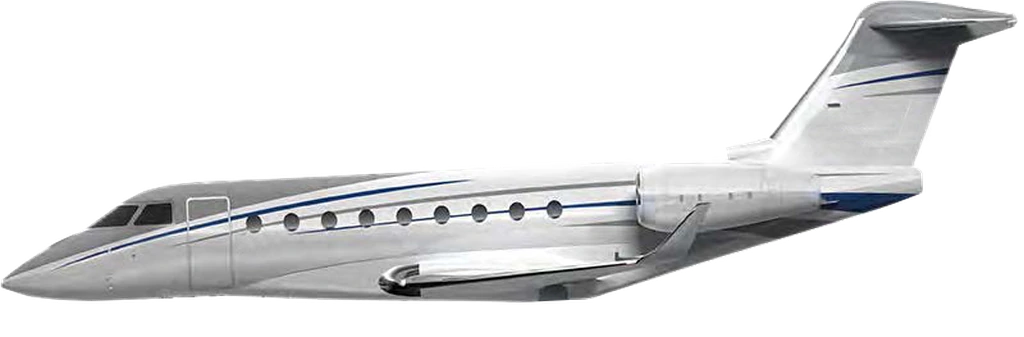
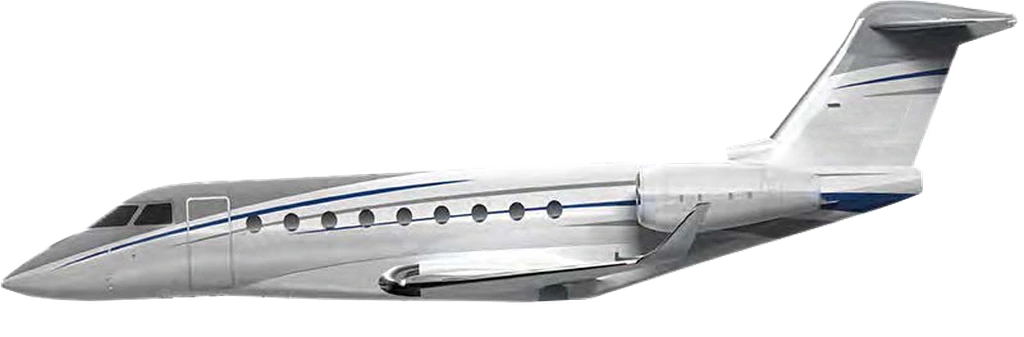
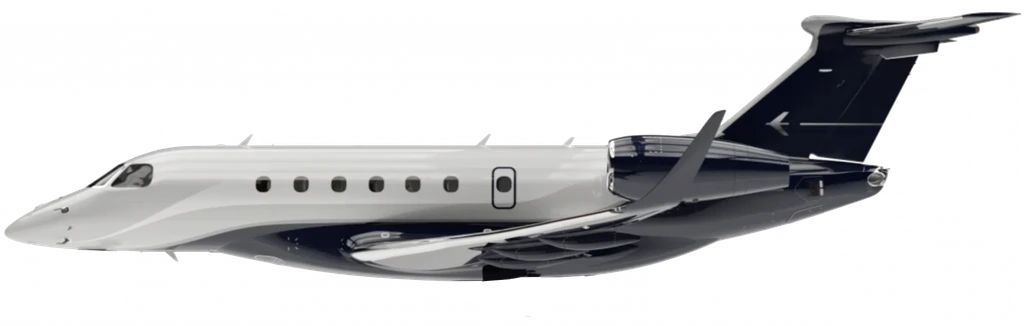
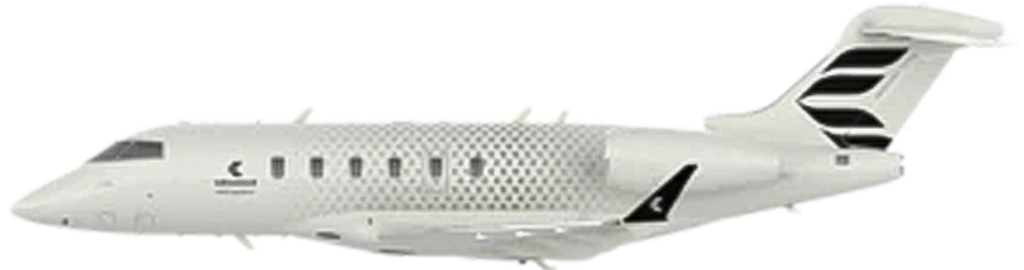
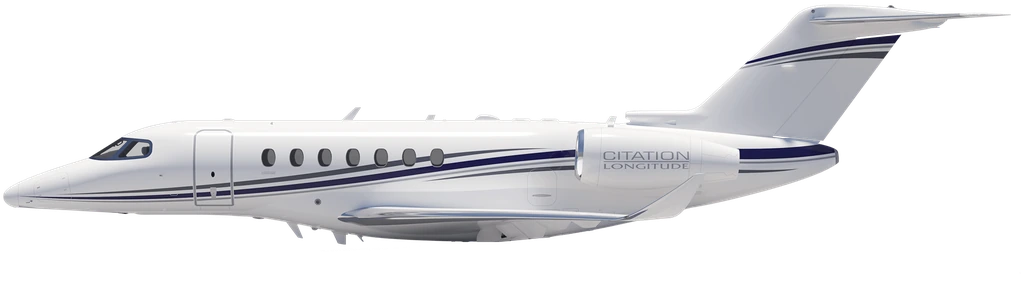
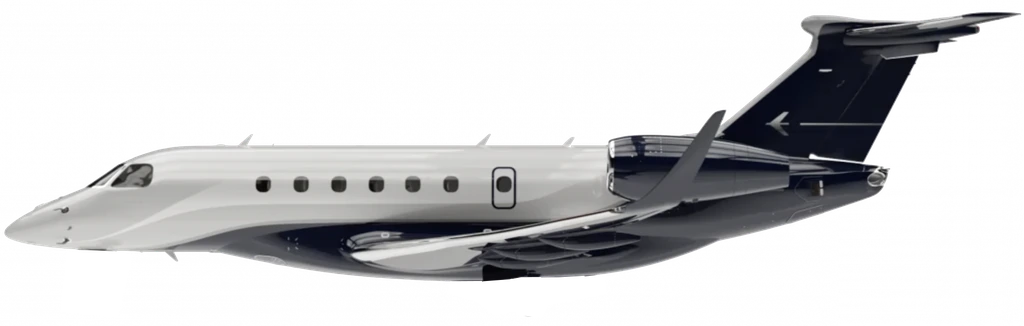
Six models: the Bombardier Challenger 3500 — the widest cabin in class (2.19 m) and massage seats; the Embraer Praetor 600 — a record 7,440 km and fly-by-wire; the Cessna Citation Longitude — the quietest cabin and Citation economics; the Citation X+ — the world's fastest passenger aircraft (M0.935); the Gulfstream G280 — trademark windows and brand reliability; and the Hawker 4000 — a composite veteran at a fair price. Send us a request — we'll prepare options, calculate running costs and analyse the best fit for your task.
How do you choose an aircraft to buy for your needs?
Start from two numbers: the length of your typical route and the number of passengers. Up to 1,000 km and 4 people — a turboprop or light jet; 2,000–4,000 km — a midsize jet; nonstop intercontinental — a long-range jet. Then adjust for short runways, baggage volume and sleeping berths. We'll match a model to your profile and calculate the ownership economics. Send us a request — we'll prepare options, calculate running costs and analyse the best fit for your task.
New aircraft or pre-owned — which is the better buy?
A new aircraft means a factory warranty and a 1–3-year queue, but the price is at its peak. A pre-owned aircraft means immediate delivery and a price 30–60% lower, while engine time and history matter. For most buyers a fresh 3–7-year-old aircraft is optimal: the main depreciation has happened and plenty of life remains. We cost both options. Send us a request — we'll prepare options, calculate running costs and analyse the best fit for your task.