The ski season by private jet: Alpine airports

The Alps are a destination where aircraft selection runs up against not range or budget but clearance for a specific field. Mountain airports have short runways, demanding approaches, daylight limitations and crew qualification requirements. Below we cover every key field in France, Switzerland and Austria and the logic of choosing between them.

Courchevel: the most famous and most constrained

Courchevel Altiport (CVF/LFLJ) is one of the world's most recognisable aerodromes and also the most constrained. A short sloping runway and a demanding approach mean commercially operated private jets do not land there; the field is available only to certain turboprop types with qualified crews.

Further constraints: the aerodrome operates seasonally, there are no night operations at all, flights are visual-rules only in daylight, and operations depend on weather and snow conditions. Planning to arrive here as the primary scenario is risky.

The working arrangement for Courchevel is different: the aircraft lands at Chambéry or Geneva and a helicopter covers the last leg in 20–30 minutes. That is not a compromise but standard practice among operators in the region.

Chambéry and Grenoble: the French gateways

Chambéry (CMF/LFLB) is the main entry point to the French Alps. At an elevation of just 234 metres the field depends far less on mountain weather than the high-altitude alternatives. It accepts midsize and super-midsize jets, with a road transfer of around 75 minutes to Courchevel and about 90 to Megève.

Grenoble (GNB/LFLS) suits a dozen resorts and has a 3,050-metre runway with no specific qualification requirements for ILS or RNAV approaches. Per operational guidance, in peak winter the airport raises its rescue and firefighting category to level 7, with operating hours from 07:00 to 21:00 local.

An important detail on Grenoble: customs and security are available without prior permission, but in February the field fills fast, and then PPRs, slots and confirmed parking all become necessary. Annecy and Lyon serve as further alternatives, Lyon especially for late arrivals.

Switzerland: Geneva, Sion, Samedan

Geneva (GVA/LSGG) is the main hub for Swiss and some French Alpine resorts, accepting aircraft of every class. Demand here is high in winter, so operators recommend considering alternatives too.

Sion (SIR/LSGS) is the primary field for Verbier, Zermatt and Villars, at an elevation comparable to Geneva and Zurich, which makes it accessible to jets in almost any conditions. But there is a significant constraint: Sion requires special authorisation from the Swiss authority because of the challenging terrain-driven approach procedures.

Samedan (SMV/LSZS) serves St Moritz with a 10–20 minute helicopter transfer, but as Europe's second-highest airport it is exposed to winter weather. Parking at Sion is limited in high season, which is factored into planning for longer visits.

Austria and Italy

Innsbruck is the key gateway to the Austrian Alps: Kitzbühel, St Anton and Seefeld are 45–60 minutes away by road. The airport is ringed by mountains and requires specialised approach procedures, which limits the list of cleared types and crews.

Salzburg serves as an alternative for the eastern Austrian resorts. For the Italian Dolomites, Bolzano (LIPB) is used with the same aircraft-class constraints, along with the Verona and Venice airports with longer road transfers.

The helicopter: a required element

In the Alps a helicopter transfer is not an option but part of the primary logistics. Typical times: Courchevel around 20–30 minutes, Méribel about 25, Tignes and Val d'Isère around 30, Morzine about 35. The same routes by road take an hour and a half to two and a half hours.

The constraint is weather: mountain helicopter operations depend on visibility and conditions, so a ground fallback is always built into the plan. The combination of 'aircraft into the valley plus helicopter up' remains the most reliable arrangement provided both links are agreed in advance.

Season peaks and booking lead times

Three pronounced peaks: Christmas, New Year and the February holidays. Per industry practice, requests for the busiest dates go in four to six weeks ahead, and earlier for New Year.

Popular routes — London–Geneva, London–Chambéry, Paris–Courchevel — sell out entirely on peak days. A separate detail: Saturday is traditionally the busiest day on Alpine routes, since weekly chalet rentals begin and end then and the valleys are gridlocked.

Weather and fallbacks

The particularity of mountain airports is that weather at the destination can close the field under an entirely clear sky at departure. So a fallback airport and a ground transfer from it are always built into the plan.

The typical arrangement: Geneva as the diversion for Courchevel-bound flights, Lyon for late arrivals, Chambéry as a more reliable alternative to the high-altitude fields. Sensible practice is to hold time in reserve against a diversion, particularly when connecting to the start of a chalet rental.

Choosing an aircraft for the Alps

The sourcing order here is stricter than on any other European destination. First the target resort, then the airport that serves it, then which aircraft types are cleared there, and only after that range and seat count.

For high-altitude fields a turboprop such as the Pilatus PC-12 is often optimal: it combines short-field capability, a pressurised cabin and sufficient range. Valley airports suit light and midsize jets; intercontinental arrivals need heavy aircraft landing at Geneva, Zurich or Milan.

JetHunter provides access to more than 5,000 aircraft and a catalogue of 246 models with specifications. For Alpine routes, sourcing starts from clearance at the specific field and includes arranging the helicopter leg, parking and a fallback airport.

«Alpine airports are the one place in Europe where an aircraft's clearance matters more than its class. A heavy jet cannot land at Courchevel not because of cost but because the runway is short, the approach steep, and there are no night operations at all.»

— Alexey Mordvintsev, CEO of JetHunter

Author: Alexey Mordvintsev, CEO of JetHunter, President of the Association of Professionals of Executive Aviation Industry (APIDA). Over 14 years in the industry.


Find a private jet

Find out which aircraft is right for you

Answer a few questions and find out which aircraft are right for you.

How to choose an aircraft for rent?

Choosing an aircraft to rent is an important step that will determine the comfort of your trip. Here are key factors to consider:

image

Purpose of the trip:

  • Business travel: a small but comfortable airplane such as the Cessna Citation CJ3+ or Embraer Phenom 300E is suitable for business meetings.
  • Vacation: if you are traveling with a large group, choose a more spacious model such as the Bombardier Challenger 605 or Gulfstream G550.
  • Transcontinental flight: long flights require an aircraft with a long range, such as a Bombardier Global 6000 or Gulfstream G650ER.

Number of passengers:

  • Decide on the exact number of passengers to choose an airplane with enough seats and comfort level for everyone. For better comfort, calculate quantity of passengers based on a number of separate seats, disregarding divans.

Distance and route:

  • Consider the range of the chosen model and the possibility of landing at the destination airport. Consider the specifics of the route: mountainous or maritime terrain may require airplanes with specific technical characteristics. We can help you with this!.

Budget:

  • Determine your budget and compare the cost of renting different models.
  • Consider additional costs: airport services, meals on board, on-board internet. We’ll advise you when you can save up some money and when you better not cut corners.

Additional Requirements:

  • Availability of bedroom, hot catering, shower, internet, entertainment system.
  • Need to transport luggage, sports equipment, pets. Smoking.

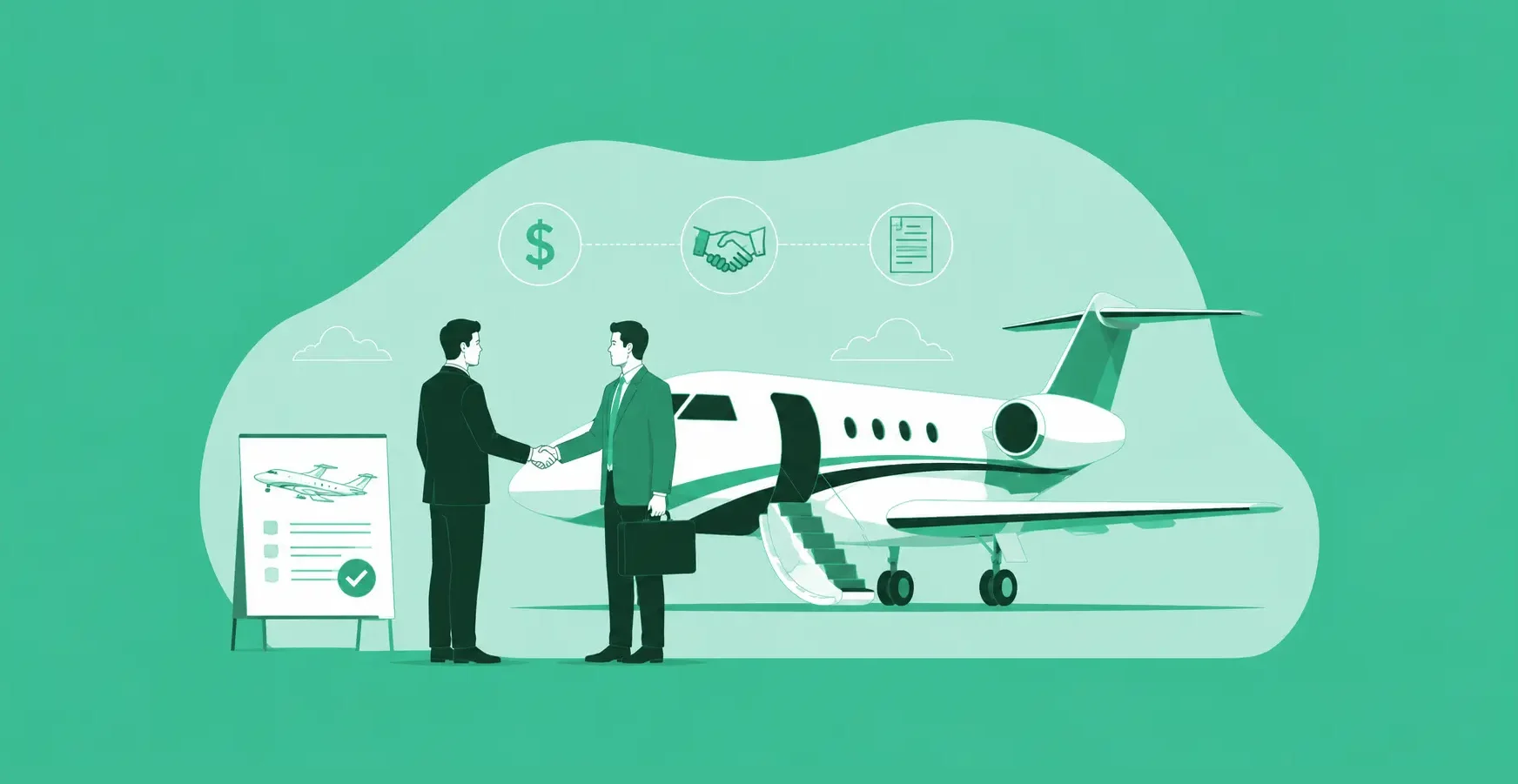
How an Aircraft Purchase Works: Request, Contract, Payment

1

Send us a request

Contact us and tell us about your most ambitious wishes. We will find the best aircraft for you!

2

Sign a contract

Sign Aircraft purchase agreement. This ensures that Aircraft purchase terms and conditions are protected and understood by both parties.

3

Make payment

Make payment for your chosen aircraftin any convenient way. We offer more than 50 different means of payment.

Eight Stages of a Business Jet Purchase

Determine aircraft requirements

Determine your budget and travel needs: Where do you want to fly? How often? How many passengers will you carry? What level of comfort do you prefer?

Send request to us

Contact our manager, who will help you understand the technical characteristics of the aircraft and choose the most suitable model.

Select an aircraft model

Based on your requirements, we will select several aircraft models that are optimally suited in terms of technical characteristics, capacity, flight range and other parameters. We will also help you compare the selected models and make an informed choice. We recommend choosing an aircraft that is 80% of your ideal.

Visual inspection of the aircraft

Choose one or two aircrafts from the available options. We will arrange for a visual inspection where you can personally inspect the aircraft, assess the condition of its interior and exterior and determine the most suitable option for purchase.

LOI and contract

You will need to sign a Letter of Intent to purchase the aircraft (LOI), pay a deposit and sign an Aircraft Purchase Agreement drafted by our experienced lawyers.

Pre-Purchase Inspection (PPI)

We will arrange an independent technical inspection of the aircraft at a certified center to ensure that it is safe and in good working order. You will receive a detailed report on the technical condition of the aircraft to be sure of its reliability. As a result, you will receive a fully operational airworthy aircraft.

Deal closing

At this stage, the aircraft is flown to the closing location and the aircraft is paid for in any way you like. The transaction is conducted through an escrow agent, which guarantees the safety and transparency of the transaction. Your funds will be sent to the seller only after receiving all necessary documents for the aircraft.

Getting an aircraft

We will organize a delivery ceremony to put the aircraft at your service. And we will ensure that your new aircraft gets off to a comfortable start. If necessary, we recommend the operator, insurance company and trusted maintenance center.

Have questions?

Leave your contact information and we will contact you within 5 minutes and tell you everything in more detail.

Find out more

We will advise, select and consult you on all issues.

Frequently asked questions

Which airports serve the Alpine resorts?

Chambéry and Grenoble for the Three Valleys, Geneva and Bern for the Swiss resorts, Innsbruck for Austria. The point is to land as close to the slopes as possible instead of spending three hours in a transfer after a night flight.

How do I get to Courchevel?

Fly into Chambéry or Geneva, then take a helicopter to the Courchevel altiport. The altiport itself has a short sloping runway and a demanding approach, so jets do not operate there.

When is the season and which dates are busiest?

The season runs from December to March, peaking over the New Year and the February school holidays. Mountain airports work to strict slots, so flights on those dates are booked well ahead.

Is there a charge for skis and snowboards?

No, equipment travels free in the baggage hold. Do say how many sets you are bringing: baggage volume affects the choice of aircraft.

How does a deal work: stages and timeline from deposit to handover?

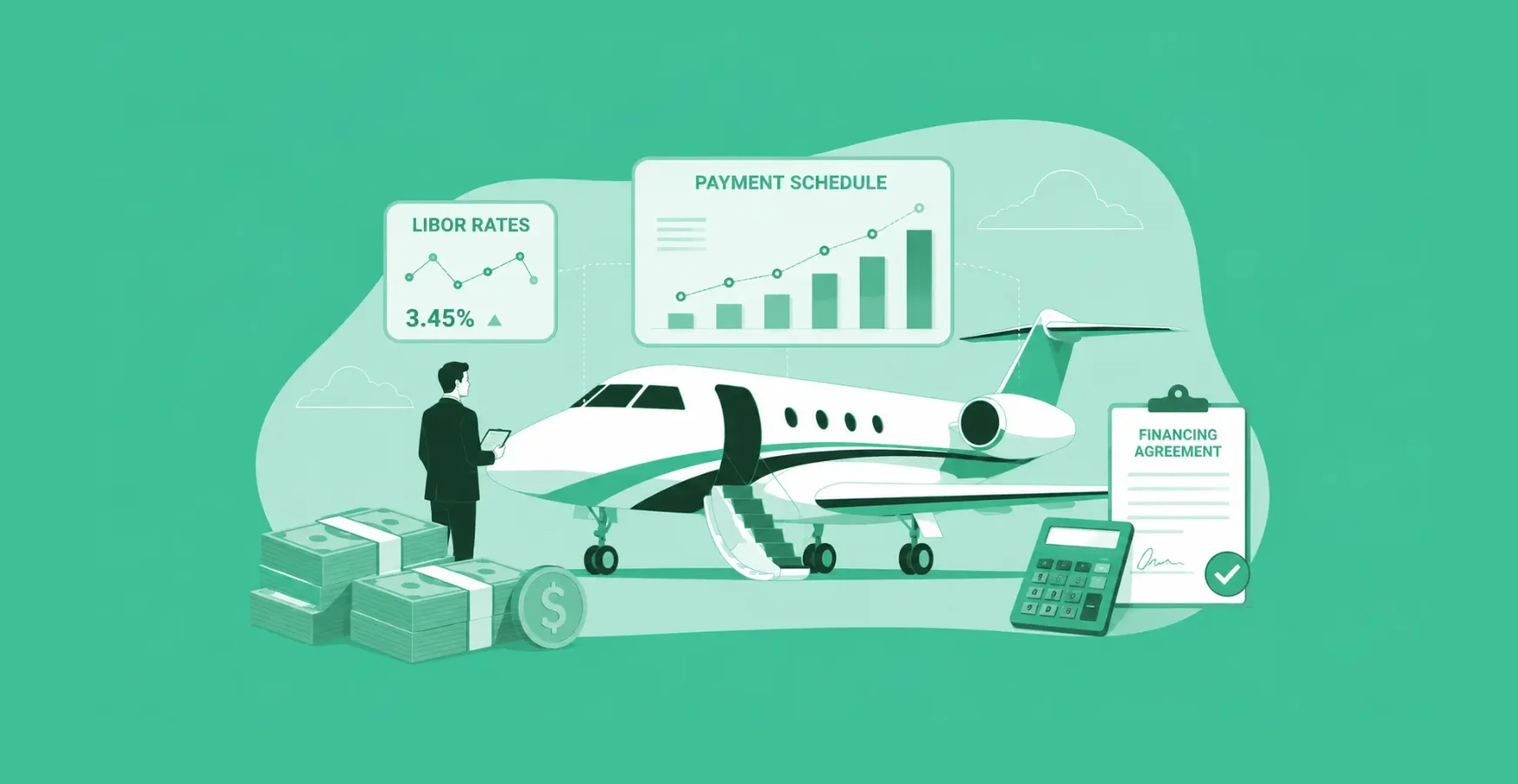
The standard path takes 6–10 weeks. Step 1: a letter of intent (LOI) with price and terms — 3–5 days. Step 2: a 5–10% deposit into escrow and signing of the purchase agreement. Step 3: a pre-purchase inspection — 1–3 weeks. Step 4: rectification of findings and price adjustment. Step 5: closing — simultaneous transfer of funds, title and risk, technical acceptance and ferry of the aircraft.

What is a pre-purchase inspection and who pays for it?

A pre-purchase inspection (PPI) is an independent check at a certified centre: airframe, engines, corrosion, records and compliance with airworthiness directives. It takes from 3 days on a turboprop to 2–3 weeks on a heavy jet and costs $15–100K — paid by the buyer. By market practice the seller pays to rectify airworthiness-affecting defects. A seller refusing a PPI is grounds to walk away.

What taxes and duties apply when importing and registering an aircraft?

The import budget depends on jurisdiction. In the EU the main items are any customs duty (most business-jet codes carry reduced or zero rates) and import VAT, which varies by country of entry (for example 19–22% in much of Europe). Registration in Aruba, San Marino or the Isle of Man under operation outside the EU allows a temporary-admission regime. We produce an exact calculation before the LOI is signed — an error here costs millions.

How far in advance should a flight be booked?

The standard is 24–48 hours before departure: that is enough to confirm the aircraft, crew and slots. For regular clients we arrange a domestic flight from 4–6 hours. International routes need 48–72 hours: overflight permits for some countries take 3–5 working days. On peak dates — Christmas, summer holidays, major forums — aircraft are booked out 2–3 weeks ahead, so plan early.

What are empty legs and how much can you save on them?

An empty leg is the ferry of an empty aircraft to its next job or home to base. Such segments sell at a 30–75% discount to the usual price: a flight that would cost $25K can come to $8–12K. The limits: the date and route are fixed to the aircraft's schedule, and if the main booking is cancelled the flight may shift. We publish current empty legs weekly — watch the listings.

What are the rules on baggage, pets and flying with children?

Baggage is limited only by hold volume: a light jet takes 5–8 suitcases, while midsize and above fit skis, gun cases and golf bags — clear oversized cargo in advance. Pets travel in the cabin in a carrier or crate; a pet passport, microchip and documents for the destination country are required. Children fly from birth to 2 years with no surcharge.

How JetHunter Works With Clients: A Word From the Founder

image

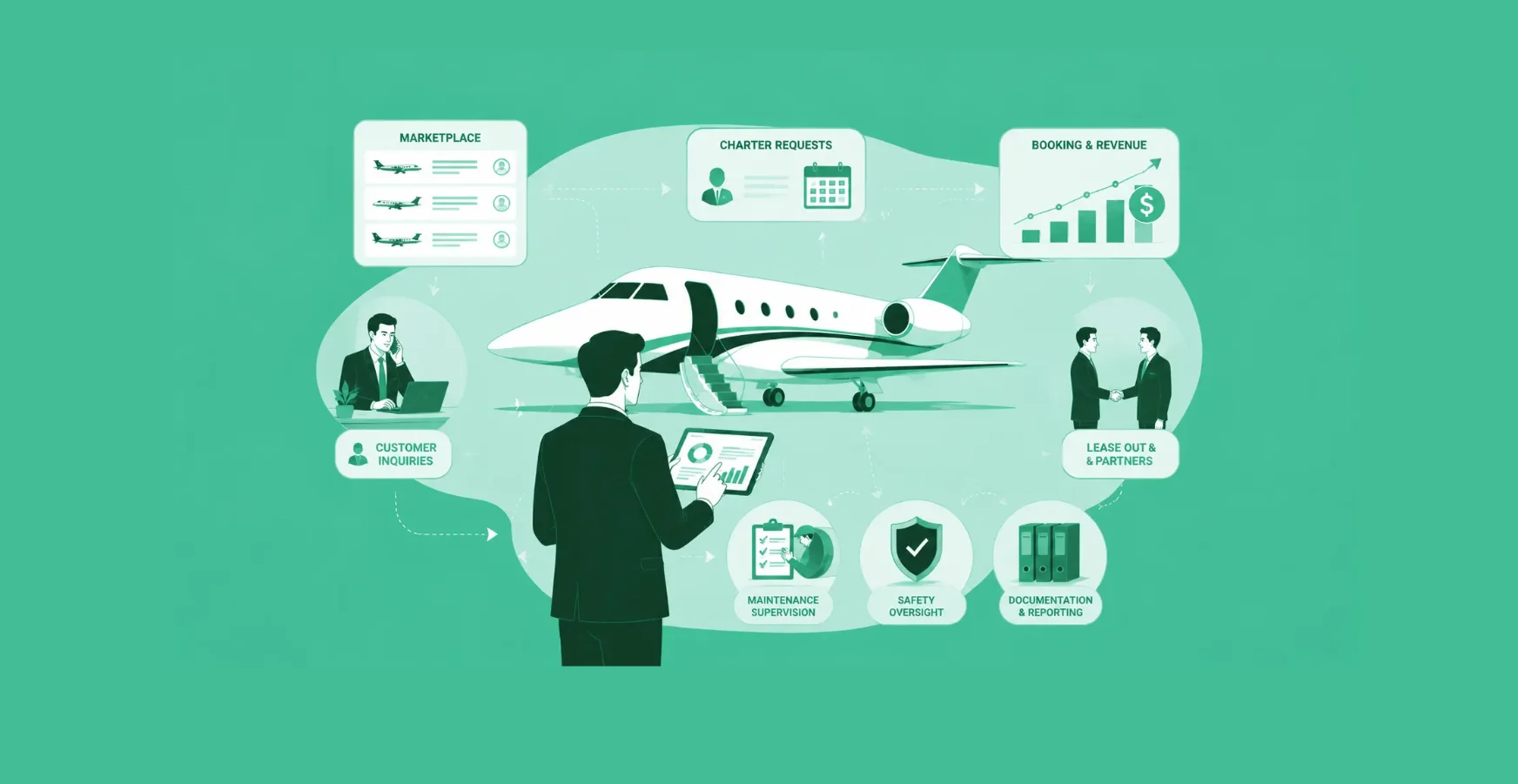
For those who value time above all else, the sky opens up limitless possibilities. At JetHunter we have built a service that turns private flying into a tool of efficiency and comfort. When you charter an aircraft with us, you get more than transport — you get a carefully designed space for work and rest.

Our approach is comprehensive. Looking to buy a private jet, or need a business jet for a certain period? We will be your reliable partner. Every client gets personal attention: we walk you through the model range, help you choose an aircraft to buy, and arrange charter terms that keep your budget and business goals in focus.

We value the trust you place in us and aim to build a long-term, mutually rewarding relationship with every client.

With JetHunter you acquire more than an aircraft — you open up a new standard of living, where distance is no obstacle to your ambitions.

Sincerely,
Alex Mordvintsev, Founder of JetHunter