










Frequently asked questions
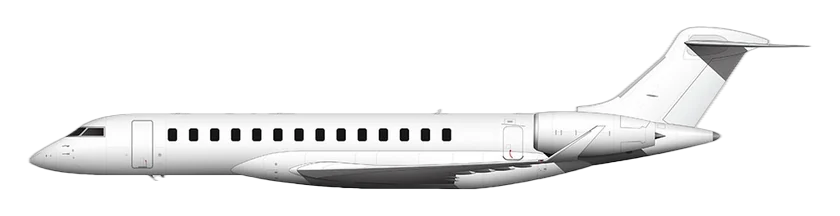
What condition is the Gulfstream G650ER, 2017 in: hours and cycles?
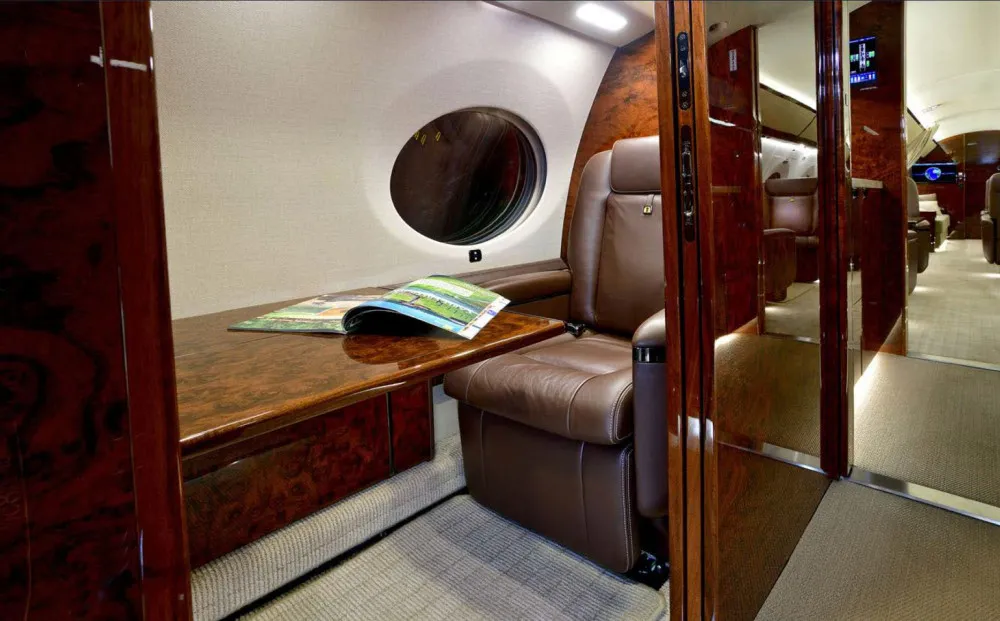
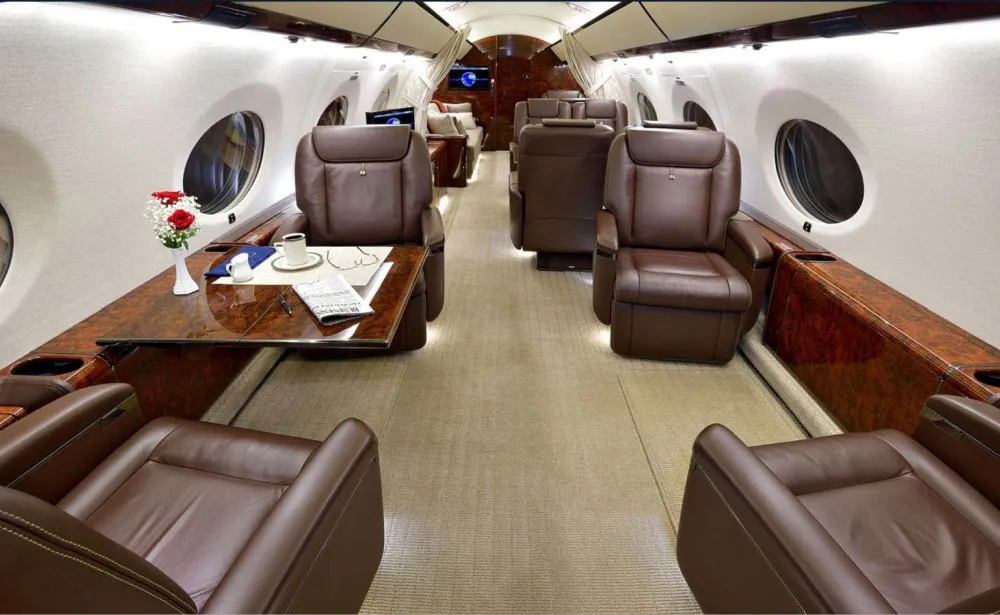
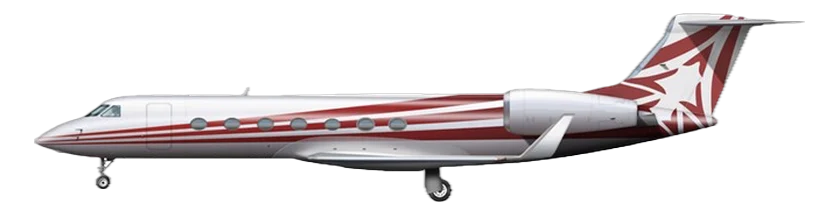
A 2017 aircraft, reg. N671WV. 1,233 flight hours over 566 cycles — about 140 hours a year, well below the market average of 350–450. Cabin — 13 seats. The aircraft is kept on a continuing-airworthiness programme with a transparent maintenance history. Send us a request — we will prepare options for your task.
How much does the Gulfstream G650ER, 2017 cost and what are the ownership costs?
The average pre-owned price for the model is $44.9M. Running costs at 300–400 h/year — about $4.54M a year, or $11,345 per flight hour. The price of a specific aircraft depends on year, hours flown and engine-programme status. Send us a request — we will calculate the cost of ownership for your usage.
What is Gulfstream known for and which models are in the range?
America's Gulfstream is a byword for the flagship business jet: half the world's long-range fleet carries the letter G. The current range: the super-midsize G280, the new G400/G500/G600, and the summit — G650ER, G700 and G800 with up to 14,800 km of range. Signature traits: an M0.90 cruise, oval windows three times the usual area and a cabin altitude equivalent to 900 m. Send us a request — we'll prepare options, calculate running costs and analyse the best fit for your task.
How reliable are Gulfstreams and how is support organised?
Gulfstream fleet dispatch reliability holds at 99.8% — behind it is business aviation's largest in-house service organisation: 4,000+ specialists, $2B of parts inventory and a 24-hour support centre able to send a mobile team anywhere in the world. The Rolls-Royce Pearl engines on the G700/G800 are serviced under the hourly-rate CorporateCare programme. Send us a request — we'll prepare options, calculate running costs and analyse the best fit for your task.
How well does Gulfstream hold value on the pre-owned market?
An industry benchmark: a five-year-old G650ER sells for $42–52M against a $70M+ list, and in short-supply years pre-owned aircraft sold above new ones given the queue. 2010s G550s steadily hold $14–18M. Liquidity comes from global demand: a third of buyers are in the US, a third in the Middle East and Asia, so a seller does not depend on one region. Send us a request — we'll prepare options, calculate running costs and analyse the best fit for your task.
Which Gulfstream should you choose for a specific task?
For 3–5-hour routes and regional flights, the G280: 6,660 km, 10 seats, the most economical in the family. The G500/G600 cover 9,600–12,000 km — London or Geneva to Singapore nonstop. The G650ER and G700 are intercontinental classics: 13,900–14,350 km, a 19-seat cabin with a bedroom and shower; the G800 adds range to 14,800 km. Send us a request — we'll prepare options, calculate running costs and analyse the best fit for your task.
What routes and tasks suit long-range jets?
This is the class of nonstop intercontinental flights: London–Los Angeles, Geneva–New York, Dubai–Sydney with one stop. A range of 9,600–14,800 km saves 3–5 hours per connection and removes dependence on intermediate countries. Cabins of three or four zones with a bedroom, shower and office turn a 12-hour flight into a full working day or a night's sleep. Send us a request — we'll prepare options, calculate running costs and analyse the best fit for your task.
What range and how many passengers do long-range jets have?
Capacity is 12–19 passengers with sleeping berths for 6–10. Range: Global 5500 10,600 km, G550 12,500 km, Falcon 8X 11,950 km, G650ER 13,890 km, Global 7500 14,260 km, G700 14,350 km, Global 8000 14,800 km. Cruise M0.85–0.925; the Global 8000 reaches M0.94 — faster than any production civil aircraft. Send us a request — we'll prepare options, calculate running costs and analyse the best fit for your task.
How does a long-range jet differ from neighbouring classes?
From the ultra-large class it is set apart by 3,000–6,000 km more range and modern airframes with low cabin altitude (equivalent to 900–1,200 m at cruise). ACJ/BBJ business liners give two or three times the floor area, but need long runways, cost more to maintain and are slower. The formula: regular nonstop 10+ hours for a small group — this class; a 20+-person residence cabin — a liner. Send us a request — we'll prepare options, calculate running costs and analyse the best fit for your task.
How much does a long-range jet cost on the pre-owned market?
The Global Express XRS and early Global 5000 are $10–16M: the minimum budget to enter the intercontinental club. G550 $13–18M, Global 6000 $16–24M, Falcon 8X $42–52M, G650ER $42–55M, Global 7500 $60–70M. Costly inspection items: Rolls-Royce BR710/Pearl time (a pair overhaul $6–9M) and 120/240-month airframe status. Send us a request — we'll prepare options, calculate running costs and analyse the best fit for your task.
How does a deal work: stages and timeline from deposit to handover?
The standard path takes 6–10 weeks. Step 1: a letter of intent (LOI) with price and terms — 3–5 days. Step 2: a 5–10% deposit into escrow and signing of the purchase agreement. Step 3: a pre-purchase inspection — 1–3 weeks. Step 4: rectification of findings and price adjustment. Step 5: closing — simultaneous transfer of funds, title and risk, technical acceptance and ferry of the aircraft.
What is a pre-purchase inspection and who pays for it?
A pre-purchase inspection (PPI) is an independent check at a certified centre: airframe, engines, corrosion, records and compliance with airworthiness directives. It takes from 3 days on a turboprop to 2–3 weeks on a heavy jet and costs $15–100K — paid by the buyer. By market practice the seller pays to rectify airworthiness-affecting defects. A seller refusing a PPI is grounds to walk away.