Oktoberfest by private jet: Munich's airports and logistics

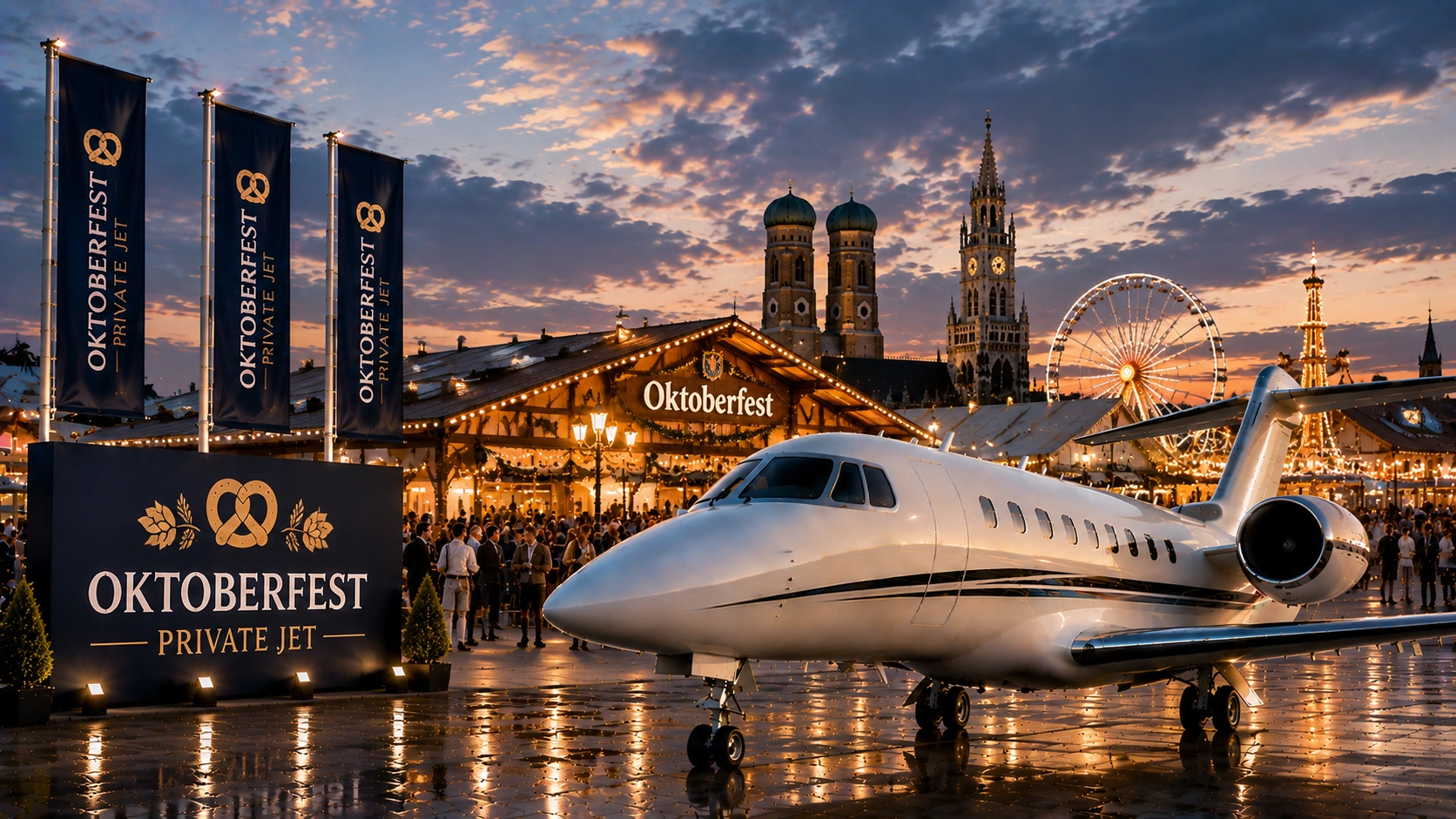
Oktoberfest is Germany's largest festival, running from mid-September into the first days of October. For business aviation it is an atypical peak: it stretches over more than two weeks rather than concentrating into a few days like most European events. Below we cover Munich's airports, the logistics and practical planning.

Munich's airports

Munich (MUC/EDDM) is Bavaria's main international hub, about 35 kilometres northeast of the city. It accepts every aircraft class, has full business-aviation infrastructure and operates as a point of entry.

Oberpfaffenhofen (OBF/EDMO) west of Munich is a dedicated business-aviation airport with no scheduled passenger traffic. That means no competition for slots with airlines and faster procedures; the field is traditionally popular with private operators in the region.

Augsburg (AGB/EDMA) about 70 kilometres west serves as a further alternative, including for parking. On peak festival weekends these fields relieve the main airport.

A stretched peak

The main difference between Oktoberfest and Cannes or Davos is duration. The festival runs over two weeks, so the load is distributed rather than concentrated. The peaks fall on weekends, particularly the first and last.

The practical consequence for planning: slots and parking on festival weekdays are usually available, while weekends are tight. That gives room for manoeuvre absent at short events — shifting a visit by a day or two often solves the problem entirely.

Parking: size it to the stay

Because the festival is stretched, holding an aircraft on the ground for the whole period makes no sense. The typical arrangement is positioning for a specific visit with departure one to three days later, or repositioning to base and returning.

The calculation is made against specific dates: on a two-day visit the aircraft usually stays; on a longer one repositioning proves cheaper than parking plus crew downtime. Oberpfaffenhofen and Augsburg serve as convenient parking points without repositioning to another country.

Routes and flight times

Munich sits in the centre of Europe and the legs are short: London to Munich is about 1 hour 45 minutes, Paris to Munich around 1 hour 10 minutes, Milan to Munich about an hour, Vienna to Munich around 45 minutes, Zurich to Munich about 40 minutes.

For longer routes: Moscow to Munich is about 3 hours 20 minutes, Dubai to Munich around 6 hours, Istanbul to Munich about 2 hours 40 minutes. European legs are covered by light and midsize jets, making a single-day visit practical.

Ground logistics

From Munich airport to the Theresienwiese, where the festival is held, is around 40–50 minutes by car outside peak hours. From Oberpfaffenhofen it is closer — about 30–40 minutes. On festival weekends city traffic rises substantially and journey times grow.

A separate feature of the destination is accommodation: Munich hotels are booked months ahead on festival dates and prices are noticeably above normal. That shapes the trip format: some guests fly in for a single day without an overnight, which a private aircraft makes entirely feasible.

Who a private flight suits

The first scenario is corporate groups: companies bring teams and partners, and an aircraft seating eight to twelve solves the task more cheaply than business-class tickets for everyone, with a guarantee of arriving together.

The second is the single-day visit: arrive in the morning, programme during the day, evening departure without an overnight. Given Munich hotel prices on festival dates, that format can be economically justified. The third is combined trips pairing Munich with business in Germany or Austria.

Practical planning

The first question is dates: weekday or weekend. For festival weekdays planning is normal; for weekends it needs margin on slots and parking. The second is the airport: Oberpfaffenhofen when speed of procedures is the priority, Munich for a larger aircraft or a scheduled connection.

The third question is the length of the visit, which determines the parking arrangement. The fourth is ground transfer: on festival days it is arranged in advance, since public transport and taxis are stretched.

Munich beyond the festival

Oktoberfest is not the only reason for business visits to Munich. The city hosts the headquarters of several major corporations, holds international trade fairs and serves as a gateway to the Bavarian Alps and Austrian ski resorts, one and a half to two hours away by road.

For business aviation that means year-round demand with seasonal peaks: the festival in September and October, the exhibition calendar through the year, the ski season in winter. Oberpfaffenhofen remains a convenient field across all seasons.

Frequently asked questions

Which airport should I choose? Oberpfaffenhofen when speed of procedures is the priority, Munich for a larger aircraft or a scheduled connection, Augsburg as a parking alternative.

How long is the drive to the Theresienwiese? From Munich 40–50 minutes outside peak, from Oberpfaffenhofen 30–40 minutes.

When is it hardest? At weekends, especially the first and last; on festival weekdays slots and parking are usually available.

Is a visit without an overnight realistic? Yes: short European legs allow arrival in the morning and departure in the evening, which Munich hotel prices can justify.

Choosing an aircraft

European routes are served by light and midsize jets, and both Munich fields accept them without restriction. Intercontinental arrivals require heavy aircraft, and the choice then shifts toward the main airport.

JetHunter provides access to more than 5,000 aircraft and a catalogue of 246 models with range maps. For Oktoberfest, sourcing starts from the visit format: a single-day trip, a corporate group or an extended stay call for different decisions on aircraft and parking.

«Oktoberfest differs from other European peaks in duration: not three days but over two weeks. That changes the logic — holding parking for the whole period makes no sense; the aircraft is positioned for a specific visit.»

— Alexey Mordvintsev, CEO of JetHunter

Author: Alexey Mordvintsev, CEO of JetHunter, President of the Association of Professionals of Executive Aviation Industry (APIDA). Over 14 years in the industry.

Find a private jet

Find out which aircraft is right for you

Answer a few questions and find out which aircraft are right for you.

How to choose an aircraft for rent?

Choosing an aircraft to rent is an important step that will determine the comfort of your trip. Here are key factors to consider:

image

Purpose of the trip:

  • Business travel: a small but comfortable airplane such as the Cessna Citation CJ3+ or Embraer Phenom 300E is suitable for business meetings.
  • Vacation: if you are traveling with a large group, choose a more spacious model such as the Bombardier Challenger 605 or Gulfstream G550.
  • Transcontinental flight: long flights require an aircraft with a long range, such as a Bombardier Global 6000 or Gulfstream G650ER.

Number of passengers:

  • Decide on the exact number of passengers to choose an airplane with enough seats and comfort level for everyone. For better comfort, calculate quantity of passengers based on a number of separate seats, disregarding divans.

Distance and route:

  • Consider the range of the chosen model and the possibility of landing at the destination airport. Consider the specifics of the route: mountainous or maritime terrain may require airplanes with specific technical characteristics. We can help you with this!.

Budget:

  • Determine your budget and compare the cost of renting different models.
  • Consider additional costs: airport services, meals on board, on-board internet. We’ll advise you when you can save up some money and when you better not cut corners.

Additional Requirements:

  • Availability of bedroom, hot catering, shower, internet, entertainment system.
  • Need to transport luggage, sports equipment, pets. Smoking.

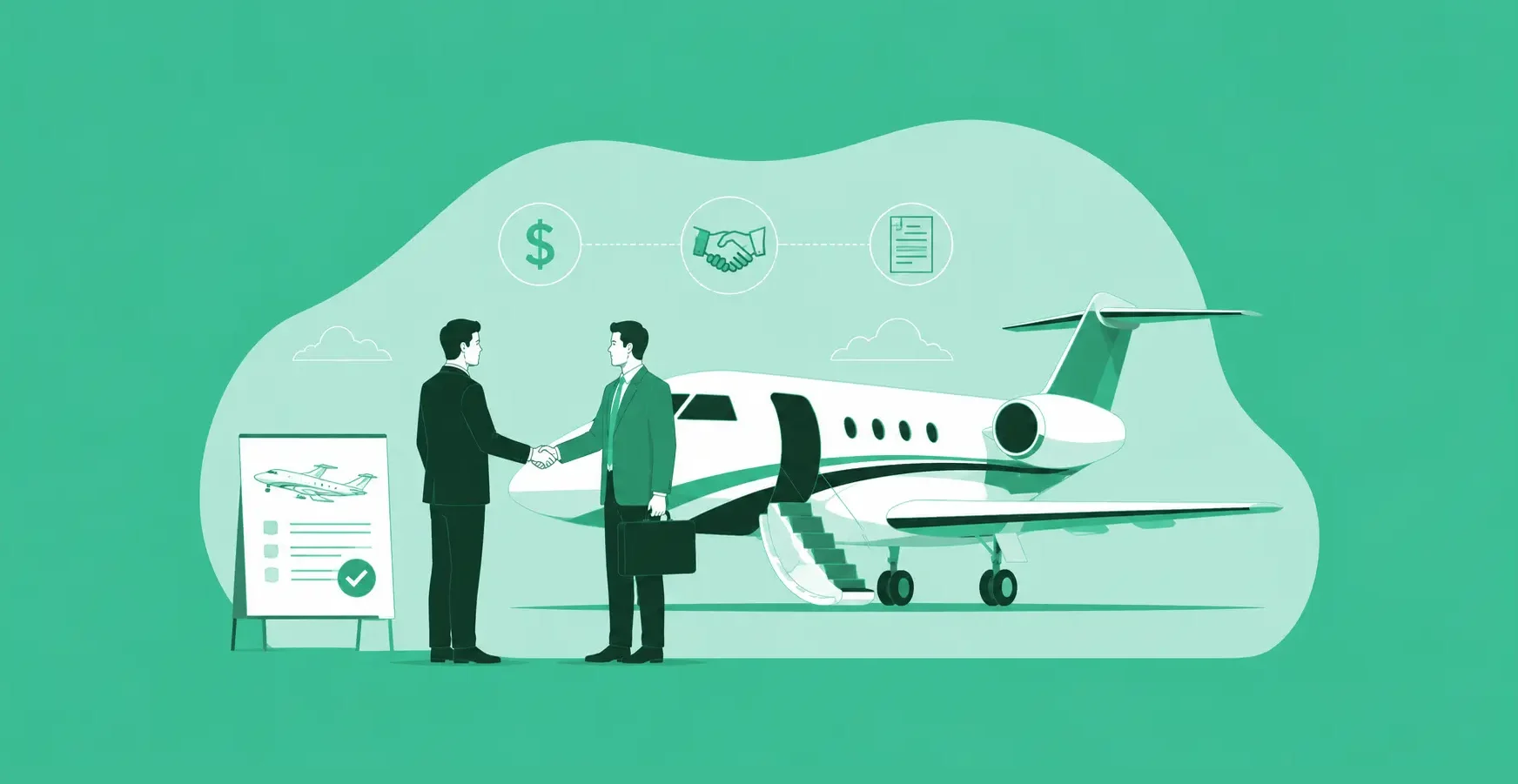
How an Aircraft Purchase Works: Request, Contract, Payment

1

Send us a request

Contact us and tell us about your most ambitious wishes. We will find the best aircraft for you!

2

Sign a contract

Sign Aircraft purchase agreement. This ensures that Aircraft purchase terms and conditions are protected and understood by both parties.

3

Make payment

Make payment for your chosen aircraftin any convenient way. We offer more than 50 different means of payment.

Eight Stages of a Business Jet Purchase

Determine aircraft requirements

Determine your budget and travel needs: Where do you want to fly? How often? How many passengers will you carry? What level of comfort do you prefer?

Send request to us

Contact our manager, who will help you understand the technical characteristics of the aircraft and choose the most suitable model.

Select an aircraft model

Based on your requirements, we will select several aircraft models that are optimally suited in terms of technical characteristics, capacity, flight range and other parameters. We will also help you compare the selected models and make an informed choice. We recommend choosing an aircraft that is 80% of your ideal.

Visual inspection of the aircraft

Choose one or two aircrafts from the available options. We will arrange for a visual inspection where you can personally inspect the aircraft, assess the condition of its interior and exterior and determine the most suitable option for purchase.

LOI and contract

You will need to sign a Letter of Intent to purchase the aircraft (LOI), pay a deposit and sign an Aircraft Purchase Agreement drafted by our experienced lawyers.

Pre-Purchase Inspection (PPI)

We will arrange an independent technical inspection of the aircraft at a certified center to ensure that it is safe and in good working order. You will receive a detailed report on the technical condition of the aircraft to be sure of its reliability. As a result, you will receive a fully operational airworthy aircraft.

Deal closing

At this stage, the aircraft is flown to the closing location and the aircraft is paid for in any way you like. The transaction is conducted through an escrow agent, which guarantees the safety and transparency of the transaction. Your funds will be sent to the seller only after receiving all necessary documents for the aircraft.

Getting an aircraft

We will organize a delivery ceremony to put the aircraft at your service. And we will ensure that your new aircraft gets off to a comfortable start. If necessary, we recommend the operator, insurance company and trusted maintenance center.

Have questions?

Leave your contact information and we will contact you within 5 minutes and tell you everything in more detail.

Find out more

We will advise, select and consult you on all issues.

Frequently asked questions

When does Oktoberfest take place?

From late September into the first days of October, running for two weeks. Munich receives around six million visitors in that period.

How long is the flight to Munich?

About 2.5 hours from Istanbul, about 3.5 hours from Moscow and about 6.5 hours from Dubai.

Can it be done as a day trip?

Yes, and it often is: arrive in the morning, take your table in the tent, depart in the evening or the next morning. Hotels are taken six months ahead, and a day trip removes that problem.

How do I get a table in the historic tents?

Tables are booked in advance and usually together with the flight — by the time the festival opens, the popular tents have nothing left.

How does a deal work: stages and timeline from deposit to handover?

The standard path takes 6–10 weeks. Step 1: a letter of intent (LOI) with price and terms — 3–5 days. Step 2: a 5–10% deposit into escrow and signing of the purchase agreement. Step 3: a pre-purchase inspection — 1–3 weeks. Step 4: rectification of findings and price adjustment. Step 5: closing — simultaneous transfer of funds, title and risk, technical acceptance and ferry of the aircraft.

What is a pre-purchase inspection and who pays for it?

A pre-purchase inspection (PPI) is an independent check at a certified centre: airframe, engines, corrosion, records and compliance with airworthiness directives. It takes from 3 days on a turboprop to 2–3 weeks on a heavy jet and costs $15–100K — paid by the buyer. By market practice the seller pays to rectify airworthiness-affecting defects. A seller refusing a PPI is grounds to walk away.

What taxes and duties apply when importing and registering an aircraft?

The import budget depends on jurisdiction. In the EU the main items are any customs duty (most business-jet codes carry reduced or zero rates) and import VAT, which varies by country of entry (for example 19–22% in much of Europe). Registration in Aruba, San Marino or the Isle of Man under operation outside the EU allows a temporary-admission regime. We produce an exact calculation before the LOI is signed — an error here costs millions.

How far in advance should a flight be booked?

The standard is 24–48 hours before departure: that is enough to confirm the aircraft, crew and slots. For regular clients we arrange a domestic flight from 4–6 hours. International routes need 48–72 hours: overflight permits for some countries take 3–5 working days. On peak dates — Christmas, summer holidays, major forums — aircraft are booked out 2–3 weeks ahead, so plan early.

What are empty legs and how much can you save on them?

An empty leg is the ferry of an empty aircraft to its next job or home to base. Such segments sell at a 30–75% discount to the usual price: a flight that would cost $25K can come to $8–12K. The limits: the date and route are fixed to the aircraft's schedule, and if the main booking is cancelled the flight may shift. We publish current empty legs weekly — watch the listings.

What are the rules on baggage, pets and flying with children?

Baggage is limited only by hold volume: a light jet takes 5–8 suitcases, while midsize and above fit skis, gun cases and golf bags — clear oversized cargo in advance. Pets travel in the cabin in a carrier or crate; a pet passport, microchip and documents for the destination country are required. Children fly from birth to 2 years with no surcharge.

How JetHunter Works With Clients: A Word From the Founder

image

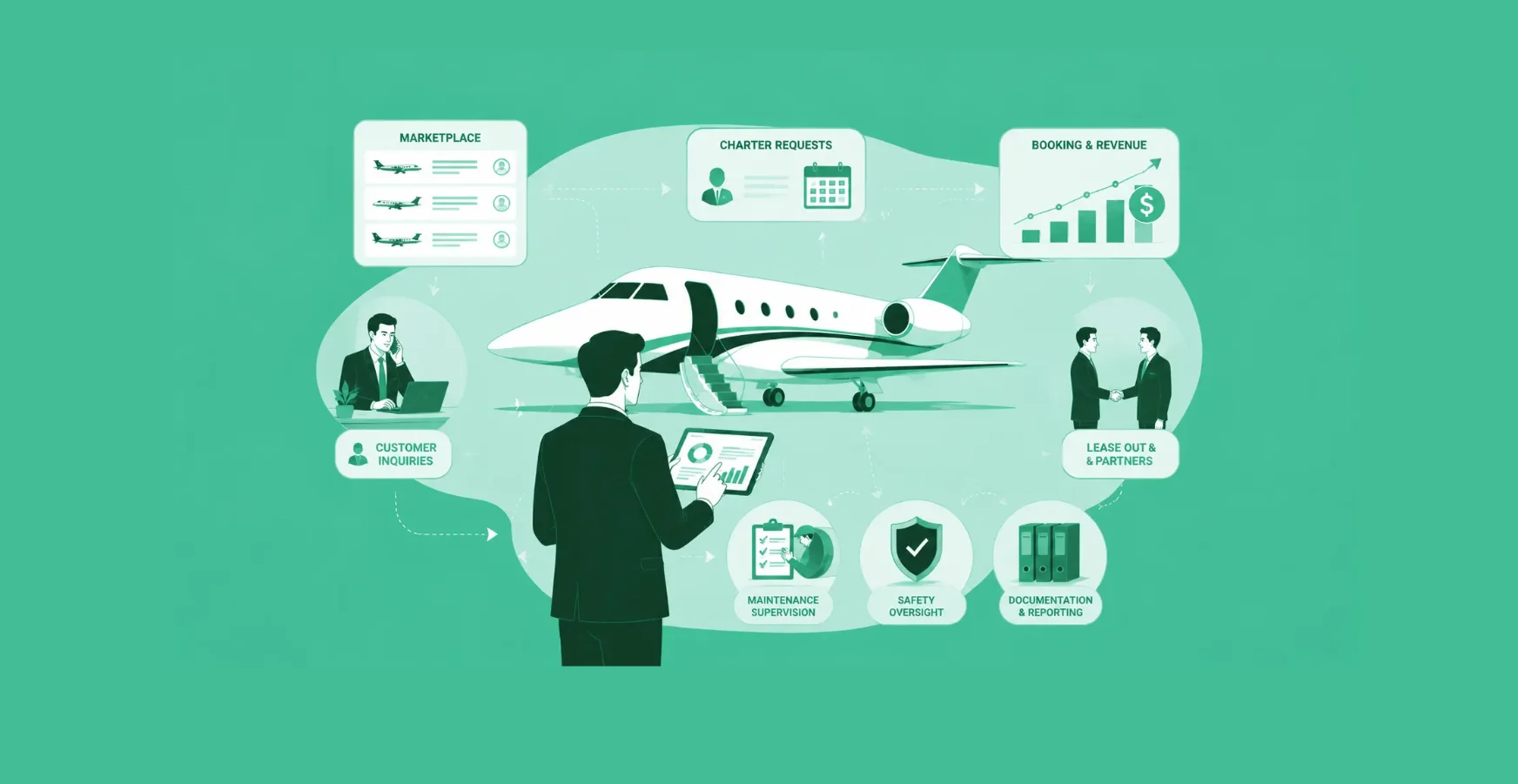
For those who value time above all else, the sky opens up limitless possibilities. At JetHunter we have built a service that turns private flying into a tool of efficiency and comfort. When you charter an aircraft with us, you get more than transport — you get a carefully designed space for work and rest.

Our approach is comprehensive. Looking to buy a private jet, or need a business jet for a certain period? We will be your reliable partner. Every client gets personal attention: we walk you through the model range, help you choose an aircraft to buy, and arrange charter terms that keep your budget and business goals in focus.

We value the trust you place in us and aim to build a long-term, mutually rewarding relationship with every client.

With JetHunter you acquire more than an aircraft — you open up a new standard of living, where distance is no obstacle to your ambitions.

Sincerely,
Alex Mordvintsev, Founder of JetHunter