The short answer: from one and a half to two million dollars for an older light jet to more than a hundred million for a new ultra-long-range flagship. That spread makes the question almost meaningless without qualifiers, so below we cover what makes up the price, how new differs from pre-owned, what the market is doing in 2026 and which costs arise beyond the contract figure.
Price bands by class
The market is divided into classes, each with its own price band. Very light and light jets run roughly $2–12 million, midsize $8–20 million, super-midsize $15–30 million, heavy large-cabin $25–60 million, and ultra-long-range flagships from $60–80 million upward. Business airliners built on mainline platforms exceed a hundred million before the cabin is fitted out.
These are market reference points, not a price list: within each band the spread is set by age, hours, condition and specification. A new aircraft and a fifteen-year-old example of the same type can differ in price by a factor of three or four.
The order of magnitude is confirmed by industry statistics. Per Honeywell, some 8,500 new business jets worth $283 billion will be delivered over the coming decade — implying an average delivered price of around $33 million.
New or pre-owned
A new aircraft brings a factory warranty, modern avionics and connectivity, predictable costs in the early years and the ability to specify the interior. The price for that is not only money but time: order backlogs on popular models stretch into months and years.
A pre-owned aircraft is cheaper to enter and available immediately, but demands a thorough pre-purchase inspection and carries higher operating costs due to wear. The practical rule: the older the aircraft, the less the purchase price matters relative to engine condition and enrolment in maintenance programmes.
Recent years have shifted demand toward larger aircraft. As industry analysts note, flagship models with list prices above $70 million account for a growing share of deliveries, which is why the total value of deliveries is rising faster than their number.
What the market is doing in 2026
The market currently favours sellers. New deliveries are rising: in 2025 manufacturers handed over 854 business jets, up 11.8% on the previous year, with the combined value of all aircraft delivered reaching a record $35.7 billion.
Pre-owned supply is tight: by mid-2026 about 6.5% of the active fleet was listed against a ten-year average of 8.1%. Transactions are growing — in the first half of 2026 accredited dealers closed 746 deals, up 21% year on year — while price reductions in listings fell by 11%.
For a buyer this means strong competition for quality younger aircraft and little room to negotiate on them. Older aircraft linger in listings longer — there the buyer's position is stronger.
What sets the price of a specific aircraft
Within the same type and year the price can vary by millions. The first factor is utilisation: total time and cycles against airframe and engine limits. The second is maintenance programme status: an aircraft with transferable engine, APU and airframe coverage is worth noticeably more, because the buyer gets a predictable budget instead of an unknown future overhaul bill.
The third factor is avionics and connectivity: compliance with current mandates and cabin broadband now affect price more than they did a decade ago. The fourth is interior and paint condition; the fifth is operating history: number of owners, where the aircraft was based, completeness of logbooks, damage and repair history.
Specification is assessed separately: cabin configuration, seat count, shower and berthing on long-range aircraft, auxiliary fuel tanks. Aircraft identical on paper but differently configured trade at different prices.
Costs beyond the aircraft price
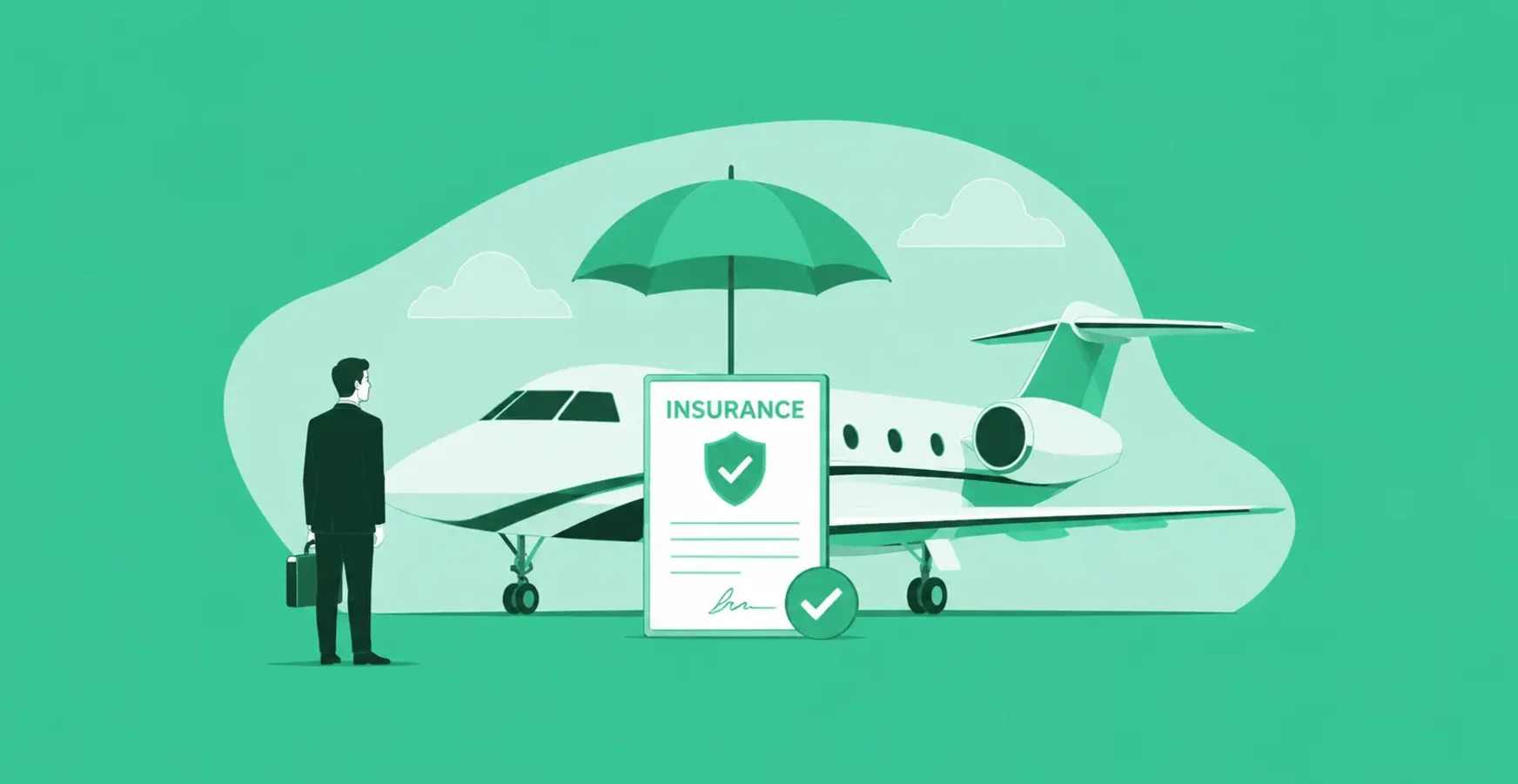
The contract figure is not the total. Added to it are the pre-purchase inspection and rectification of findings, transaction handling and escrow, registration in the chosen jurisdiction, repositioning the aircraft, insurance, legal and tax advice, and broker commission.
The tax element depends on jurisdiction and ownership structure and can prove the largest single line — in some scenarios a percentage of the aircraft's value. This is settled before signing, not after, with specialist advisers.
Sensible practice is to hold a reserve above the purchase budget for inspection findings and priority work. The pre-purchase inspection is usually what justifies revising the price in the buyer's favour.
Depreciation: the main hidden item
An aircraft loses roughly 7–10% of value a year depending on model and market conditions. Over five years of ownership the gap between purchase and sale price often exceeds all direct operating costs for the same period — yet it is the item least often included in calculations.
The rate of loss is uneven: a new aircraft sheds a significant share in its early years, while one already past the steep part of the curve depreciates more slowly. That is an argument for pre-owned aircraft where the ownership horizon is relatively short.
What it costs to run after purchase
Purchase is only the entry. Annual fixed costs cover crew salaries and training, hull and liability insurance, hangarage, subscriptions and ground handling; variable costs rise with hours — fuel, maintenance, engine reserves, fees.
The order of magnitude depends on class: for a midsize aircraft the fixed portion runs to hundreds of thousands of dollars a year, for an ultra-long-range one it comfortably exceeds a million. The industry benchmark for ownership paying off starts at roughly 200 hours a year; below that, charter or fractional ownership is usually more rational.
How the transaction runs
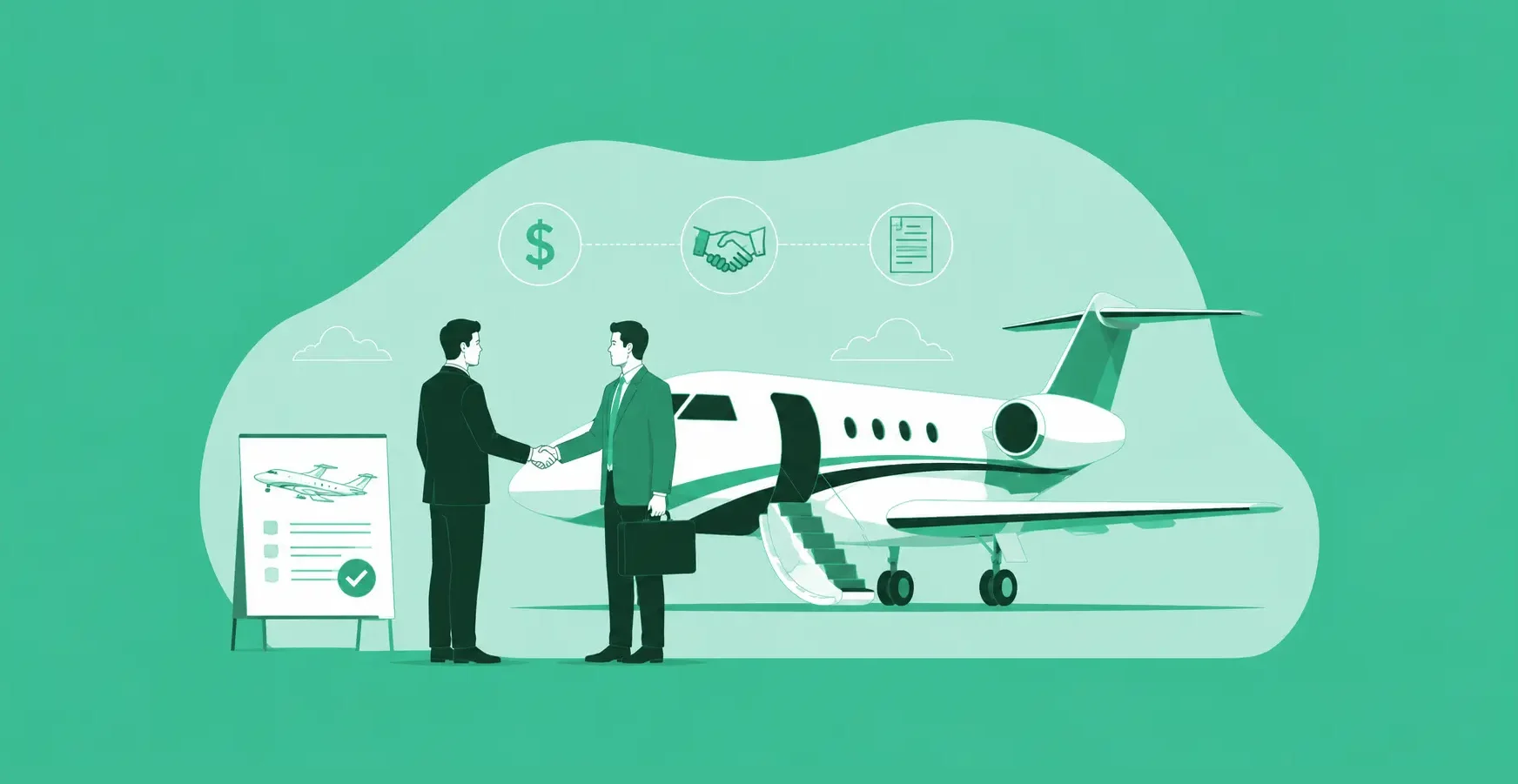
The purchase process falls into six stages: defining mission and budget, sourcing aircraft on the market, a letter of intent (LOI), the pre-purchase inspection, renegotiation based on its findings, and closing through escrow with title transfer and registration.
The inspection is the pivotal stage. The aircraft is flown to a service centre and opened up to an agreed scope; airframe, engines, systems and documentation are examined. Findings are split between those the seller rectifies and those the buyer takes on at a discount. Economising here is the most expensive mistake in the whole deal.
A separate check is legal: that the aircraft is free of liens and encumbrances, that the chain of title is sound, and its status in the international registry of security interests. Specialist lawyers handle this, not the broker.
Alternatives to outright purchase
Owning a whole aircraft is not the only route. Fractional ownership gives a share in a specific aircraft and divides fixed costs among co-owners, cutting the entry threshold several times over. Jet cards give a fixed hourly rate with no ownership at all, and on-demand charter means paying only for a specific flight.
The choice is driven by annual hours. Industry analysts note that demand for fractional ownership has become one of the drivers of record orders for new aircraft — the format serves those for whom outright ownership is excessive but regular chartering has become inconvenient.
Financing the purchase
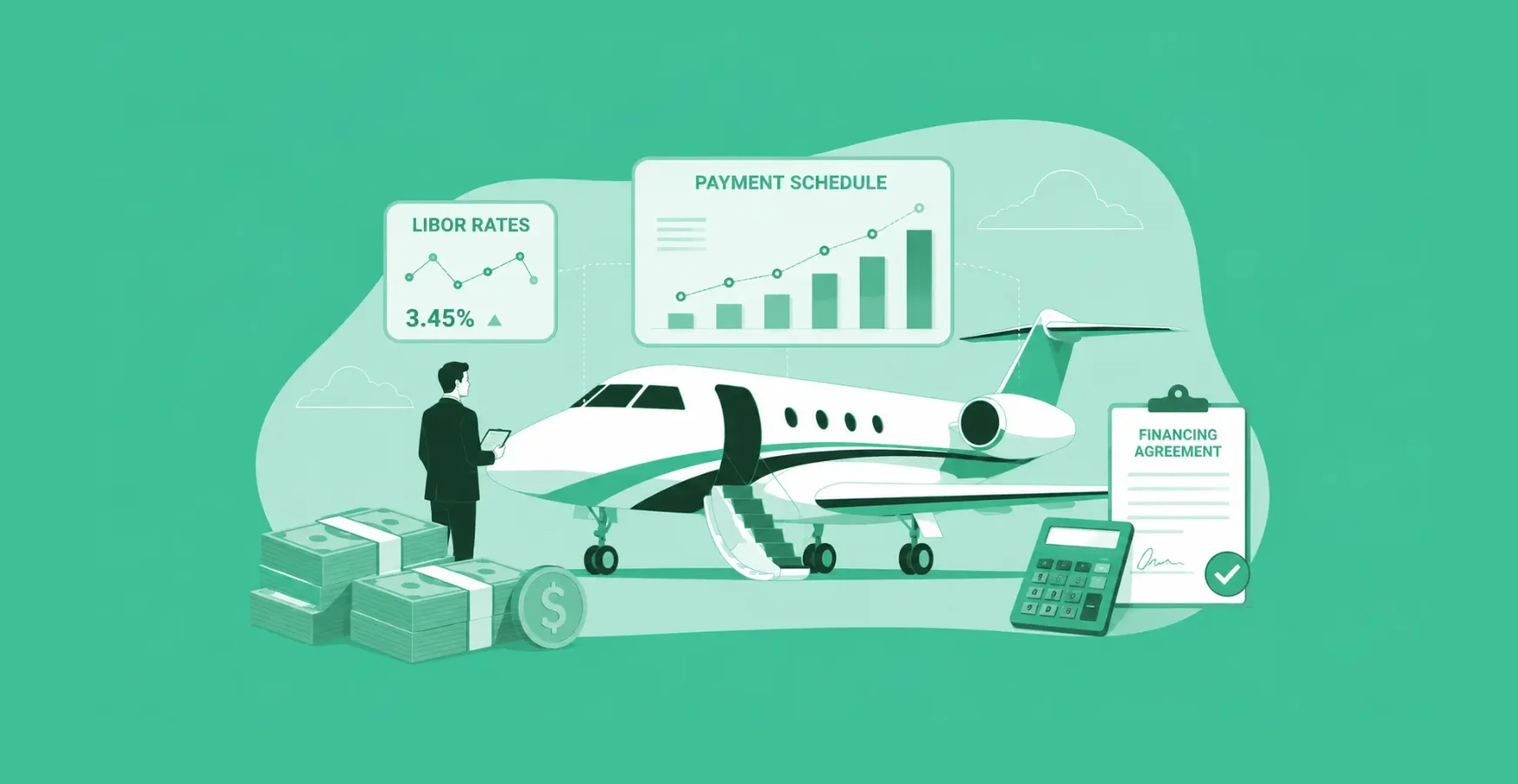
Few transactions close entirely with the buyer's own funds. Aircraft lending is a distinct segment with its own terms: tenor, rate, down-payment requirements and criteria for the aircraft as collateral. Lenders assess the aircraft's age, the type's liquidity on the pre-owned market and enrolment in maintenance programmes.
This is precisely why enrolment in an hourly programme is treated by banks as a collateral-value factor rather than merely an owner convenience: predictable maintenance costs reduce the risk that the asset loses value through a deferred, expensive repair.
Common buyer mistakes
The first is treating the asking price as the final figure: the real total combines the aircraft price, inspection findings, transaction costs, taxes and priority work. The second is economising on the pre-purchase inspection or narrowing its scope to speed up the deal; that is exactly where corrosion, undisclosed repairs and documentation discrepancies surface.
The third mistake is underestimating depreciation and counting only running costs. The fourth is buying an aircraft for hypothetical future routes rather than the actual flight profile. The fifth is ignoring maintenance programme status: an aircraft without coverage is cheaper to buy, but the risk of an expensive event sits entirely with the new owner.
How to cost it for your case
A correct calculation starts not with a budget but with a flight profile: how many hours a year, which routes, how many passengers. From this follows the minimum sufficient aircraft class — and the most common first-time buyer mistake is taking an aircraft larger than the mission requires and paying for unused volume throughout ownership.
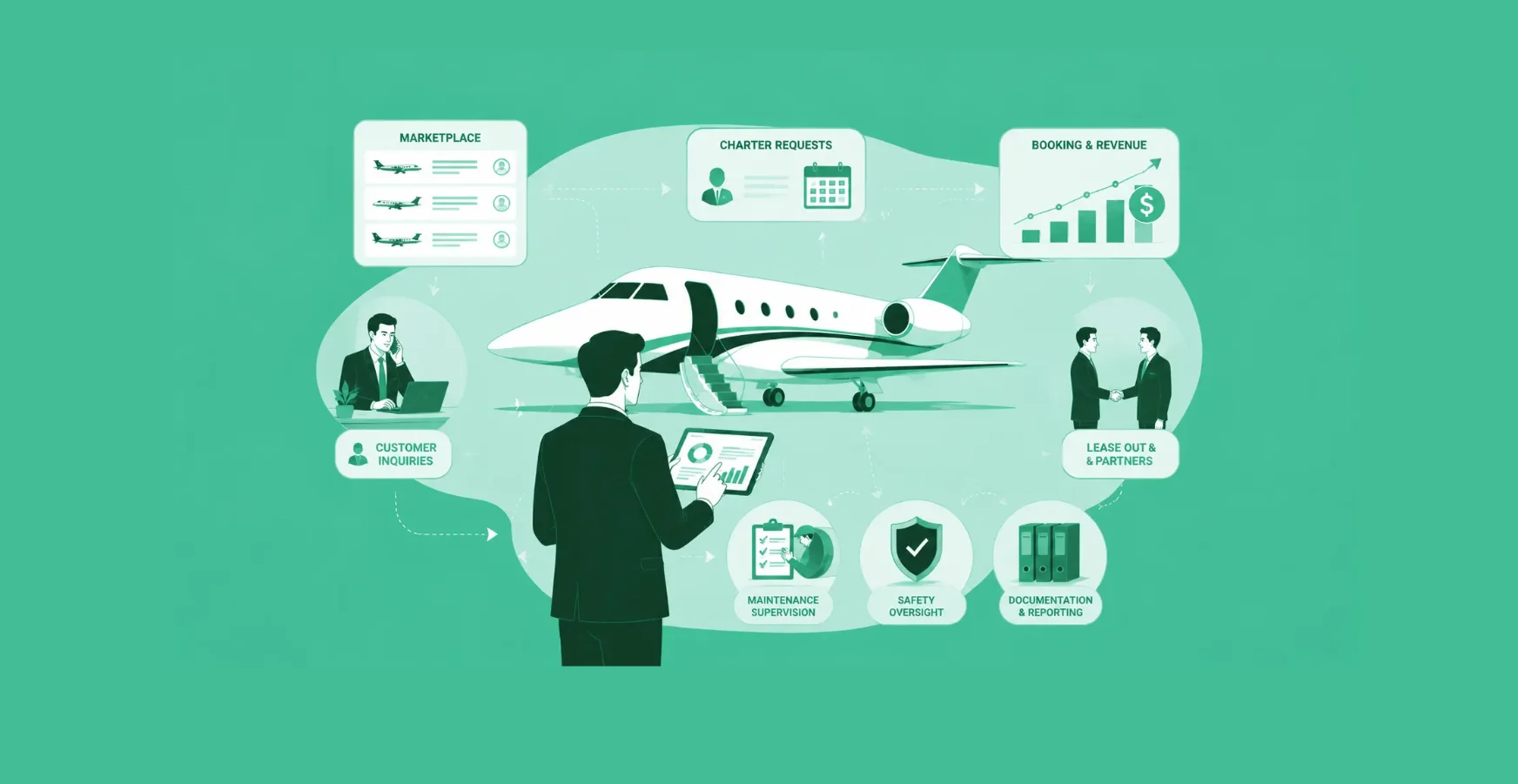
JetHunter maintains an open catalogue of aircraft for sale and supports the transaction end to end: sourcing against the mission, verifying history and programme status, arranging the pre-purchase inspection, renegotiating on its findings and closing through escrow. That turns the price question from a range into a specific costing for a specific aircraft.
«The asking price is not what you pay. Between the listed figure and the final one sits the pre-purchase inspection, and it is usually what moves the number by hundreds of thousands in your favour.»
— Alexey Mordvintsev, CEO of JetHunter
Author: Alexey Mordvintsev, CEO of JetHunter, President of the Association of Professionals of Executive Aviation Industry (APIDA). Over 14 years in the industry.