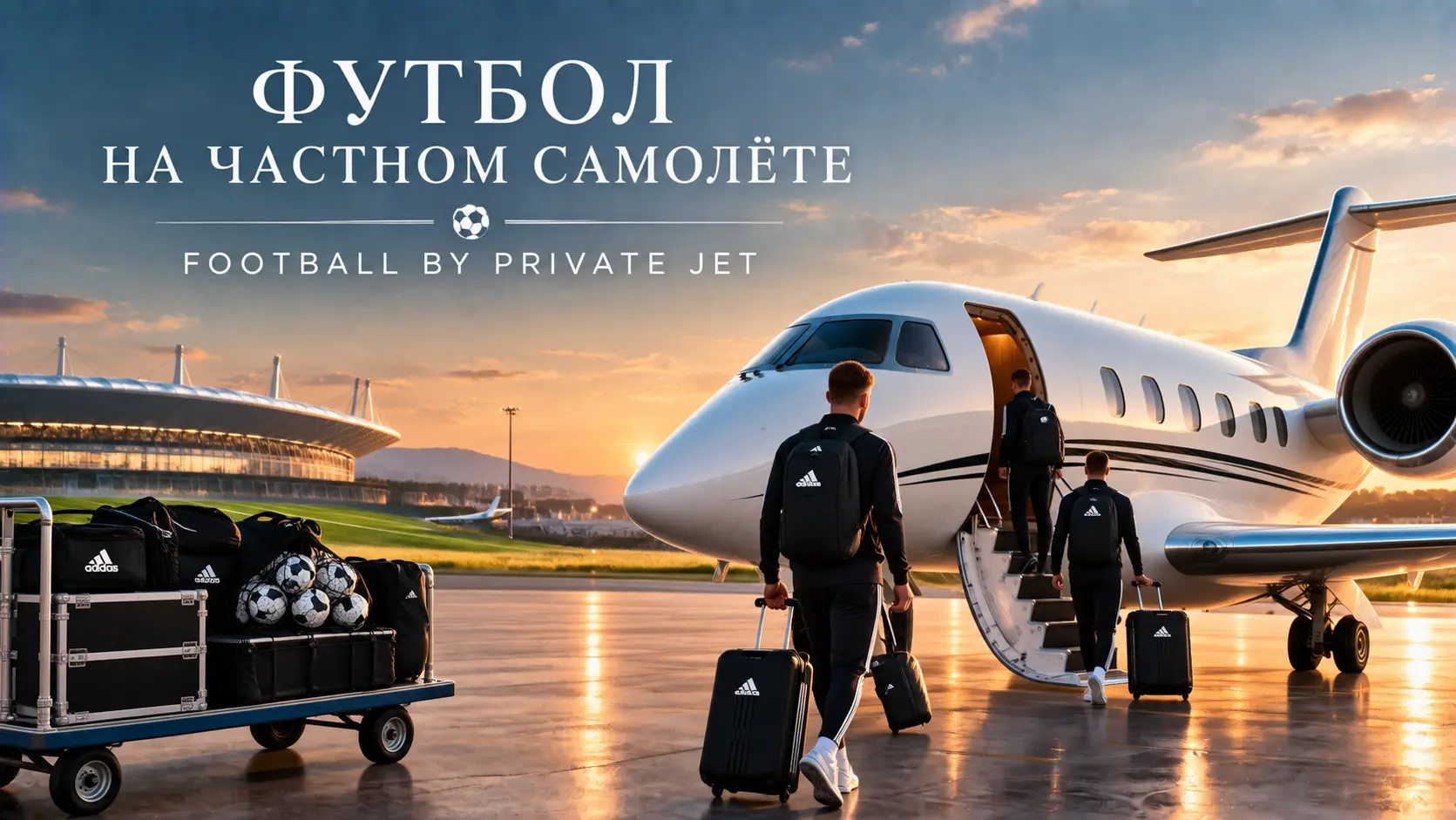
Football matches create the most time-compressed demand in business aviation: everything concentrates into a single evening, and the host city often lacks developed infrastructure for private flights. Below we cover the logistics of that scenario and practical planning.
The one-evening problem
Unlike a tennis tournament or an air show spread over days and weeks, a match happens on a specific evening. Arrivals concentrate into the few hours before kick-off, departures come straight after the final whistle, and both waves overlay the airport's normal traffic.
The practical consequence: apron and slots become scarce more sharply than at any other type of event. Parking on match day is often unavailable at all, and after drop-off the aircraft moves to a neighbouring field, returning for departure.
The second factor is night restrictions. A match finishing late in the evening can run into an airport curfew where night operations are prohibited. This is checked before the flight is confirmed, not after.
Cities without infrastructure
Major UEFA finals are not held only in London, Madrid or Munich, where business aviation is developed. The venue is often set by rotation, and the city may have a single mid-sized airport built for ordinary traffic.
In such cases the working arrangement is arrival at the nearest large hub with a road or helicopter transfer. That adds an hour or ninety minutes to the journey but removes the risk of failing to secure a slot or parking.
World and European championships complicate the picture: matches are spread across several cities, some with limited capacity, while the flow of supporters loads the ground logistics too.
Group economics
Football is the scenario where a private aircraft is most often chosen by a group: corporate hospitality programmes, partner delegations, groups of friends. With eight to twelve passengers the aircraft cost is shared and converges with business-class tickets.
A further argument is returning the same evening. The match finishes late, scheduled flights have gone, and the alternative is an overnight — expensive on final night with rooms in short supply.
How to plan
The order: first check the host city airport's capacity on the specific date and any night restrictions, then consider a fallback field with a transfer, then agree slot and parking, and only then the aircraft.
JetHunter provides access to more than 5,000 aircraft and works with event routing. For matches the key question is not aircraft availability but whether landing and departing at the required time is possible, and that is checked first.
«A football match is one evening in a city that rarely sees business aviation the rest of the year. The constraint is not the aircraft but apron capacity: it is sized for weekdays, not for a final.»
— Alexey Mordvintsev, CEO of JetHunter
Author: Alexey Mordvintsev, CEO of JetHunter, President of the Association of Professionals of Executive Aviation Industry (APIDA). Over 14 years in the industry.