Baggage, pets, documents and smoking on a private flight

Practical questions come up for most first-time private flyers: how much baggage fits, can a dog come along, is a passport needed, is smoking allowed. The answers differ from scheduled aviation, but not in the direction people usually assume: the extra freedom is in service, not in law. Here is each question in turn.

How much baggage can you take

The key difference from a scheduled flight: business aviation counts baggage not in pieces or kilos per passenger but by the volume of the baggage hold — in cubic feet or cubic metres. There is no '23 kg per bag' rule here; the constraint is the geometry of the specific aircraft.

The spread is wide. Very light jets have a usable hold of roughly 0.6–1.0 m³, taking a couple of soft holdalls and little else. Heavy and ultra-long-range aircraft reach 4–6 m³: the Bombardier Global 8000, for example, has a hold that takes a large group's luggage together with sports equipment.

The second constraint is weight. Passengers, baggage and fuel all draw on the same maximum take-off weight limit. On a short leg this is invisible, but on a long flight every extra kilo of luggage is a kilo of fuel that cannot be loaded. On range-limited routes baggage and fuel compete directly.

The practical consequences: soft bags beat hard cases, because the fuselage is curved and a hold always has unusable corners. Oversized items — skis, golf bags, musical instruments — are limited not by volume but by the width of the baggage door, so the aircraft is selected for them specifically. And on smaller jets the hold is external, unpressurised and inaccessible in flight, so medication, documents and electronics stay in the cabin.

Can you fly with pets

Yes, and it is one of the notable advantages of a private flight: the animal travels in the cabin beside its owner rather than in a cargo hold. Dogs, cats, birds — the answer is usually yes, but it must be agreed in advance: not every aircraft owner and operator accepts animals on board.

The constraint here is not aviation but veterinary and border control, and it is strict. Uniform rules apply for entry into the EU: per the European Commission, the animal must be identified by a microchip and vaccinated against rabies, and the vaccination date must not precede the microchipping date, with the animal at least 12 weeks old at primary vaccination.

A key planning detail: at least 21 days must elapse between primary vaccination and departure for the EU. That means the decision to bring an animal is made at least a month ahead, not a week before the trip.

Documents differ by residency. The European pet passport is issued only to owners resident in the EU and is valid for life while the vaccination remains current. Entry from third countries requires a veterinary certificate issued no earlier than 10 days before arrival. Some countries — Finland, Ireland, Malta, Norway — additionally require tapeworm treatment for dogs 24–120 hours before arrival, and entry from high-risk countries requires a rabies antibody titre test.

Non-compliance is costly: quarantine, refusal of entry or return to the country of origin are all possible. Requirements must be checked against the country of arrival, not departure — and checked early, with the operator.

Are a passport and visa needed

Yes. There is a common misconception that a private flight removes formalities. Business aviation operates within the same legal framework as all civil aviation: every passenger passes passport and customs control, normal visa rules apply, and prohibited items remain prohibited.

What differs is not the existence of procedures but how they are organised. Control is passed in a separate terminal or VIP lounge, without shared queues and many times faster. A representative meets passengers at the entrance, takes passports and handles check-in, after which passengers clear passport and customs control and are driven straight to the aircraft, where the baggage is already loaded.

The operator requests a passenger list with full passport details in advance — it is needed for filing permits and advance passenger information. This is why adding a passenger at the last minute is harder than it seems: the constraint is paperwork, not cabin seats.

Arrival at the airport is 20–30 minutes before departure rather than two or three hours. That difference is what delivers the main time saving on short trips.

Is smoking allowed on board

On some aircraft, yes. This is one of the few differences from scheduled aviation, where smoking is universally banned. But the decision rests with neither the passenger nor the broker: it is the aircraft owner's, and because smoking leaves traces in the cabin and affects the finish, most owners do not permit it.

The practical takeaway: if the ability to smoke matters, say so at the enquiry stage, before aircraft selection — as with pets. Sourcing then runs only among aircraft where it is permitted, rather than the issue surfacing after the fact.

What cannot be carried

Restrictions on dangerous goods and prohibited items apply in full. Weapons are a separate category: carriage is possible but requires permits and clearances from the operator and from the countries of departure, overflight and arrival. This is arranged in advance and does not tolerate improvisation.

The same applies to large sums of cash, works of art, hunting trophies and prescription medicines in quantity — ordinary customs rules apply throughout. The private status of a flight creates no exemptions; it only speeds up the procedures.

Catering and drinks on board

The flight price includes a catering budget per passenger: on a short leg typically around €100–200 per person, on a long one from several hundred dollars upward depending on the operator. Within that budget the menu is chosen in advance: appetisers, cheese and charcuterie boards, salads, hot dishes, desserts, fruit. Food is prepared at a restaurant and delivered to the aircraft.

The standard bar usually holds white and red wine, sparkling, and mid-range spirits. Any special requests — a specific label, rare bottles, a particular cuisine — are ordered separately and billed above the budget. The same goes for children: toys, films and books are arranged in advance.

Costs that arrive after the flight

A reputable broker quotes an all-in price covering take-off and landing, fuel, ground handling and VIP lounges for the stated passenger count. But a few items are billed after the fact by their nature.

The first is winter de-icing. It is not priced in advance because the captain decides on it from actual weather; the invoice arrives three to four weeks after the flight. The most de-icing-prone conditions are temperatures around zero, from −5 to +5 degrees; in dry frost treatment is usually not required.

The second is cabin cleaning if something is spilled or soiled. The crew normally flags this immediately. The third is an increase in passenger numbers against the stated count: catering costs rise, as does the VIP lounge charge, which is billed per person passing through.

Children on board

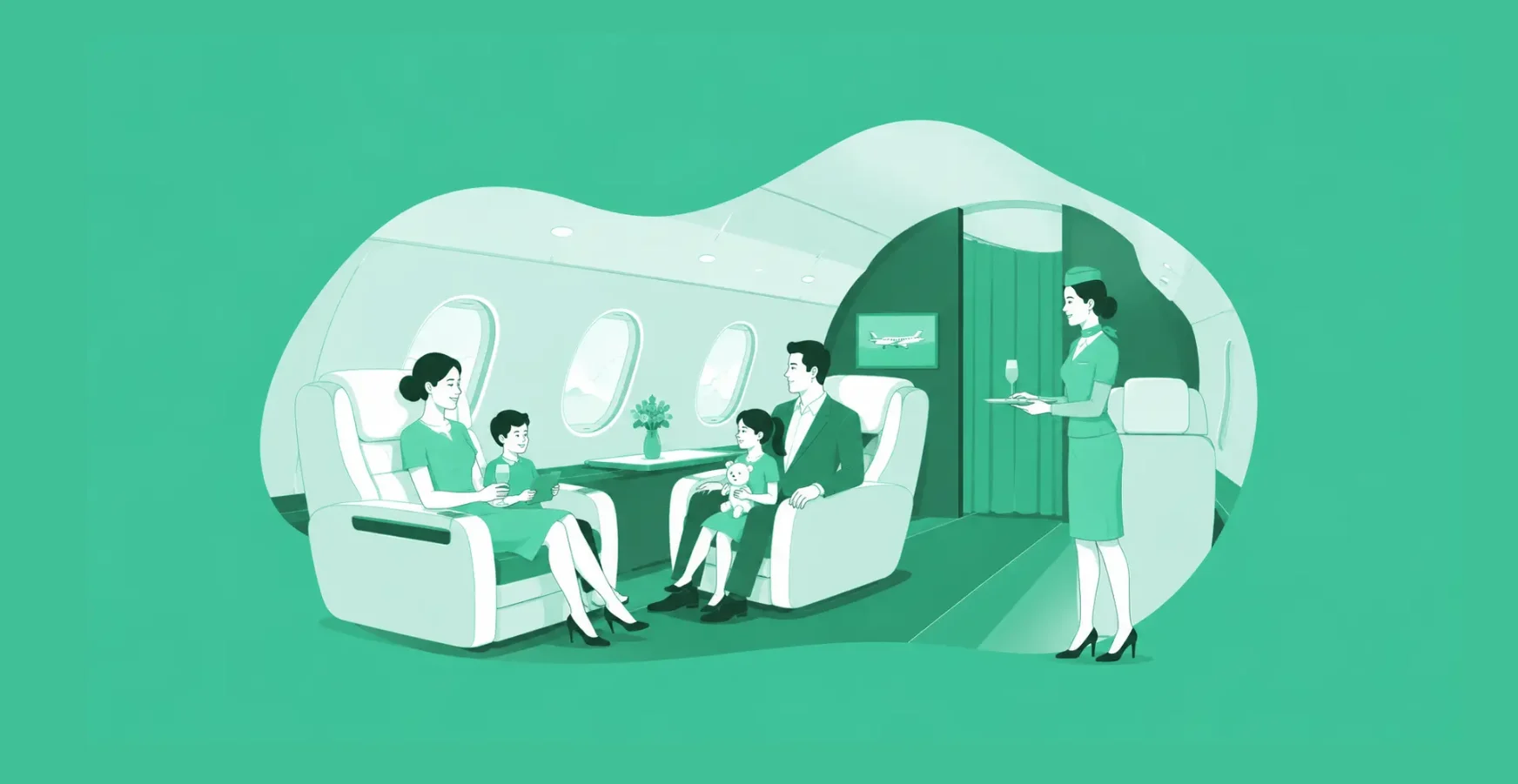
There are no age restrictions on private flights, and the whole trip is markedly simpler for families with children: no queues, no long terminal waits, and departure timed around the child's routine rather than the reverse. Pushchairs, car seats and bulky children's baggage are accommodated without separate approvals, subject to hold volume.

Children's meals, toys, films and books are ordered in advance alongside the main catering. For infants, the availability of suitable belts and the ability to fit a car seat is confirmed — this depends on aircraft type and cabin layout, so the question is asked at the sourcing stage.

Passengers with reduced mobility

Private aviation is usually easier than scheduled travel for passengers with reduced mobility: the car drives to the aircraft steps, there are no long walks through a terminal, and crew assistance comes without queuing. But the specifics depend on the aircraft: step height, door width and the availability of a lift device vary.

If wheelchair carriage, stretcher transport or medical equipment on board is required, this is flagged in advance — an aircraft with suitable entry geometry is selected, and in some cases air ambulance capability is brought in.

What to specify when booking

To avoid surprises, state at the enquiry stage: the exact passenger count, the volume and nature of baggage (especially oversized items — skis, golf, instruments), any animals and their species, whether smoking is required, dietary preferences and restrictions, whether children are travelling, and any reduced-mobility needs.

The more completely these inputs are given upfront, the more accurate the aircraft selection and the lower the chance of an incompatibility surfacing at the paperwork stage. JetHunter provides access to more than 5,000 aircraft, and sourcing accounts for all these conditions simultaneously, not just the route and seat count.

«A private flight removes the queues, not the law. Passport and customs control work exactly as in commercial aviation — just faster and in a separate lounge. Anything you cannot carry on a scheduled flight, you cannot carry on a private one.»

— Alexey Mordvintsev, CEO of JetHunter

Author: Alexey Mordvintsev, CEO of JetHunter, President of the Association of Professionals of Executive Aviation Industry (APIDA). Over 14 years in the industry.

How to choose an aircraft for rent?

Choosing an aircraft to rent is an important step that will determine the comfort of your trip. Here are key factors to consider:

image

Purpose of the trip:

  • Business travel: a small but comfortable airplane such as the Cessna Citation CJ3+ or Embraer Phenom 300E is suitable for business meetings.
  • Vacation: if you are traveling with a large group, choose a more spacious model such as the Bombardier Challenger 605 or Gulfstream G550.
  • Transcontinental flight: long flights require an aircraft with a long range, such as a Bombardier Global 6000 or Gulfstream G650ER.

Number of passengers:

  • Decide on the exact number of passengers to choose an airplane with enough seats and comfort level for everyone. For better comfort, calculate quantity of passengers based on a number of separate seats, disregarding divans.

Distance and route:

  • Consider the range of the chosen model and the possibility of landing at the destination airport. Consider the specifics of the route: mountainous or maritime terrain may require airplanes with specific technical characteristics. We can help you with this!.

Budget:

  • Determine your budget and compare the cost of renting different models.
  • Consider additional costs: airport services, meals on board, on-board internet. We’ll advise you when you can save up some money and when you better not cut corners.

Additional Requirements:

  • Availability of bedroom, hot catering, shower, internet, entertainment system.
  • Need to transport luggage, sports equipment, pets. Smoking.

How an Aircraft Purchase Works: Request, Contract, Payment

1

Send us a request

Contact us and tell us about your most ambitious wishes. We will find the best aircraft for you!

2

Sign a contract

Sign Aircraft purchase agreement. This ensures that Aircraft purchase terms and conditions are protected and understood by both parties.

3

Make payment

Make payment for your chosen aircraftin any convenient way. We offer more than 50 different means of payment.

Eight Stages of a Business Jet Purchase

Determine aircraft requirements

Determine your budget and travel needs: Where do you want to fly? How often? How many passengers will you carry? What level of comfort do you prefer?

Send request to us

Contact our manager, who will help you understand the technical characteristics of the aircraft and choose the most suitable model.

Select an aircraft model

Based on your requirements, we will select several aircraft models that are optimally suited in terms of technical characteristics, capacity, flight range and other parameters. We will also help you compare the selected models and make an informed choice. We recommend choosing an aircraft that is 80% of your ideal.

Visual inspection of the aircraft

Choose one or two aircrafts from the available options. We will arrange for a visual inspection where you can personally inspect the aircraft, assess the condition of its interior and exterior and determine the most suitable option for purchase.

LOI and contract

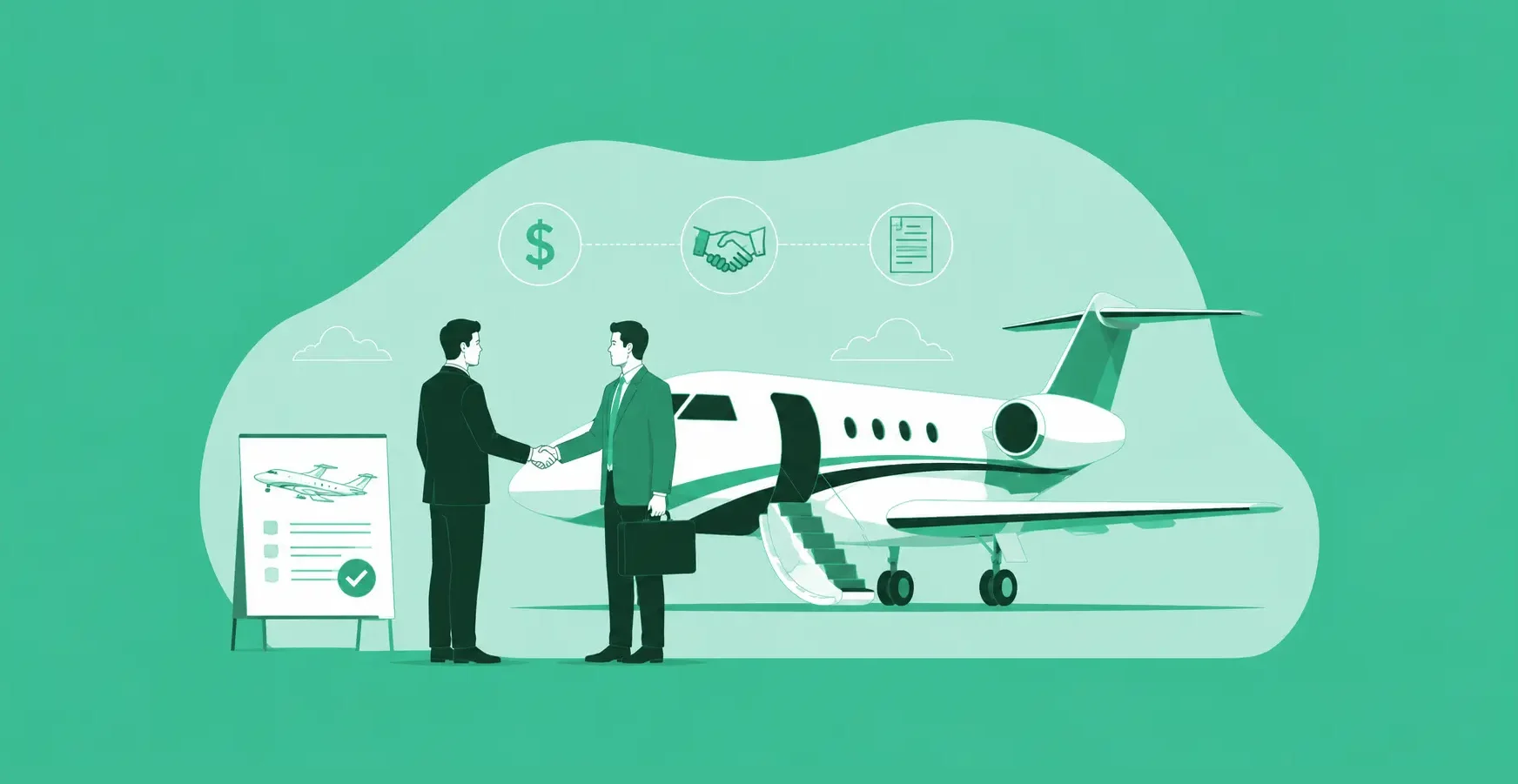
You will need to sign a Letter of Intent to purchase the aircraft (LOI), pay a deposit and sign an Aircraft Purchase Agreement drafted by our experienced lawyers.

Pre-Purchase Inspection (PPI)

We will arrange an independent technical inspection of the aircraft at a certified center to ensure that it is safe and in good working order. You will receive a detailed report on the technical condition of the aircraft to be sure of its reliability. As a result, you will receive a fully operational airworthy aircraft.

Deal closing

At this stage, the aircraft is flown to the closing location and the aircraft is paid for in any way you like. The transaction is conducted through an escrow agent, which guarantees the safety and transparency of the transaction. Your funds will be sent to the seller only after receiving all necessary documents for the aircraft.

Getting an aircraft

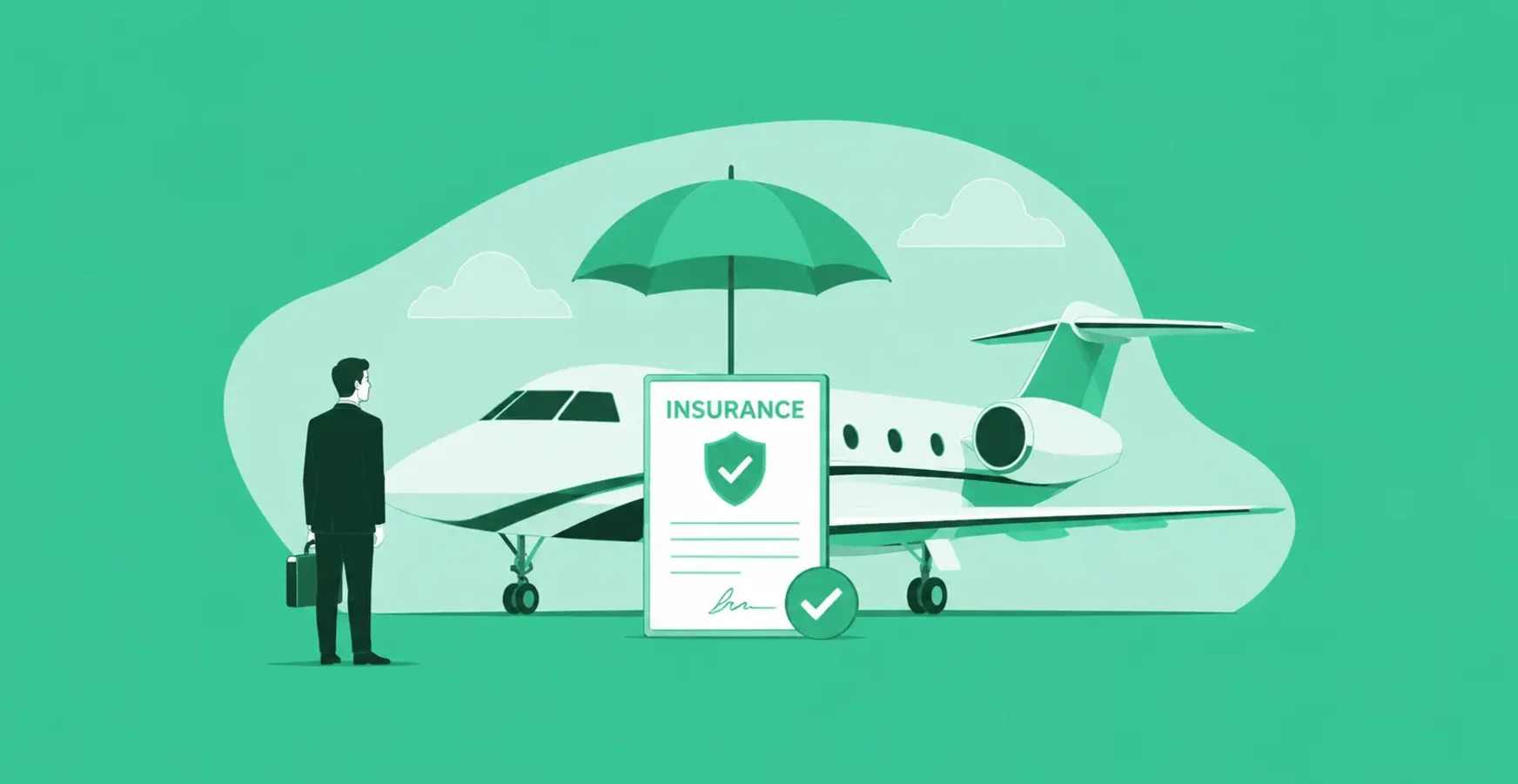
We will organize a delivery ceremony to put the aircraft at your service. And we will ensure that your new aircraft gets off to a comfortable start. If necessary, we recommend the operator, insurance company and trusted maintenance center.

Have questions?

Leave your contact information and we will contact you within 5 minutes and tell you everything in more detail.

Find out more

We will advise, select and consult you on all issues.

Frequently asked questions

How much baggage can I take on a private flight?

It depends on the aircraft: a light jet takes 5–8 bags, a midsize 8–16 and a heavy jet 20–30. What matters is not just hold volume but weight-and-balance with the passenger count; skis, golf and oversize items are cleared in advance. Send us a request — we'll prepare options, calculate running costs and analyse the best fit for your task.

Can I fly with pets?

Yes — on a private flight a pet travels in the cabin beside you, not crated in the hold. You need a vet passport, vaccinations and, for international flights, the destination country's documents. Terms are agreed at booking. Send us a request — we'll prepare options, calculate running costs and analyse the best fit for your task.

What documents are needed for a private flight?

For a domestic flight, an ID; for international, a passport and the destination visa. The crew and broker arrange slots, permits and customs. The exact document list depends on the route. Send us a request — we'll prepare options, calculate running costs and analyse the best fit for your task.

Is smoking allowed on board?

The owner sets the rule: some aircraft allow smoking, others don't, and e-cigarettes are regulated too. Check at booking; most aircraft prohibit it for safety reasons. Send us a request — we'll prepare options, calculate running costs and analyse the best fit for your task.

How does a deal work: stages and timeline from deposit to handover?

The standard path takes 6–10 weeks. Step 1: a letter of intent (LOI) with price and terms — 3–5 days. Step 2: a 5–10% deposit into escrow and signing of the purchase agreement. Step 3: a pre-purchase inspection — 1–3 weeks. Step 4: rectification of findings and price adjustment. Step 5: closing — simultaneous transfer of funds, title and risk, technical acceptance and ferry of the aircraft.

What is a pre-purchase inspection and who pays for it?

A pre-purchase inspection (PPI) is an independent check at a certified centre: airframe, engines, corrosion, records and compliance with airworthiness directives. It takes from 3 days on a turboprop to 2–3 weeks on a heavy jet and costs $15–100K — paid by the buyer. By market practice the seller pays to rectify airworthiness-affecting defects. A seller refusing a PPI is grounds to walk away.

What taxes and duties apply when importing and registering an aircraft?

The import budget depends on jurisdiction. In the EU the main items are any customs duty (most business-jet codes carry reduced or zero rates) and import VAT, which varies by country of entry (for example 19–22% in much of Europe). Registration in Aruba, San Marino or the Isle of Man under operation outside the EU allows a temporary-admission regime. We produce an exact calculation before the LOI is signed — an error here costs millions.

How far in advance should a flight be booked?

The standard is 24–48 hours before departure: that is enough to confirm the aircraft, crew and slots. For regular clients we arrange a domestic flight from 4–6 hours. International routes need 48–72 hours: overflight permits for some countries take 3–5 working days. On peak dates — Christmas, summer holidays, major forums — aircraft are booked out 2–3 weeks ahead, so plan early.

What are empty legs and how much can you save on them?

An empty leg is the ferry of an empty aircraft to its next job or home to base. Such segments sell at a 30–75% discount to the usual price: a flight that would cost $25K can come to $8–12K. The limits: the date and route are fixed to the aircraft's schedule, and if the main booking is cancelled the flight may shift. We publish current empty legs weekly — watch the listings.

What are the rules on baggage, pets and flying with children?

Baggage is limited only by hold volume: a light jet takes 5–8 suitcases, while midsize and above fit skis, gun cases and golf bags — clear oversized cargo in advance. Pets travel in the cabin in a carrier or crate; a pet passport, microchip and documents for the destination country are required. Children fly from birth to 2 years with no surcharge.

How JetHunter Works With Clients: A Word From the Founder

image

For those who value time above all else, the sky opens up limitless possibilities. At JetHunter we have built a service that turns private flying into a tool of efficiency and comfort. When you charter an aircraft with us, you get more than transport — you get a carefully designed space for work and rest.

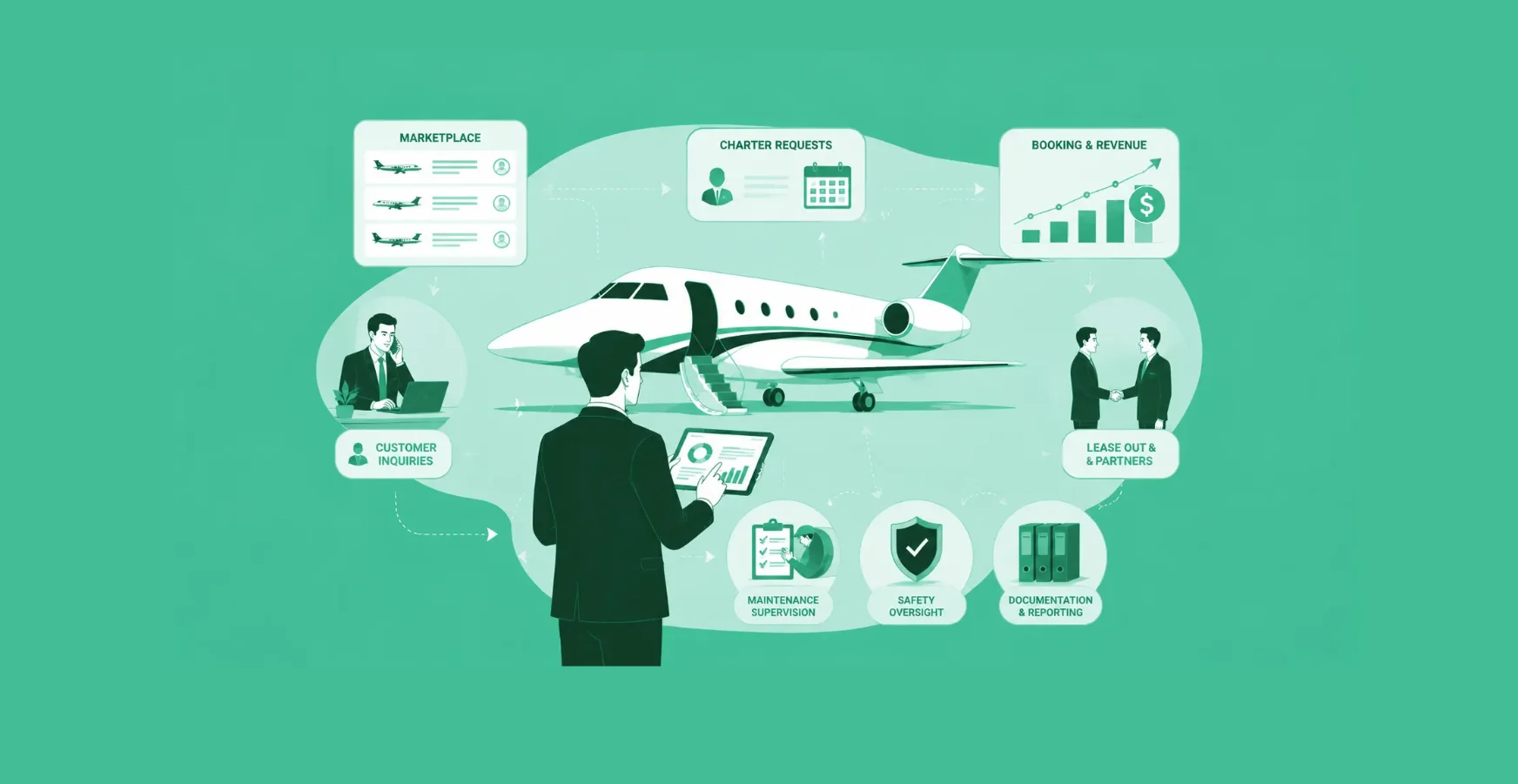
Our approach is comprehensive. Looking to buy a private jet, or need a business jet for a certain period? We will be your reliable partner. Every client gets personal attention: we walk you through the model range, help you choose an aircraft to buy, and arrange charter terms that keep your budget and business goals in focus.

We value the trust you place in us and aim to build a long-term, mutually rewarding relationship with every client.

With JetHunter you acquire more than an aircraft — you open up a new standard of living, where distance is no obstacle to your ambitions.

Sincerely,
Alex Mordvintsev, Founder of JetHunter