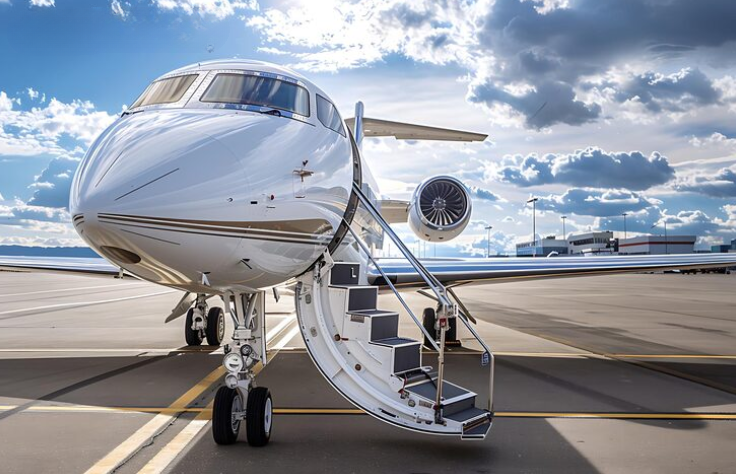
Purchasing a business jet is a decision that involves months of negotiations, inspections, and approvals. But the real work begins after the deal. Maintaining an aircraft requires ongoing investment: hangar space, crew salaries, maintenance programs, certificate renewals, and insurance premiums. All of this falls on the owner, regardless of whether the aircraft is flying or grounded.
The average private jet is in the air for 200-400 hours per year. The rest of the time is idle. And this idle time costs money. For a long-haul jet, fixed costs can exceed $1.5-2 million rubles per year – even without a single flight.
Commercial management changes this economics. When an aircraft isn't busy with private flights, it's in service: operating charter flights, carrying passengers on commercial demand, and partially offsetting maintenance costs. The airliner ceases to be a pure expense item and becomes a manageable asset.
What is commercial private jet management?
It is important to distinguish between three things here: ownership, operation and commercial loading.
Ownership is a legal fact. The aircraft belongs to you, and you bear the costs of its maintenance. Operation refers to the technical and organizational aspects: airworthiness, crew, basing, and scheduled maintenance. Revenue loading refers to the use of the aircraft to carry passengers on a commercial basis during periods when it is not being used by your flights.
Commercial management. The owner receives revenue from occupancy while maintaining priority for their own flights.
This is standard practice in business aviation. Most mid-size and higher-category aircraft are used in commercial programs. The reason is obvious: maintaining an aircraft that flies for 200 hours, with a potential of 800-1,000 hours, is economically unsustainable.

What is involved in commercial aircraft management?
Commercial management isn't simply "finding a client for an empty flight." It's a system of multiple disciplines, each requiring its own expertise.
- Analyzing the aircraft's potential. Before introducing an aircraft to the commercial market, it's important to understand the demand it can meet. A long-haul aircraft with a range of 12,000+ km caters to intercontinental routes: Dubai-London, Almaty-Singapore, Tashkent-New York. Super-midsize jets like the Bombardier Challenger 3500 cater to the high-demand regional segment. The Pilatus PC-12 NGX turboprop is suitable for short-haul flights and airfields with limited infrastructure. The aircraft type determines the loading strategy.
- Finding and organizing commercial loads. The management team addresses market demand: charter flights, corporate contracts, and discounted empty legs. The goal is to fill downtime so the aircraft generates revenue rather than sits idle in a hangar.
- Documents, permits, and approvals. Commercial aircraft operation requires a separate set of documents: an Air Operator Certificate (AOC), passenger permits, and route approvals from aviation authorities. Errors at this level are costly, ranging from fines to flight suspensions.
- Flight operations support. Crew coordination, airport slots, ground handling at FBOs (business aviation terminals), catering, transfers. Every commercial flight is a project involving dozens of contractors, and someone has to keep track of everything.
- Financial reporting and expense control. The owner receives a transparent picture of how much the aircraft has earned, how much it has spent on operation, and how it is trending month-by-month. Without this, it's impossible to make decisions—either about occupancy or about future ownership.
How commercial loading helps reduce owner costs
The economics of aircraft ownership are structured like this: the majority of costs are fixed. Hangar storage is year-round. Flight crews receive monthly salaries. Maintenance schedules are based on the calendar, not just flight hours. Insurance is paid in advance. These costs are independent of the aircraft's flight hours.
Commercial load factor plays a role in this portion of the budget. Revenue from charter flights during downtime covers a portion of the fixed costs that the owner incurs in any event. For a super-midsize aircraft with a stable load factor, this could be as much as 30-60% of these costs.
It's important to understand that commercial management is not a guarantee of profit. Charter demand depends on the season, routes, and market conditions. An aircraft based in Dubai will be loaded differently than one based in Russia. The goal is to reduce net ownership costs, not to turn the aircraft into a guaranteed-profit business.
Who is this model suitable for and who is it not?
Commercial management isn't a one-size-fits-all solution. There are scenarios where it works well, and others where it's overkill.
Fits: Owners who use the aircraft 150-300 hours per year and want to reduce maintenance costs during periods of downtime. Those who fly seasonally—for example, actively in the winter and summer, with the aircraft available in the spring and fall. Owners who value economic control without being immersed in operational routines: crew schedules, maintenance coordination, and negotiations with airports.
Not suitable: Those who fly 500+ hours a year and use their aircraft almost nonstop have nothing to load. And those who are determined not to allow other passengers on their plane. This is a matter of personal preference, and it's perfectly reasonable.
Intermediate option: Owners who are prepared to operate with limited commercial capacity—for example, only empty-hand flights (when the aircraft flies empty to its base anyway). In this case, the interior doesn't incur additional wear and tear, and the revenue from the flight covers the ferry costs.

Which aircraft are best suited for commercial operations?
Not every airliner is equally in demand on the charter market. Commercial load potential directly depends on the aircraft class and region of operation.
The super-midsize segment is experiencing the most demand. The Bombardier Challenger 3500 or Embraer Praetor 500 cover the majority of business routes within the region – Dubai-Riyadh, Almaty-Istanbul, Tashkent-Tbilisi. They have a range of 5,000-6,000 km and a cabin capacity of 8-10 passengers. For commercial management, this is the optimal option: stable demand and predictable load factors.
Long-haul aircraft – Bombardier Global 7500, Gulfstream G700 – they operate differently. Demand is lower, but each flight generates significant revenue. Loading depends on the hub: in Dubai or Geneva, it's easier to fill slots than in less crowded cities. For owners of such aircraft, the commercial program is built around limited-edition, high-margin flights.
Light jets and turboprops – Pilatus PC-12 NGX, The Cessna Citation CJ3+ occupies a distinct niche. Their per-flight margins are lower, but in regions with poor scheduled air service, demand is stable. This is especially true if the aircraft can operate on short runways and at airfields without extensive infrastructure.
What risks arise without professional management?
Some owners try to organize commercial downloads on their own—through acquaintances, random requests, and without a system. The results are usually predictable.
- Chaotic loading. Flights appear haphazardly, without a strategy. A plane flies from Moscow to Dubai, but the return flight is empty because no one has organized a return flight. The money spent on the flight is wasted, but the income is zero;
- Opaque costs. Without a unified financial control, it's difficult to understand the true cost of each flight hour. Some contractors bill for fuel, others for ground handling, and still others for storage. Without consolidation of this data, the owner doesn't see the full picture;
- Documentation errors. Commercial passenger transportation is subject to a different level of regulatory requirements than private flights. Incomplete documentation, expired permits, and non-compliant certificates can all lead to fines or a grounding.;
- Downtime losses. Without a professional team monitoring the market and promptly filling requests, downtime windows remain unfilled. The aircraft is parked, expenses are incurred, and potential revenue is lost.
How JetHunter builds commercial management
Over 13+ years of operation and over 5,000 organized flights, we at JetHunter have built a management model that covers the entire cycle – from load planning to financial reporting to the owner.
- Selecting a loading strategy. We analyze the aircraft type, basing location, the owner's personal schedule, and route demand. Based on this, we create a loading plan: which periods are available for commercial flights, which routes are most popular, and what revenue is realistic;
- Operational support. Crew coordination, maintenance planning, airport and FBO liaison, and insurance. The owner receives a ready-to-fly aircraft without having to deal with logistics;
- Contractor and expense control. We work directly with operators, service centers, and fuel suppliers. Every expense is recorded, and reporting is available to the owner at any time. Transparency is not a slogan, but a working principle: you can see how much the aircraft has earned and how much it has spent;
- A single point of entry. The owner doesn't need to communicate with dozens of contractors. A single JetHunter manager manages the project from start to finish – from arranging a personal flight to reporting on monthly commercial flights.
How to know if this model is right for you
Compare the two scenarios. First: You own an airplane, fly it 250 hours a year, and the rest of the time it sits in a hangar, and you bear the full cost of maintenance. Second: the same 250 hours of personal flights, but during free periods the aircraft operates commercial flights, and part of the costs are offset by income from loading.
The difference between these scenarios is the specific figures, which depend on the aircraft type, base region, and demand. At JetHunter, we can calculate both scenarios for your aircraft: the current cost of ownership and how the economics will change with a commercial load.
Submit a request – a manager will contact you within 15 minutes and prepare a quote for your aircraft and routes.


